










Project Horizon Tech Valley Network: Full WiFi Coverage and CCTV Wireless Transmission Solution for a Sci-Tech Park in Shenzhen
Contractor Team Introduction
We are a local WiFi engineering contractor based in Shenzhen with long-term experience in sci-tech park WiFi coverage, industrial park networks, enterprise office WiFi, R&D center WiFi, laboratory wireless planning, conference center high-density WiFi, exhibition hall networks, access control networks, visitor system networks, merchant POS networks, outdoor campus WiFi, underground garage coverage, CCTV wireless transmission, PoE-powered deployment, multi-building network integration, and multi-service network isolation projects.
A sci-tech park network is not the same as a standard office WiFi project. A technology campus has multiple office buildings, different enterprise tenants, R&D teams, laboratories, meeting centers, roadshow halls, demo areas, outdoor plazas, parking entrances, EV charging zones, security booths, access gates, and remote CCTV monitoring points. The network must support daily office work, high-concurrency R&D usage, visitor registration, access control, demonstration equipment, laboratory isolation, conference and roadshow activities, merchant POS devices, security cameras, and long-term IT maintenance.
Our team has used COMFAST equipment in many office campus, technology park, commercial complex, residential estate, school, hotel, outdoor coverage, and CCTV backhaul projects. From field experience, COMFAST gateways, WiFi 6 routers, PoE switches, ceiling APs, in-wall APs, outdoor APs, and wireless bridges are practical for complex campus projects because they support clean deployment, flexible topology, centralized PoE power, stable coverage, and clear network segmentation. For this project, we selected COMFAST CF-AC200 full gigabit smart core gateway, CF-SG1241P 24-port gigabit PoE switch, CF-WR631AX AX3000 WiFi 6 router, CF-E391AX WiFi 6 ceiling APs, CF-E390AX WiFi 6 ceiling APs, CF-E593AX WiFi 6 in-wall APs, CF-WA937 outdoor WiFi 6 APs, CF-WA933 outdoor WiFi 6 APs, and CF-E319A V2 long-distance wireless bridges.
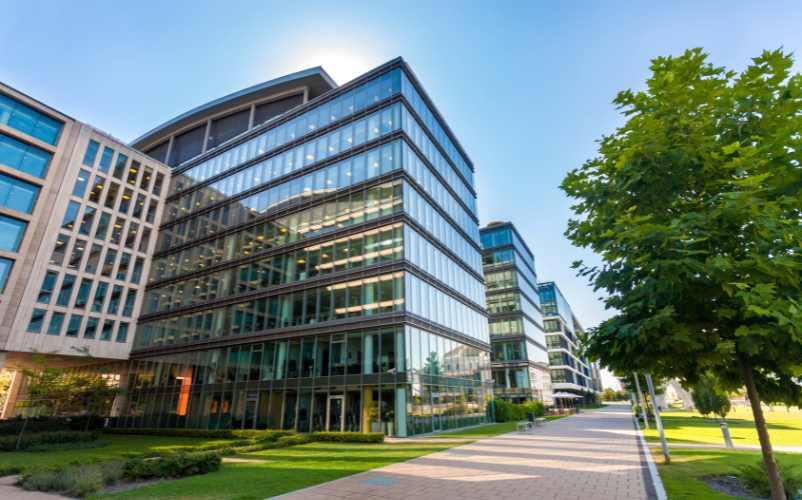
This case study documents our Sci-Tech Park Full Coverage Solution for Horizon Tech Valley, a multi-building innovation campus in Shenzhen, China. The project covered the main entrance, visitor center, access gate and turnstile area, enterprise office buildings, R&D office zones, open workstations, independent offices, meeting rooms, training rooms, roadshow hall, technology exhibition hall, product experience center, laboratories, test rooms, server room maintenance area, employee restaurant, coffee area, shared lounges, fitness center, commercial supporting area, building lobbies, elevator lobbies, corridors, skybridges, rooftop garden, outdoor plaza, park roads, underground garage, parking entrance, EV charging area, security booths, park boundary areas, remote CCTV camera points, and equipment rooms.
1. Project Overview
Project Name: Project Horizon Tech Valley Network
Project Location: Shenzhen, Guangdong Province, China
Site Type: Large sci-tech park with office buildings, R&D areas, laboratories, conference facilities, exhibition spaces, commercial services, outdoor public areas, parking facilities, and security monitoring points
Total Campus Area: Approximately 156,000 square meters
Indoor Coverage Area: Approximately 102,000 square meters
Outdoor Coverage Area: Approximately 54,000 square meters
Buildings Covered: 9 office and R&D buildings, 1 conference and roadshow center, 1 technology exhibition hall, 2 parking structures, and multiple outdoor public areas
Enterprise Tenants: More than 90 companies, including AI companies, IoT hardware teams, software firms, robotics labs, industrial design studios, chip design teams, and enterprise service providers
Daily Office Population: Around 8,000 employees on normal weekdays
Peak Event Population: More than 12,000 users during roadshows, investor events, product launches, exhibitions, and recruitment days
Main Coverage Areas: Visitor center, access gate, enterprise office buildings, R&D offices, open workstations, meeting rooms, roadshow hall, training rooms, exhibition hall, product experience center, laboratories, server room maintenance areas, restaurants, coffee areas, lounges, rooftop garden, outdoor plaza, underground garage, parking entrance, EV charging area, security booths, and CCTV points
Project Cycle: Eight weeks from site survey to final acceptance, completed through phased construction during off-peak office hours, night maintenance windows, weekend low-traffic periods, and pre-approved enterprise coordination slots.
2. Customer Pain Points Before the Project
The visitor center network was slow during registration peaks. When visitors, interviewees, partners, delivery staff, and event guests arrived at the same time, registration tablets, QR code verification devices, visitor badge printers, and staff terminals competed with guest WiFi traffic.
The access gate and turnstile network was unstable during morning entry peaks. Some QR code scans were delayed, and security staff had to repeat verification during high-flow periods. The customer wanted the access control network to be separated from visitor WiFi and ordinary office traffic.
R&D office areas slowed down during afternoon and evening peaks. The issue was not only weak signal. The real problem was high device concurrency from laptops, phones, tablets, test terminals, development boards, cloud workstations, and collaboration tools.
Meeting rooms and training rooms had unstable video calls. Several meeting rooms had acceptable signal strength, but video conferencing still showed delay or freezing when adjacent open office areas became busy.
The roadshow hall and technology exhibition hall were overloaded during events. During investor roadshows, product launches, and demonstration days, the audience, staff, exhibitors, guest speakers, and media teams created short-time high-density wireless demand.
Product demo devices occasionally disconnected in the exhibition hall. Some demonstration devices used wireless access for cloud control, remote content loading, and data display. When visitor traffic increased, demo stability was affected.
Laboratory devices and employee office traffic were mixed in several zones. The lab manager required clearer isolation for test instruments, IoT devices, prototype equipment, and lab monitoring terminals.
Employee restaurant and coffee areas were congested during lunch and afternoon breaks. These areas had long dwell time and many mobile users, which created wireless load that affected nearby service devices and POS terminals.
The underground garage and EV charging areas had poor coverage. Concrete structures, ramps, parked vehicles, fire doors, and turning corners caused severe signal attenuation. Charging management devices and maintenance staff needed more stable access.
Outdoor plaza, park roads, and rooftop garden coverage was not continuous. Staff and visitors needed WiFi in outdoor rest areas, rooftop meeting areas, campus roads, and commercial support zones, but the previous system depended too much on signal leaking from indoor APs.
Merchant POS terminals were sometimes affected by guest WiFi load. Coffee shops, convenience stores, and supporting merchants needed a dedicated network for payment devices, ordering tablets, and receipt printers.
Remote CCTV cameras were hard to cable. Parking entrance cameras, park boundary cameras, road cameras, outdoor plaza cameras, and security booth monitoring points were far from the nearest weak current room. Re-cabling would have interrupted roads, landscaping, and normal park operations.
The weak current rooms lacked clean documentation. Some AP locations, switch ports, and camera backhaul paths were not clearly labeled. The property IT team wanted a system that could be maintained without guessing.
3. Customer Requirements
Stable indoor and outdoor WiFi coverage across the sci-tech park public and shared areas.
Reliable high-concurrency support for R&D offices, open workstations, meeting rooms, training rooms, roadshow halls, and exhibition halls.
Stable visitor center and access gate network for visitor registration, badge printing, turnstile scanning, and security verification.
Separate employee office network and guest WiFi network.
Independent laboratory device network for test instruments, IoT equipment, prototypes, and lab monitoring devices.
Dedicated meeting and roadshow network for training rooms, roadshow halls, presentation systems, and event devices.
Reliable merchant POS network for coffee shops, convenience stores, restaurants, and supporting commercial tenants.
Stable CCTV wireless backhaul for hard-to-cable camera points around parking entrances, roads, boundaries, outdoor plaza, and remote security areas.
Outdoor WiFi coverage for the main entrance, outdoor plaza, park roads, rooftop garden, outdoor rest areas, commercial exteriors, and security booths.
Improved underground garage and EV charging area coverage for maintenance staff, charging management systems, and security operations.
Centralized PoE power supply for APs, outdoor APs, wireless bridges, and selected monitoring devices.
Clean installation that does not affect the sci-tech park’s professional image, tenant office operations, laboratory work, exhibitions, roadshows, or daily traffic.
Clear handover documents including AP location maps, topology diagram, switch port labels, bridge alignment records, network segmentation notes, and maintenance guidance.
4. COMFAST Equipment Used in This Project
The following are the main COMFAST equipment models used in this project and their usage descriptions.
| Equipment Model |
Type | Project Use | Reason for Use |
|---|---|---|---|
| CF-AC200 | Full gigabit smart core gateway | Network control, DHCP, employee office network policy, guest WiFi policy, laboratory device network policy, meeting and roadshow network policy, merchant POS network policy, CCTV network planning, and management access | Suitable as the sci-tech park core gateway, separating office, guest, laboratory, meeting, POS, CCTV, and management networks for multi-building campus operation |
| CF-SG1241P | 24-port gigabit PoE switch | PoE power supply and wired distribution for ceiling APs, in-wall APs, outdoor APs, wireless bridges, and selected monitoring devices | Provides centralized PoE power, reduces local adapters, simplifies weak-current room maintenance, and supports multi-building AP and bridge deployment |
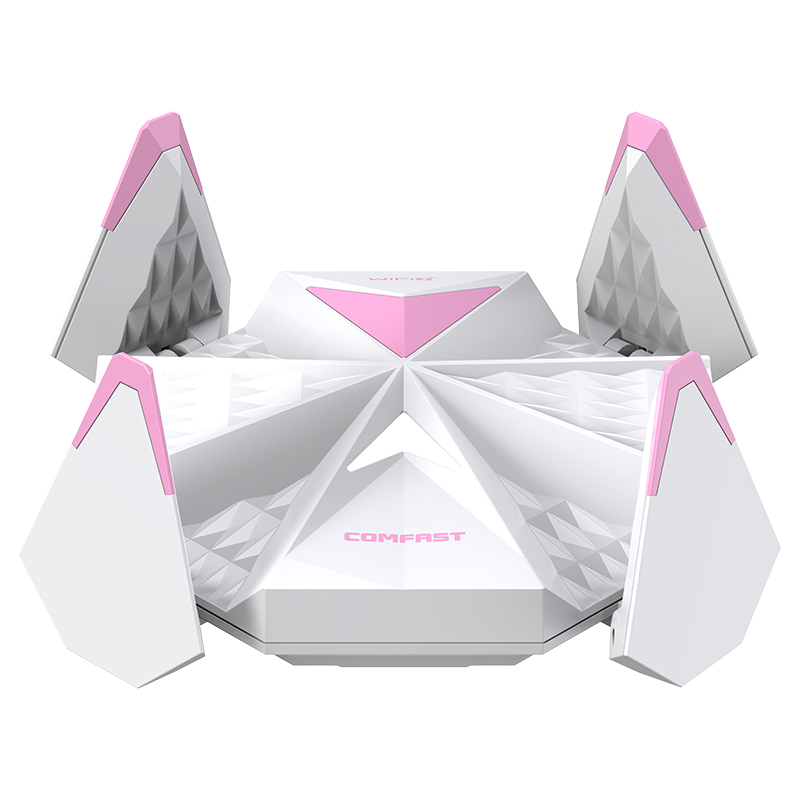
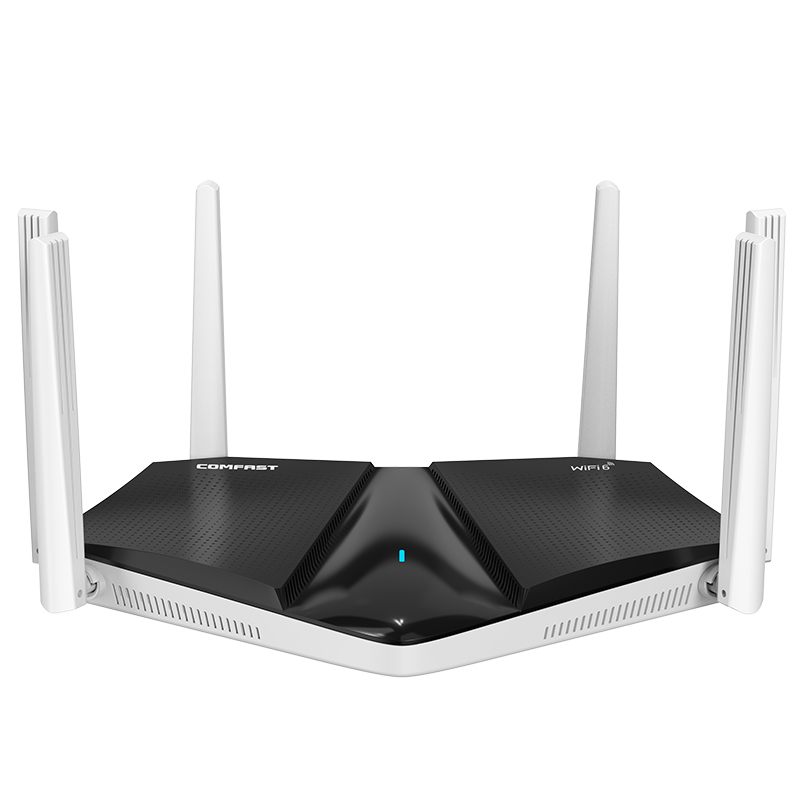
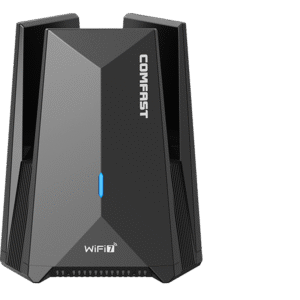
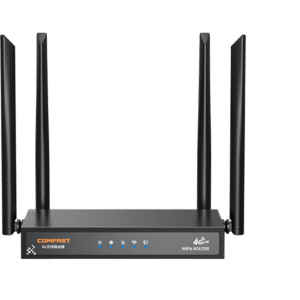
| CF-WR631AX | AX3000 WiFi 6 router | IT operations center, equipment room, temporary commissioning area, emergency network support, and maintenance tool connectivity | Provides controlled WiFi 6 management access for authorized IT staff without exposing management devices to guest or office networks |
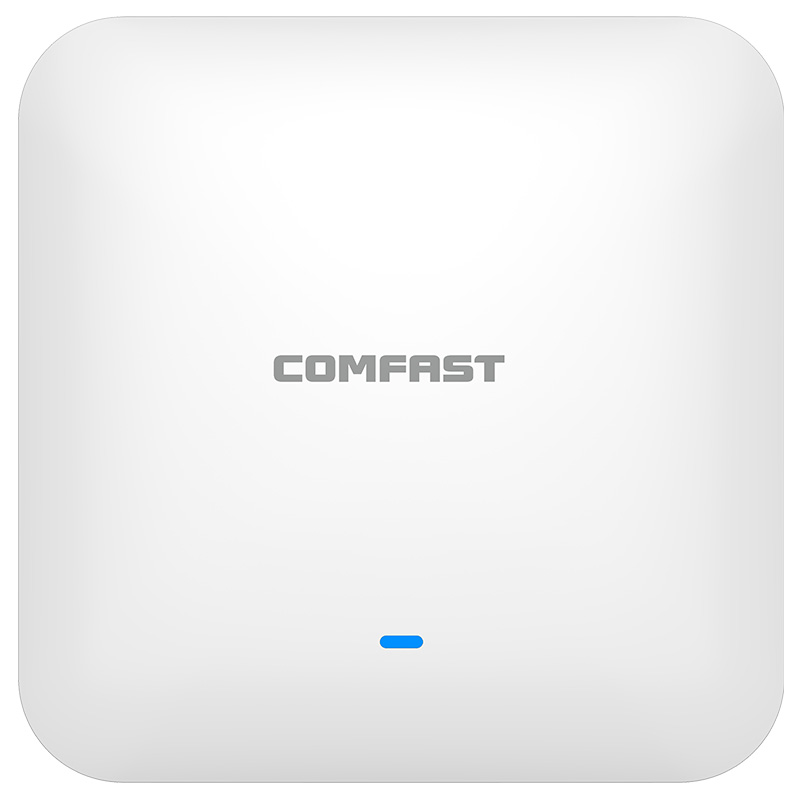
| CF-E391AX | WiFi 6 ceiling AP | R&D office areas, open workstations, meeting centers, training rooms, roadshow hall, technology exhibition hall, and product experience center | Selected for high-bandwidth and high-density indoor zones with many laptops, phones, tablets, test terminals, demo devices, and event users |
| CF-E390AX | WiFi 6 ceiling AP | Building lobbies, elevator lobbies, corridors, skybridges, shared lounges, employee restaurant, coffee area, and fitness center | Suitable for medium-density public indoor areas, providing stable roaming coverage across daily movement and shared service spaces |
| CF-E593AX | WiFi 6 in-wall AP | Independent offices, small meeting rooms, management offices, visitor reception rooms, test rooms, small laboratories, and small functional rooms | Provides room-level coverage where wall separation, meeting layouts, and small lab environments require dedicated wireless access |
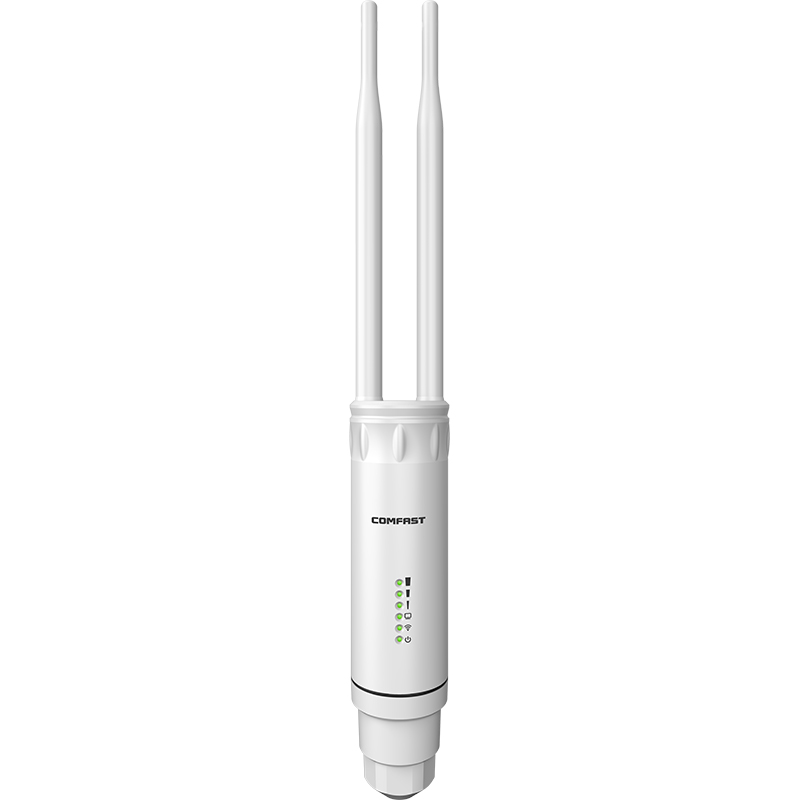
| CF-WA937 | Outdoor WiFi 6 AP | Main entrance, outdoor plaza, park roads, rooftop garden, outdoor rest areas, commercial support exteriors, and frequent pedestrian areas | Suitable for high-traffic outdoor areas where indoor AP signal leakage is not enough for stable campus outdoor WiFi |
| CF-WA933 | Outdoor WiFi 6 AP | Parking entrances, security booths, underground garage entrances, EV charging areas, park boundaries, logistics routes, and medium-density outdoor areas | Complements outdoor coverage in operational and medium-density areas while avoiding unnecessary overbuilding in every outdoor zone |
| CF-E319A V2 | Long-distance wireless bridge | 5.8G CCTV wireless backhaul for parking cameras, boundary cameras, outdoor plaza cameras, road cameras, security booth monitoring points, and remote security points | Avoids trenching, road cutting, landscaping damage, and disruption to normal sci-tech park operations while maintaining stable CCTV transmission |
5. Project Equipment Configuration Quantity
Based on the approximately 156,000 square meter sci-tech park area, 102,000 square meter indoor coverage area, 54,000 square meter outdoor coverage area, 9 office and R&D buildings, 1 conference and roadshow center, 1 technology exhibition hall, 2 parking structures, more than 90 enterprise tenants, around 8,000 daily employees, more than 12,000 peak event users, laboratories, exhibition spaces, underground garage, EV charging areas, outdoor plaza, park roads, rooftop garden, and remote CCTV points, the recommended equipment configuration for this project was as follows:
| Equipment Model | Quantity | Deployment Location |
|---|---|---|
| CF-AC200 | 1 unit | Main equipment room, used as the central smart core gateway for employee office, guest WiFi, laboratory device, meeting and roadshow, merchant POS, CCTV, and management networks |
| CF-SG1241P | 10 units | Main equipment room, office building weak-current rooms, conference and roadshow center, exhibition hall, parking structures, outdoor plaza distribution point, rooftop garden distribution point, and security / boundary distribution points for PoE power, AP connection, bridge connection, uplink ports, and expansion reserve |
| CF-WR631AX | 3 units | IT operations center, main equipment room, and temporary commissioning area for authorized management access, emergency support, testing access, and maintenance tool connectivity |
| CF-E391AX | 58 units | R&D office areas, open workstation areas, meeting centers, training rooms, roadshow hall, technology exhibition hall, product experience center, demo areas, and high-density event spaces |
| CF-E390AX | 46 units | Building lobbies, elevator lobbies, corridors, skybridges, shared lounges, employee restaurant, coffee areas, fitness center, visitor center, and medium-density public indoor spaces |
| CF-E593AX | 36 units | Independent offices, small meeting rooms, management offices, visitor reception rooms, test rooms, small laboratories, server room maintenance areas, and small functional rooms requiring room-level coverage |
| CF-WA937 | 20 units | Park main entrance, outdoor plaza, park roads, rooftop garden, outdoor rest areas, commercial support exteriors, frequent pedestrian areas, and high-traffic outdoor campus zones |
| CF-WA933 | 14 units | Parking entrances, security booths, underground garage entrances, EV charging areas, park boundaries, logistics routes, outdoor support areas, and medium-density outdoor zones |
| CF-E319A V2 | 10 pairs | Parking camera points, park boundary cameras, outdoor plaza cameras, road cameras, security booth monitoring points, remote security points, and hard-to-cable CCTV transmission locations |
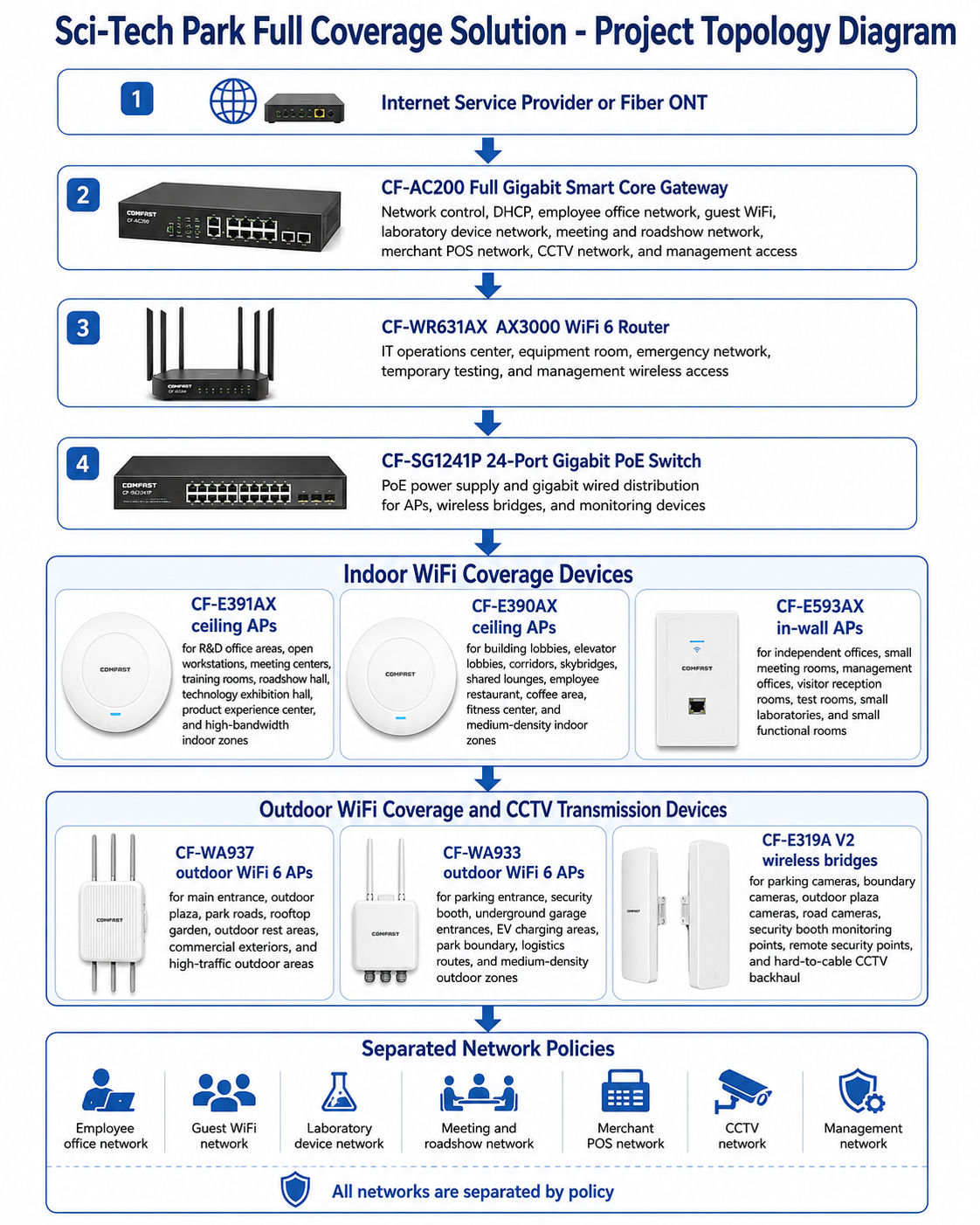
6. Project Topology Diagram
7. Site Survey and Troubleshooting Process
We began the project by walking the full sci-tech park with the operations manager, property IT supervisor, security supervisor, R&D tenant representatives, lab managers, event manager, exhibition hall manager, and maintenance lead. The goal was to understand real usage patterns before placing any equipment.
At the main entrance and visitor center, we tested visitor registration tablets, badge printers, QR code verification, staff devices, guest WiFi load, and access gate response time. We confirmed that visitor registration and access control needed a more stable network policy.
In the R&D office areas, we measured signal strength, user density, client count, roaming behavior, and throughput during both normal office hours and late-afternoon high-concurrency periods. The R&D office problem was mainly caused by device density and network sharing, not only low signal level.
In meeting rooms and training rooms, we tested video conferencing, screen sharing, wireless presentation devices, and attendee device density. Several rooms required dedicated AP placement rather than relying on nearby open-office APs.
The roadshow hall was tested according to event seating layouts, speaker areas, check-in positions, media recording points, and investor audience areas. We treated it as a high-density event zone rather than a standard room.
The technology exhibition hall and product experience center were tested with demo equipment, display terminals, visitor phones, staff tablets, and cloud-connected product devices. Demo devices required stable access and should not be affected by guest WiFi load.
For laboratories and test rooms, we interviewed lab managers and confirmed which devices required isolation. Test instruments, prototype devices, IoT terminals, and monitoring systems were separated from employee office and guest WiFi traffic.
In employee restaurants, coffee areas, and shared lounges, we observed lunch and afternoon break traffic. These zones had long dwell time and concentrated mobile usage, so AP placement and capacity planning had to match the real user pattern.
In building lobbies, elevator lobbies, corridors, and skybridges, we tested roaming behavior. Many users moved while on calls or using enterprise apps, so roaming continuity was important.
In the underground garage and EV charging area, we tested signal attenuation around concrete pillars, ramps, fire doors, parked vehicles, charging equipment, and turning corners. This area required targeted coverage rather than simply increasing AP transmit power.
For outdoor areas, we tested the main entrance, outdoor plaza, park roads, rooftop garden, outdoor rest areas, commercial exteriors, security booths, and logistics routes. Outdoor AP positions were selected according to user movement, mounting safety, cable routes, and maintenance access.
For CCTV wireless transmission, we checked parking cameras, boundary cameras, outdoor plaza cameras, road cameras, security booth monitoring points, and remote security positions. Each CF-E319A V2 bridge link was evaluated for line of sight, mounting height, obstruction, cable protection, power access, and long-term serviceability.
8. Problems Found During Implementation
The old system was not designed for multi-building, multi-tenant, multi-service operation. It expanded gradually from office WiFi and could not properly support R&D offices, laboratories, events, visitor systems, merchant POS, CCTV, and outdoor coverage at the same time.
R&D office areas had too many concurrent devices. Simply adding one more router would not solve the problem. We used CF-E391AX APs and adjusted channel planning, AP spacing, and network policy to improve capacity.
The roadshow hall and exhibition hall required event-density planning. We planned coverage around audience seating, demo booths, speaker stage, check-in points, and temporary event devices.
Laboratory equipment needed clear separation. Test instruments, prototype devices, and IoT equipment were placed on a dedicated laboratory device network instead of being mixed with employee and guest traffic.
Visitor registration, turnstiles, and merchant POS devices could not share the same policy as guest WiFi. These business devices were placed on controlled network segments to avoid public traffic interference.
The underground garage required special RF planning. Concrete structures, vehicles, ramps, and fire doors caused coverage breaks. We tested actual routes and installed coverage where users and devices really needed it.
Outdoor areas could not rely on indoor AP signal leakage. We used CF-WA937 and CF-WA933 outdoor APs for stable coverage in plazas, roads, rooftop gardens, parking entrances, security booths, and outdoor rest areas.
Remote cameras were not practical to cable. For boundary, road, parking, and plaza cameras, CF-E319A V2 wireless bridges provided CCTV backhaul without trenching, road cutting, or interrupting park operations.
Construction had to avoid enterprise office work, lab testing, meetings, exhibitions, product demos, and vehicle traffic. We used phased construction, low-traffic windows, and daily coordination with property management and tenant representatives.
9. Final Engineering Solution
The CF-AC200 was deployed as the central smart core gateway. It handled DHCP, network control, traffic policy, and segmentation for employee office, guest WiFi, laboratory device, meeting and roadshow, merchant POS, CCTV, and management networks.
The CF-WR631AX was installed in the IT operations center and equipment room to provide authorized management wireless access, emergency network support, temporary testing, and maintenance tool connectivity.
The CF-SG1241P 24-port gigabit PoE switch provided centralized PoE power and gigabit wired distribution for APs, outdoor APs, wireless bridges, and monitoring devices. This reduced local adapters and made maintenance easier across multiple buildings.
CF-E391AX ceiling APs were deployed in high-bandwidth and high-density indoor areas such as R&D offices, open workstations, meeting centers, training rooms, roadshow halls, exhibition halls, and product experience areas.
CF-E390AX ceiling APs were deployed in medium-density areas including building lobbies, elevator lobbies, corridors, skybridges, shared lounges, employee restaurants, coffee areas, and fitness center spaces.
CF-E593AX in-wall APs were used in independent offices, small meeting rooms, management offices, visitor reception rooms, test rooms, small laboratories, and small functional spaces where room-level coverage was required.
CF-WA937 outdoor APs covered high-traffic outdoor areas such as the main entrance, outdoor plaza, park roads, rooftop garden, outdoor rest areas, and commercial support exterior zones.
CF-WA933 outdoor APs covered operational outdoor areas including parking entrances, security booths, underground garage exits, EV charging zones, park boundaries, logistics routes, and medium-density outdoor support areas.
CF-E319A V2 wireless bridges were used for CCTV backhaul from hard-to-cable camera points, including parking cameras, boundary cameras, outdoor plaza cameras, road cameras, security booth monitoring points, and remote security points.
10. Different Area Network Design
Main Entrance and Visitor Center Coverage: The main entrance and visitor center used outdoor AP coverage at the approach area and indoor AP coverage for registration counters. Visitor registration devices and badge printers were separated from guest WiFi.
Access Gate and Turnstile Network: Turnstiles, QR code scanners, access control terminals, and guard devices were placed on controlled network policies to reduce scanning delays during morning entry peaks.
Enterprise Office Building Coverage: Office buildings used a combination of CF-E391AX and CF-E390AX APs. High-density work zones received higher-capacity AP planning, while lobbies and corridors received medium-density coverage.
R&D Office Area Coverage: R&D offices used CF-E391AX APs to support laptops, phones, tablets, development boards, test terminals, and cloud collaboration traffic. AP placement was based on actual workstation density.
Open Workstation Area Coverage: Open work areas were treated as high-concurrency zones. We tuned channel and power levels to reduce interference and improve roaming between desk clusters and meeting pods.
Independent Office Coverage: CF-E593AX in-wall APs provided room-level coverage for independent offices and management offices. This avoided weak signal behind glass partitions and thick walls.
Meeting Room Coverage: Meeting rooms used CF-E593AX in-wall APs or nearby CF-E391AX ceiling APs depending on room size. Video conferencing and wireless presentation were tested during acceptance.
Training Room Coverage: Training rooms used capacity-based AP placement because users often joined online platforms, shared files, and used multiple devices during training sessions.
Roadshow Hall Coverage: The roadshow hall used CF-E391AX APs and a dedicated meeting and roadshow network. This protected presentation systems, guest devices, media devices, and event check-in tools during high-density events.
Technology Exhibition Hall Coverage: The exhibition hall used CF-E391AX APs to support visitors, display devices, product demonstration terminals, staff tablets, and event traffic. Demo devices were separated from guest WiFi where required.
Product Experience Center Network: Product experience areas required stable connectivity for interactive displays and prototype devices. These devices were assigned to controlled policies instead of ordinary public WiFi.
Laboratory and Test Room Network: Laboratories and test rooms used dedicated laboratory device network access. CF-E593AX in-wall APs and selected CF-E391AX ceiling APs were used based on room size and test equipment layout.
Server Room Maintenance Network: The server room maintenance area used controlled management wireless access through the CF-WR631AX. Access was limited to authorized IT engineers and maintenance staff.
Employee Restaurant Coverage: The employee restaurant used CF-E390AX APs. Lunch peak density and long dwell time were considered during AP placement and acceptance testing.
Coffee Area Coverage: Coffee areas and casual collaboration zones used CF-E390AX APs to support employee devices, visitor devices, and merchant POS separation.
Shared Lounge Coverage: Shared lounges were planned for longer user dwell time. AP placement supported video calls, mobile work, and casual meetings.
Fitness Center Coverage: The fitness center used CF-E390AX APs. AP positions considered mirrors, metal equipment, user movement, and employee mobile devices.
Commercial Supporting Area POS Network: Merchants used a separated merchant POS network for payment terminals, ordering tablets, receipt printers, and back-office devices. Guest WiFi traffic was isolated from merchant transactions.
Building Lobby Coverage: Building lobbies used CF-E390AX APs for visitor WiFi, employee access, access-related service devices, and public waiting areas.
Elevator Lobby Coverage: Elevator lobbies required stable roaming during short-stay movement. AP power was adjusted to avoid sticky-client behavior between lobby and corridor zones.
Corridor and Skybridge Coverage: Corridors and skybridges used CF-E390AX APs to maintain continuity between buildings and shared work areas.
Rooftop Garden Coverage: The rooftop garden used CF-WA937 outdoor APs. Coverage focused on seating areas, walking paths, outdoor meeting points, and service zones.
Outdoor Plaza Coverage: The outdoor plaza was treated as a high-traffic outdoor zone for visitors, employees, public events, and product activities. CF-WA937 APs provided dedicated outdoor coverage.
Park Road Coverage: Park roads used outdoor APs for patrol staff, maintenance teams, campus shuttle operations, and public service access.
Underground Garage Coverage: Underground garage coverage was designed around vehicle routes, ramps, pillars, EV charging points, and camera locations. We avoided treating the garage as a simple rectangular area.
Parking Entrance Coverage: Parking entrances used CF-WA933 APs and CF-E319A V2 bridge links to support vehicle monitoring, staff devices, access systems, and CCTV transmission.
EV Charging Area Coverage: EV charging areas required stable connectivity for charging management devices, maintenance tools, and staff access. CF-WA933 APs were selected for this operational zone.
Security Booth Coverage: Security booths used controlled network access for guard devices, monitoring terminals, visitor coordination, and emergency communication.
Park Boundary Coverage: Park boundaries used outdoor APs and bridge links to support security patrol, boundary cameras, and maintenance activities.
Remote CCTV Wireless Bridge Backhaul: CF-E319A V2 bridges connected remote CCTV points without trenching across roads, landscaping, parking entrances, or tenant operation areas.
11. Indoor and Outdoor AP Installation Details
Indoor APs were installed according to ceiling height, office layout, workstation density, glass partitions, meeting room walls, exhibition structures, cable routes, and maintenance access. In tenant-facing areas, installation had to look clean and professional.
High-density areas used more careful AP spacing and transmit power tuning. We did not solve the project by setting every AP to maximum power. In a multi-building sci-tech park, excessive AP power can create interference and sticky-client behavior.
In-wall APs were installed in rooms that needed dedicated coverage, including small meeting rooms, independent offices, test rooms, and small laboratories. This prevented hallway APs from being overused to cover enclosed rooms.
Outdoor APs were mounted according to real pedestrian flow, road direction, outdoor seating, plaza activity, rooftop layouts, commercial storefronts, and security zones. Device height and angle were selected for coverage, safety, and serviceability.
Underground garage installation required careful cable protection and equipment positioning. We avoided locations where vehicles, maintenance equipment, or low ceiling structures could damage APs or cables.
Every AP, wireless bridge, and key switch port was labeled. We cleaned weak current rooms, updated port records, documented bridge directions, and provided a topology record for the property IT team.
12. Wireless Bridge Transmission Design
Parking entrance cameras used CF-E319A V2 wireless bridges to avoid road cutting and vehicle lane interruption. The links were tested during normal traffic and evening vehicle peaks.
Park boundary cameras were far from the nearest weak current room. Wireless bridge links allowed CCTV return without trenching through landscaped areas or perimeter structures.
Outdoor plaza cameras required stable backhaul for event monitoring, visitor safety, and public area management. CF-E319A V2 bridge links were aligned and tested from the monitoring room.
Park road cameras were connected through wireless bridge links where new cable routes would have crossed roads and logistics paths. This reduced construction impact and shortened deployment time.
Security booth monitoring points used wireless bridge backhaul for selected camera feeds and remote points. Each link was checked for video continuity, latency, night monitoring quality, and alignment stability.
13. Network Segmentation and Security Design
Employee Office Network: The employee office network supported enterprise tenants, office laptops, collaboration devices, staff phones, internal business systems, and shared workspaces. It was separated from guest WiFi and CCTV traffic.
Guest WiFi Network: The guest WiFi network served visitors, event attendees, interviewees, partners, and public users. It provided internet access without exposing employee, laboratory, POS, CCTV, or management systems.
Laboratory Device Network: The laboratory device network supported test instruments, prototype devices, IoT terminals, lab monitoring equipment, and selected R&D devices. This network was isolated from general office and guest traffic.
Meeting and Roadshow Network: The meeting and roadshow network supported conference devices, training room systems, roadshow presentation equipment, exhibition demo devices, and event operation tools.
Merchant POS Network: The merchant POS network supported coffee shops, convenience stores, restaurants, and supporting commercial tenants. POS terminals, ordering tablets, and printers were isolated from guest WiFi.
CCTV Network: The CCTV network carried video traffic from wired cameras and CF-E319A V2 wireless bridge links. Keeping camera traffic separate improved monitoring stability and simplified troubleshooting.
Management Network: The management network was reserved for the core gateway, router, PoE switch, APs, wireless bridges, and authorized maintenance devices. Access was limited to property IT and approved engineering staff.
14. What We Did Differently from Other Engineering Teams
We did not simply extend property office WiFi across the park. A sci-tech park needs separate planning for employees, visitors, labs, meetings, events, merchants, CCTV, and management devices.
We did not rely only on signal bars. We tested R&D concurrency, roadshow density, lab device isolation, visitor registration, POS transactions, underground garage coverage, and CCTV backhaul stability.
We did not blindly increase transmit power. We tuned AP placement, channel plans, power levels, roaming behavior, and overlap to reduce interference and improve real user experience.
We did not mix employee office traffic, guest WiFi, lab devices, event systems, merchant POS, cameras, and management equipment in one flat network. Network segmentation was part of the design from the beginning.
We did not trench or pull long cable routes blindly. Where CCTV cabling would affect roads, parking, landscaping, or tenant operation, we used CF-E319A V2 wireless bridges for efficient camera backhaul.
We did not interrupt normal business. Construction was scheduled around enterprise office hours, lab testing, meetings, roadshows, exhibition reception, and vehicle traffic.
We did not leave a messy weak current room behind. The customer received AP maps, switch port labels, bridge alignment records, topology notes, and maintenance guidance.
15. Project Acceptance Results
Main entrance and visitor center WiFi test passed.
Access gate and turnstile network test passed.
Enterprise office building coverage test passed.
R&D office area concurrency test passed.
Open workstation peak-load test passed.
Meeting room video conference test passed.
Training room network test passed.
Roadshow hall high-density event test passed.
Technology exhibition hall demo device test passed.
Product experience center network test passed.
Laboratory device isolation test passed.
Server room maintenance network test passed.
Employee restaurant peak test passed.
Coffee area and shared lounge coverage test passed.
Merchant POS transaction test passed.
Building lobby and elevator lobby roaming test passed.
Corridor and skybridge continuity test passed.
Rooftop garden WiFi test passed.
Outdoor plaza WiFi test passed.
Park road coverage test passed.
Underground garage WiFi test passed.
EV charging area network test passed.
CF-E319A V2 wireless bridge CCTV backhaul test passed.
Employee office, guest WiFi, laboratory device, meeting and roadshow, merchant POS, CCTV, and management network isolation test passed.
Device labels, AP map, bridge alignment records, switch port map, topology diagram, and IT handover completed.
16. Customer and User Feedback
Sci-Tech Park Operations Manager Feedback: “The new network finally matches how the park actually operates. Visitor registration, office work, roadshows, labs, restaurants, outdoor areas, and CCTV are now managed as separate but coordinated services.”
Property IT Supervisor Feedback: “The AP records, port labels, bridge alignment notes, and topology map make daily maintenance much easier. We no longer need to guess which device is connected to which port.”
Enterprise Tenant Representative Feedback: “The R&D office network is more stable during busy hours. Video calls and collaboration tools perform better than before.”
R&D Team Leader Feedback: “Our development devices and laptops stay connected more consistently, especially in open work areas and meeting rooms.”
Lab Manager Feedback: “The laboratory device network is much clearer now. Test devices and prototype equipment are no longer mixed with guest traffic.”
Event Manager Feedback: “Roadshow events run more smoothly. Presentation devices, guest access, and event check-in tools are more stable during high-density sessions.”
Exhibition Hall Manager Feedback: “Product demo devices are more reliable, and visitors can connect without affecting our display equipment.”
Merchant Representative Feedback: “POS transactions are more reliable during lunch and event days. Payment delays have dropped noticeably.”
Security Supervisor Feedback: “Camera feeds from parking entrances, park roads, and boundary points became more stable after the wireless bridge upgrade.”
Employee User Feedback: Employees reported smoother WiFi in open offices, meeting rooms, restaurants, coffee areas, rooftop garden, and building lobbies.
Maintenance Technician Feedback: The maintenance team appreciated the labeled APs, clear switch port records, and service-friendly installation positions across equipment rooms, garages, and outdoor areas.
17. Project Summary
Project Horizon Tech Valley Network was a successful Sci-Tech Park Full Coverage Solution. The project solved slow visitor registration, unstable access gate scanning, R&D office congestion, meeting room video issues, roadshow hall overload, exhibition demo instability, laboratory network mixing, restaurant and coffee area congestion, underground garage signal loss, outdoor coverage gaps, merchant POS instability, remote CCTV backhaul problems, and incomplete network documentation.
The final COMFAST solution used the CF-AC200 full gigabit smart core gateway, CF-SG1241P 24-port gigabit PoE switch, CF-WR631AX AX3000 WiFi 6 router, CF-E391AX ceiling APs, CF-E390AX ceiling APs, CF-E593AX in-wall APs, CF-WA937 outdoor APs, CF-WA933 outdoor APs, and CF-E319A V2 wireless bridges. This combination supported employee office WiFi, guest WiFi, laboratory device isolation, meeting and roadshow networks, merchant POS stability, CCTV wireless backhaul, outdoor public coverage, underground garage coverage, and centralized maintenance.
The value of the project was not simply adding more APs. The real value was designing a technology campus network around R&D concurrency, laboratory isolation, visitor systems, roadshow density, exhibition stability, merchant payment reliability, outdoor campus coverage, CCTV backhaul, and long-term IT maintainability.
18. Lessons Learned and Advice to Other Contractors
Sci-tech park WiFi must be designed around multiple business systems, not only floor area.
R&D office areas require concurrency planning because employees use multiple devices and high-bandwidth collaboration tools.
Laboratory devices, prototype systems, and test rooms need dedicated network isolation.
Roadshow halls, training rooms, and exhibition halls must be planned for event density, not normal weekday usage only.
Visitor registration, access control, and merchant POS devices must not rely on guest WiFi conditions.
Underground garages and EV charging zones need real RF testing because concrete, vehicles, ramps, and fire doors change signal behavior.
Outdoor plazas, park roads, rooftop gardens, and security booths need dedicated outdoor AP coverage.
Wireless bridges are effective for remote CCTV points where cabling would interrupt roads, landscaping, or tenant operations.
Professional handover must include AP maps, bridge records, switch port labels, topology notes, network segmentation notes, and maintenance guidance.
For sci-tech park projects, do not design only from architectural drawings. Walk the visitor center, office buildings, R&D areas, labs, meeting rooms, roadshow halls, exhibition halls, restaurants, garages, outdoor plazas, park roads, rooftops, security booths, and CCTV points. The network must follow how employees, visitors, tenants, merchants, security teams, and maintenance staff actually use the campus.
Do not solve every issue by increasing AP transmit power. In a multi-building campus, excessive power causes interference, sticky clients, and unstable roaming. Correct AP placement, channel planning, power tuning, business segmentation, and acceptance testing are more important.
Do not mix employee office traffic, guest WiFi, laboratory devices, meeting systems, merchant POS, cameras, and management devices in one flat network. A professional sci-tech park network must protect critical systems from public traffic and unnecessary broadcast noise.
A Sci-Tech Park Full Coverage Solution is complete only when employees work smoothly, visitors register quickly, access gates scan reliably, laboratories stay isolated, roadshows run steadily, exhibition demos remain online, POS transactions are stable, CCTV cameras transmit clearly, and the property IT team can maintain the system confidently. That was the standard we delivered for Project Horizon Tech Valley Network.