










Project CareCenter Monitoring Upgrade: Hospital Monitoring Solution for a Private Medical Center in Dubai
Contractor Team Introduction
We are a local WiFi and security monitoring transmission engineering contractor serving hospitals, private medical centers, clinics, rehabilitation facilities, office towers, hotels, shopping centers, parking facilities, and multi-building campuses across the UAE market. Our team has extensive experience in hospital CCTV upgrades, emergency department camera backhaul, outpatient hall monitoring, pharmacy and cashier area surveillance, basement parking CCTV, cross-building wireless transmission, fire control room integration, PoE-powered camera systems, weak-current room organization, NVR security monitoring center deployment, and controlled management WiFi for medical operations teams.
A Hospital Monitoring Solution is very different from a normal commercial CCTV project. Hospitals operate around the clock. Emergency access cannot be blocked. Ambulance lanes must stay open. Outpatient and registration areas have strong traffic peaks. Pharmacy, cashier, and waiting areas require clear playback. Inpatient corridors need stable recording without violating privacy boundaries. Basement parking, logistics passages, and remote perimeter points are often difficult to cable. A professional hospital monitoring project must protect medical workflow, patient movement, emergency response, fire access, network stability, NVR recording continuity, and future maintenance efficiency.
Our team has used COMFAST equipment in many hospital, medical campus, office, public service, logistics, parking, and outdoor wireless transmission projects. From field experience, COMFAST gateways, PoE switches, WiFi 6 routers, ceiling APs, in-wall APs, outdoor APs, and wireless bridges are practical for hospital environments because they support stable CCTV backhaul, centralized PoE power, controlled management WiFi, cross-building transmission, outdoor monitoring return, and clear network segmentation. For this project, we selected COMFAST CF-AC200 full gigabit smart core gateway, CF-SG1241P 24-port gigabit PoE switch, CF-WR630AX WiFi 6 router, CF-E391AX ceiling APs, CF-E395AX ceiling APs, CF-E591AX in-wall APs, CF-WA937 outdoor WiFi 6 APs, CF-E312A V2 5.8G wireless bridges, CF-E113A V2 5.8G wireless bridges, and CF-E319A V3 long-distance wireless bridges.
1. Project Overview
Project Name: Project CareCenter Monitoring Upgrade
Project Location: Dubai Healthcare City, Dubai, United Arab Emirates
Hospital Type: Private multi-specialty medical center with outpatient clinics, emergency department, inpatient ward floors, imaging center, laboratory zone, pharmacy, infusion area, day surgery public corridors, rehabilitation area, administrative offices, basement parking, ambulance entrance, logistics passages, and outdoor hospital roads
Buildings Included: 4 main buildings and 1 auxiliary logistics building
Floor Count: 2 basement levels and up to 16 above-ground floors
Average Outpatient Visits: Around 3,200 visits per day
Average Emergency Visits: Around 360 emergency visits per day
Hospital Beds: 420 beds
CCTV Cameras Included in Upgrade: 142 cameras
Remote Cameras Requiring Wireless Backhaul: 35 cameras
NVR Location: Hospital security monitoring center on the ground floor of the operations building
Fire Control Room Location: Ground floor fire command room beside the emergency coordination office
Main Monitoring Areas: Outpatient hall, registration and cashier area, pharmacy pickup area, waiting areas, emergency hall, emergency rescue channel, ambulance entrance, inpatient public corridors, nurse station public areas, surgery area outer corridors, ICU outer public areas, laboratory public areas, imaging center public areas, infusion area, rehabilitation public area, fire control room access, security office, main entrance, gatehouse, parking area, basement garage, elevator halls, logistics passages, medical waste temporary storage passage, hospital roads, cross-building corridors, remote perimeter, and temporary screening point
Project Goal: Build a reliable hospital CCTV monitoring system with stable video backhaul, continuous NVR recording, cross-building wireless transmission, outdoor CCTV return, controlled management WiFi, organized weak-current cabinets, separated CCTV and management networks, and professional documentation for hospital operations and security teams.
2. Customer Pain Points Before the Project
The outpatient hall camera feeds became choppy during morning registration and afternoon clinic peaks. Live preview could open, but playback showed short freezes when many cameras were returning video to the NVR at the same time.
Emergency rescue channel cameras had unstable backhaul. This was a high-risk area because stretchers, nurses, doctors, patients, and emergency equipment moved through the corridor continuously. The hospital needed uninterrupted monitoring without any construction method that blocked movement.
Ambulance entrance cameras occasionally dropped offline during evening shift changes and outdoor weather changes. The old cable routes were exposed near vehicle lanes, and several camera points were not protected well enough for long-term use.
Inpatient public corridor cameras recorded inconsistently in several floors. Cameras were online, but the NVR playback had short missing segments during night rounds and visiting-hour periods.
Pharmacy pickup and cashier window footage had occasional frame loss. These areas required clear and reliable playback for service review, payment verification, queue management, and security checks.
Basement parking and remote parking cameras were unstable. Thick concrete walls, long cable paths, parking lanes, and limited weak-current access made traditional cabling difficult and disruptive.
Logistics passages, remote perimeter cameras, and the far gatehouse cameras had unstable backhaul. Some camera points were added over several phases without a clean topology, so the hospital maintenance team could not quickly identify the actual transmission path.
Cross-building CCTV transmission was unclear. Some old links passed through weak-current cabinets, temporary switches, and undocumented uplinks, which made troubleshooting slow during hospital operation.
Several wireless bridge links used overlapping channels. Parking, gatehouse, logistics passage, temporary screening point, and perimeter camera links interfered with each other during simultaneous video return.
CCTV traffic and hospital office traffic were mixed in some cabinets. This increased congestion risk and made it difficult to separate camera faults from office network issues.
Weak-current cabinets and the monitoring center rack had unclear labels. Cameras, APs, wireless bridges, uplinks, PoE ports, and older adapters were not organized well enough for a hospital that must remain operational 24/7.
3. Customer Requirements
Provide stable CCTV video backhaul for the outpatient hall, registration and cashier area, pharmacy pickup area, waiting areas, emergency hall, emergency rescue channel, ambulance entrance, inpatient corridors, nurse station public areas, surgery area outer corridors, ICU outer public areas, laboratory public areas, imaging center public areas, infusion area, rehabilitation public area, fire control room, security monitoring center, main entrance, gatehouse, parking areas, basement garage, elevator halls, logistics passages, medical waste temporary storage passage, hospital roads, cross-building corridors, remote perimeter, and temporary screening point.
Support continuous NVR recording, live preview, playback search, remote review, day video, night infrared video, and emergency incident review.
Use wireless bridge transmission where new cabling would affect ambulance movement, hospital roads, completed landscaping, basement routes, cross-building corridors, remote gatehouses, or temporary screening points.
Separate CCTV network, hospital office network, management WiFi, fire control access, and device management access by policy.
Provide limited management WiFi for security staff, IT operations, engineering duty staff, fire control room operators, nurse station management terminals, and temporary commissioning engineers.
Use centralized PoE power for cameras, wireless bridges, ceiling APs, in-wall APs, outdoor APs, and monitoring devices where practical.
Organize weak-current cabinets and the monitoring center rack with clear labels, device records, switch port maps, camera point names, and wireless bridge direction documentation.
Complete construction without affecting outpatient registration, emergency rescue, ambulance routes, patient movement, medical staff work, fire exits, hospital roads, night duty, and hospital order.
Project handover must include topology diagram, device labels, camera point list, AP location list, wireless bridge direction records, switch port map, channel planning notes, and acceptance test results.
4. COMFAST Equipment Used in This Project
The following are the main COMFAST equipment models used in this project and their usage descriptions.
| Equipment Model |
Type | Project Use | Reason for Use |
|---|---|---|---|
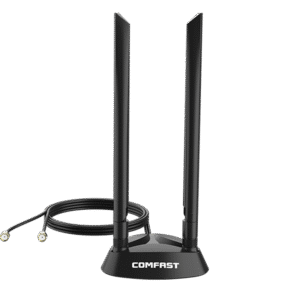
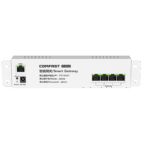
| CF-AC200 | Full gigabit smart core gateway | Hospital CCTV network access, DHCP, NVR integration, medical area network policy, maintenance access, and centralized management | Suitable as the hospital monitoring network core gateway, separating CCTV video traffic from office, medical, guest, and management networks |
| CF-SG1241P | 24-port gigabit PoE switch | PoE power supply and gigabit aggregation for cameras, APs, wireless bridges, and monitoring devices | Centralized PoE deployment reduces scattered adapters, improves weak-current room management, and makes hospital maintenance easier |
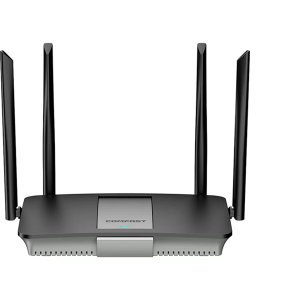
| CF-WR633AX V2 | WiFi 6 dual-band router | Monitoring room, IT office, emergency maintenance access, temporary commissioning, and authorized management wireless access | Provides controlled WiFi 6 access for hospital IT staff, security staff, and maintenance engineers without mixing with public or medical networks |
| CF-WA937 | Outdoor WiFi 6 AP | Outdoor maintenance WiFi for hospital entrance, ambulance lane, parking area, emergency access road, security booth, and patrol routes | Supports outdoor maintenance and security operations, allowing staff to check camera return, bridge signal, and NVR connectivity on site |
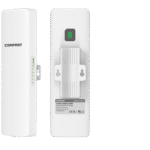
| CF-E312A V2 | 5.8G wireless bridge | CCTV wireless backhaul for outpatient entrance cameras, parking cameras, emergency lane cameras, inpatient building exterior cameras, and medium-distance monitoring points | Avoids trenching through hospital roads, pedestrian paths, landscaped areas, and operating zones while maintaining stable video transmission |
| CF-E113A V2 | 5.8G wireless bridge | Higher-stability CCTV links for emergency center exterior, far-side parking cameras, hospital boundary cameras, and remote security monitoring points | Used for critical hospital security links requiring stronger stability, better alignment, and reliable NVR recording continuity |
| CF-E319A V3 | Long-distance wireless bridge | Long-distance CCTV backhaul for remote parking areas, hospital perimeter cameras, logistics entrance cameras, and cross-building monitoring points | Suitable for long-distance hospital security monitoring where direct Ethernet cabling is difficult or disruptive |
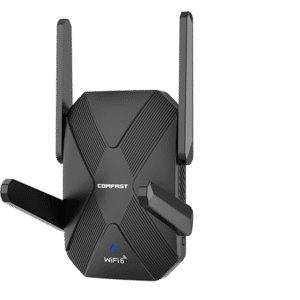
| CF-E112N V2 | Wireless bridge | Short-distance auxiliary backhaul for nearby corridor cameras, entrance cameras, temporary monitoring points, and small-area CCTV links | Practical for compact short-distance camera links where long-distance bridge devices are not necessary |
5. Project Equipment Configuration Quantity
Based on the hospital campus structure, outpatient building, inpatient building, emergency center, parking areas, ambulance lane, security booths, logistics entrance, hospital perimeter, CCTV monitoring room, and remote camera backhaul requirements, the recommended equipment configuration for this project was as follows:
| Equipment Model | Quantity | Deployment Location |
|---|---|---|
| CF-AC200 | 1 unit | Hospital main monitoring room, used as the core gateway for CCTV access, NVR integration, DHCP, maintenance access, and centralized management |
| CF-SG1241P | 6 units | Main monitoring room, outpatient building distribution point, inpatient building distribution point, emergency center distribution point, parking area distribution box, and hospital perimeter distribution point for PoE power, camera aggregation, AP connection, bridge connection, uplink ports, and maintenance reserve |
| CF-WR633AX V2 | 2 units | Monitoring room and IT office for authorized management wireless access, temporary commissioning, emergency network access, and maintenance tool connectivity |
| CF-WA937 | 6 units | Hospital entrance, ambulance lane, parking area, emergency access road, security booth, logistics entrance, patrol routes, and selected outdoor maintenance zones |
| CF-E312A V2 | 10 pairs | Outpatient entrance cameras, parking cameras, emergency lane cameras, inpatient building exterior cameras, security booth cameras, and medium-distance CCTV backhaul links |
| CF-E113A V2 | 8 pairs | Emergency center exterior cameras, far-side parking cameras, hospital boundary cameras, remote security points, and higher-priority CCTV backhaul links |
| CF-E319A V3 | 4 pairs | Remote parking cameras, hospital perimeter cameras, logistics entrance cameras, cross-building monitoring points, and hard-to-cable long-distance CCTV links |
| CF-E112N V2 | 4 pairs | Nearby corridor cameras, entrance auxiliary cameras, short-distance temporary monitoring points, and compact CCTV backhaul locations |
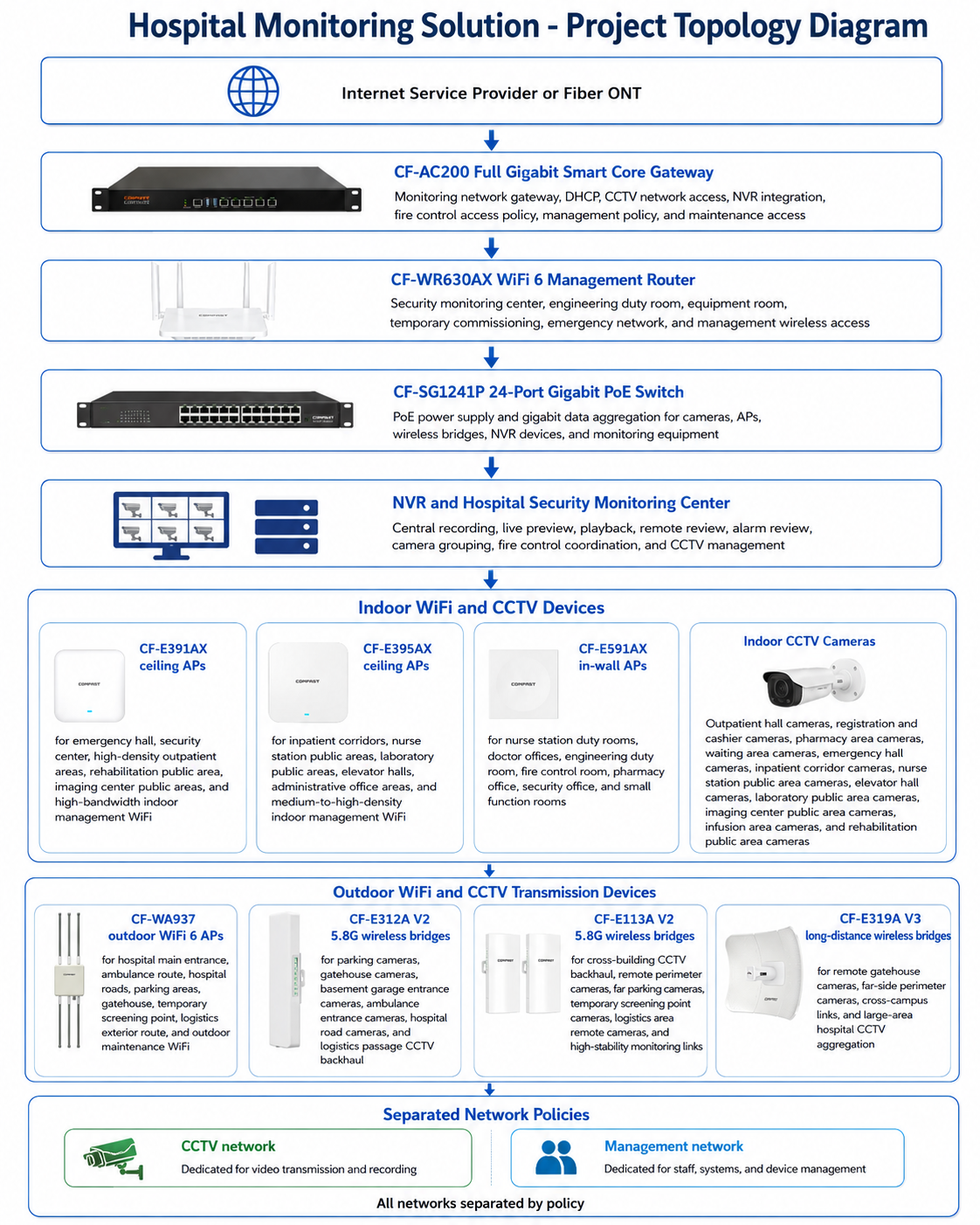
6. Project Topology Diagram
7. Site Survey and Troubleshooting Process
We started the project with a full hospital walkthrough together with the hospital operations director, security supervisor, IT supervisor, emergency department coordinator, fire control room operator, parking manager, nursing department representative, pharmacy manager, logistics supervisor, and maintenance engineer. We followed the actual patient and staff routes from the main entrance to registration, from emergency entrance to rescue channel, from outpatient hall to pharmacy, from inpatient corridors to nurse station public areas, and from basement parking to elevator halls.
In the outpatient hall, we tested camera streams during registration peaks and checked viewing angles for queue management, reception counters, self-service terminals, and waiting areas. The area needed stable recording without disturbing patient movement.
At registration and cashier windows, we checked camera angles, playback clarity, network load, privacy boundaries, and NVR search performance. These points required clear incident review and stable frame continuity.
In the pharmacy pickup area, we tested camera coverage for pickup windows, queue areas, and staff service points. Playback quality in this area had to be reliable because it is frequently used for service verification.
In the emergency hall and rescue channel, we tested video return without placing tools, ladders, or temporary cables in patient routes. The emergency corridor had to remain fully open throughout the project.
At the ambulance entrance, we checked camera position, bridge line of sight, vehicle obstruction, weather exposure, lighting conditions, and cable protection. Work here was scheduled during approved low-traffic periods and coordinated with emergency department staff.
In inpatient public corridors, nurse station public areas, elevator halls, and visitor areas, we tested camera view, video return, and privacy boundaries. Cameras were adjusted to monitor public areas rather than patient rooms or private treatment spaces.
In surgery area outer corridors and ICU outer public areas, we coordinated with department managers before any work. The project focused on public corridor monitoring and did not interfere with sterile areas or clinical procedures.
In laboratory and imaging center public areas, we checked cable routes, equipment room distance, camera placement, and management WiFi requirements. Construction had to avoid medical equipment operation and patient examination schedules.
In the basement garage, we tested camera backhaul, parking lane obstruction, elevator hall video, thick wall influence, and cable route difficulty. Wireless bridges were selected for several hard-to-cable camera points.
For gatehouse, hospital roads, logistics passages, medical waste temporary storage passage, remote perimeter, and temporary screening point, we confirmed line of sight, bridge mounting height, power source, waterproofing, and maintenance access.
In the security monitoring center and fire control room, we checked NVR channels, camera grouping, playback records, remote review settings, alarm review workflow, existing switch ports, uplinks, and fire control coordination needs.
We also inspected weak-current cabinets and equipment rooms. We recorded existing camera names, uplinks, AP locations, bridge links, PoE loads, field boxes, and cable labels before redesigning the final topology.
8. Problems Found During Implementation
Camera dropouts were not caused by camera failure alone. The actual causes included unstable PoE power, overloaded uplinks, unclear weak-current cabinet routing, poor wireless bridge direction, and same-channel interference.
Emergency and ambulance routes could not use temporary cabling that affected movement. Wireless backhaul was a better option for selected camera points because it reduced cable crossing and construction disturbance.
Cross-building cameras were better suited to wireless bridge return than unclear old uplinks. CF-E113A V2 and CF-E319A V3 links were used for stable cross-building and far-side CCTV return.
Wireless bridges could not be mounted randomly at low positions or inside cluttered equipment corners. Building walls, trees, vehicles, equipment boxes, ambulance lanes, and metal structures could all block the link. We adjusted bridge height and direction based on line of sight and maintenance access.
Multiple bridge links could not share one channel. We grouped links by gatehouse, parking, cross-building, hospital road, logistics passage, remote perimeter, and temporary screening point to reduce interference and packet loss.
Night infrared video required bandwidth margin. Hospital roads, gatehouse, parking, emergency entrance, and perimeter cameras were tested after dark to confirm stable recording and playback.
Hospital management WiFi could not be mixed with CCTV video traffic. We separated CCTV and management access by policy to protect NVR recording stability.
Weak-current cabinet devices needed structured mounting, independent power planning, clear labeling, and maintenance clearance. A hospital cannot rely on undocumented patch cables and loose adapters for security monitoring.
Construction had to avoid outpatient peaks, emergency department activity, ambulance movement, ward visiting peaks, fire inspection periods, night duty handover, and department work peaks. We used phased construction and strict site coordination.
9. Final Engineering Solution
The CF-AC200 was deployed as the core gateway for the hospital CCTV and management network. It provided DHCP, NVR integration, CCTV access, management policy, fire control access policy, and network separation.
The CF-SG1241P 24-port gigabit PoE switch was installed in the security monitoring center cabinet. It provided PoE power and gigabit aggregation for cameras, APs, wireless bridges, NVR devices, and monitoring equipment.
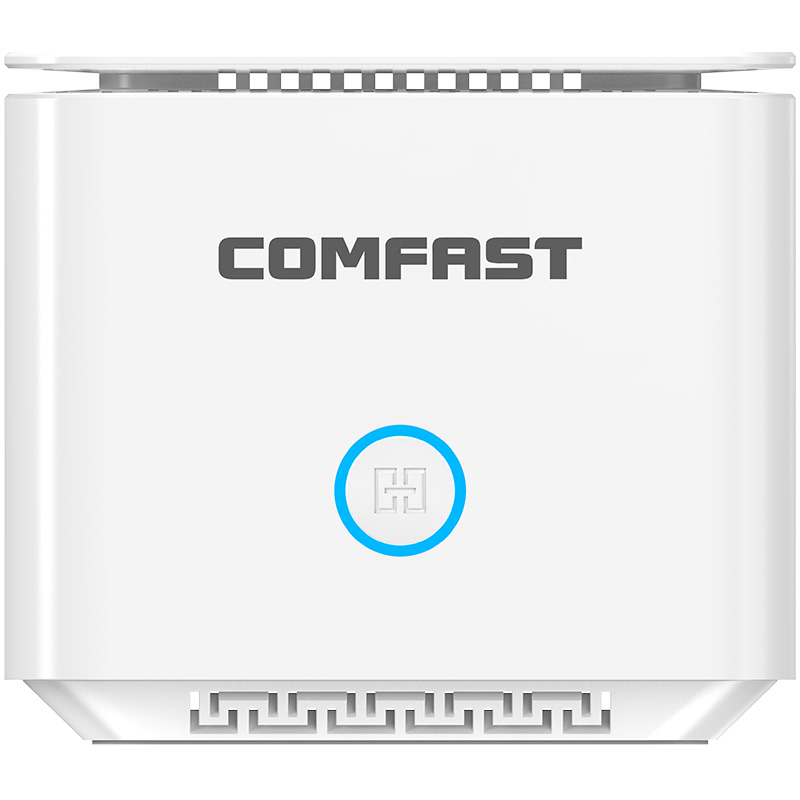
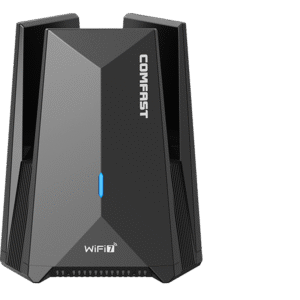
The CF-WR630AX WiFi 6 router provided controlled management wireless access in the security monitoring center, engineering duty room, and equipment room. It supported temporary commissioning and emergency maintenance access.
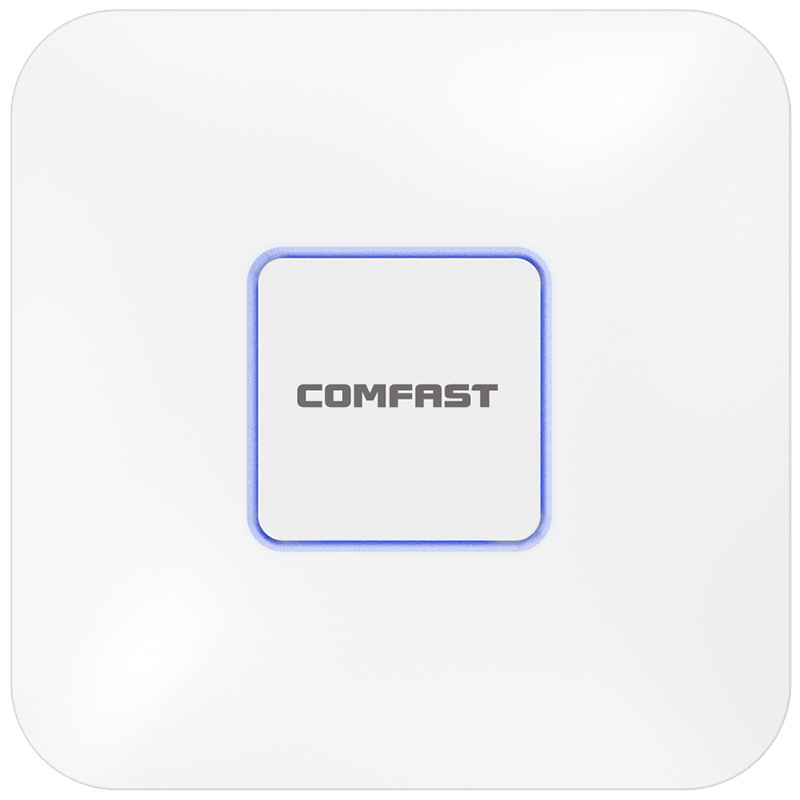
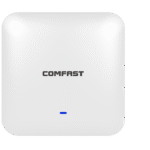
CF-E391AX ceiling APs were deployed in the emergency hall, security center, high-density outpatient areas, rehabilitation public area, and imaging center public areas for controlled high-bandwidth management WiFi.
CF-E395AX ceiling APs were deployed in inpatient corridors, nurse station public areas, laboratory public areas, elevator halls, administrative office areas, and other medium-to-high-density indoor management zones.
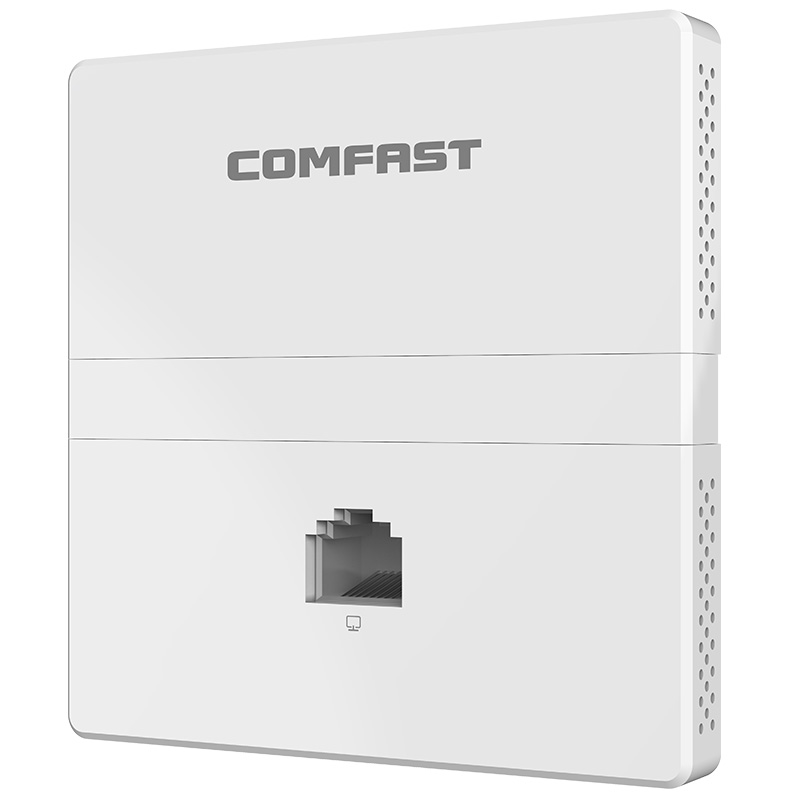
CF-E591AX in-wall APs were deployed in nurse station duty rooms, doctor offices, engineering duty room, fire control room, pharmacy office, security office, and small function rooms for room-level management access.
CF-WA937 outdoor APs were installed near the hospital main entrance, ambulance route, hospital roads, parking areas, gatehouse, temporary screening point, logistics exterior route, and outdoor maintenance zones.
CF-E312A V2 wireless bridges were used for parking cameras, gatehouse cameras, basement garage entrance cameras, ambulance entrance cameras, hospital road cameras, and logistics passage CCTV backhaul.
CF-E113A V2 wireless bridges were used for cross-building CCTV return, remote perimeter cameras, far parking cameras, temporary screening point cameras, logistics area remote cameras, and high-stability monitoring links.
CF-E319A V3 long-distance wireless bridges were deployed for remote gatehouse cameras, far-side perimeter cameras, cross-campus links, and large-area hospital CCTV aggregation points.
10. Different Area Monitoring and Backhaul Design
NVR Hospital Security Monitoring Center Network: The monitoring center became the central point for live preview, continuous recording, playback, remote review, alarm review, camera grouping, and fire control coordination. NVR channels were renamed by real hospital locations.
Core Equipment Room Network: The core equipment cabinet was reorganized with the CF-AC200, CF-WR630AX, and CF-SG1241P. CCTV ports, AP uplinks, bridge links, NVR links, and management ports were documented clearly.
Outpatient Hall Monitoring: Outpatient hall cameras covered main visitor flow, waiting areas, self-service kiosks, and information desks. CF-E391AX APs supported controlled management WiFi for authorized staff devices.
Registration and Cashier Area Monitoring: Cameras were adjusted for clear playback of service windows, queue areas, and public counters. CCTV traffic was separated from hospital office access to protect recording stability.
Pharmacy Pickup Area Monitoring: Pharmacy cameras covered pickup windows, queue zones, and service areas. The NVR playback test focused on frame continuity and search accuracy.
Emergency Hall Monitoring: Emergency hall cameras were treated as high-priority points. The link design avoided temporary cables and kept the emergency route fully open.
Emergency Rescue Channel Camera Backhaul: Rescue channel cameras required uninterrupted video return. The installation was completed in approved windows and tested during real emergency department operation.
Ambulance Entrance Monitoring: Ambulance entrance cameras used protected outdoor installation and wireless bridge backhaul where cabling would affect vehicle lanes. CF-E312A V2 links were tested in daytime, nighttime, and outdoor weather conditions.
Inpatient Corridor Monitoring: Inpatient public corridor cameras and CF-E395AX management WiFi were planned around nurse station public areas, elevator halls, and visitor flow. The system did not cover private patient rooms.
Nurse Station Public Area Monitoring: Cameras covered public areas around nurse stations, waiting zones, and corridor activity. CF-E591AX APs provided management access inside nurse station duty rooms.
Surgery Area Outer Corridor Monitoring: Surgery area outer corridor cameras were installed only in public outer corridors. Work was coordinated to avoid sterile-zone procedures and department schedules.
ICU Outer Public Area Monitoring: ICU outer public area cameras covered corridor access and public waiting areas. The project avoided clinical interiors and preserved patient privacy boundaries.
Laboratory Public Area Monitoring: Laboratory public area monitoring covered public corridors, sample submission points, and waiting zones. Cable routes avoided medical equipment operation areas.
Imaging Center Public Area Monitoring: Imaging center public cameras supported queue management and corridor monitoring. CF-E391AX APs provided controlled management WiFi for authorized devices.
Infusion Area Monitoring: Infusion area cameras covered public movement and emergency response paths. Camera placement avoided private treatment close-ups and focused on public safety zones.
Rehabilitation Public Area Monitoring: Rehabilitation public area cameras monitored reception, waiting areas, and public corridors. Management WiFi supported authorized staff devices.
Fire Control Room Monitoring Access: The fire control room received stable monitoring access and coordination with the security center. The network remained separated from office user traffic.
Main Entrance and Gatehouse Monitoring: Main entrance and gatehouse cameras used outdoor AP-assisted maintenance access and wireless backhaul where cabling was difficult. The system supported visitor flow and security review.
Parking Area Camera Backhaul: Parking cameras were divided into near and remote groups. CF-E312A V2 and CF-E113A V2 links were used depending on distance and obstruction.
Basement Garage Monitoring: Basement garage cameras covered elevator halls, vehicle lanes, payment areas, and emergency paths. Hard-to-cable points used wireless bridge return after line-of-sight testing.
Logistics Passage Monitoring: Logistics passage cameras covered medical supply movement, service traffic, and after-hours activity. CF-E312A V2 links returned video from hard-to-cable exterior sections.
Medical Waste Temporary Storage Passage Monitoring: Cameras covered the public access side and service passage of the medical waste temporary storage area. The installation avoided interfering with regulated handling routes.
Hospital Road Camera Backhaul: Hospital road cameras monitored internal vehicle flow, patient drop-off, ambulance movement, and logistics vehicles. Wireless bridges reduced road-crossing cable work.
Cross-Building CCTV Wireless Backhaul: CF-E113A V2 and CF-E319A V3 bridges were used for cross-building CCTV return. Link groups were planned by distance, direction, and camera bitrate.
Remote Perimeter Camera Backhaul: Remote perimeter cameras used long-distance wireless bridge backhaul where cabling would require disruptive trenching or long outdoor routes.
Temporary Screening Point Monitoring: Temporary screening point cameras used flexible wireless backhaul and CF-WA937 maintenance WiFi support. This allowed the hospital to adjust temporary points without rebuilding cable routes.
11. Wireless Bridge, AP, and Camera Installation Details
Wireless bridge installation height was selected according to building walls, trees, ambulance lanes, parked vehicles, equipment boxes, logistics routes, and maintenance safety. We avoided low convenient points because those are often blocked by vehicles, signage, landscaping, or outdoor structures.
CF-E312A V2 bridges were used for mid-distance camera groups, including parking, gatehouse, basement entrance, ambulance entrance, hospital road, and logistics passage cameras. Each link was tested with real camera video, not only bridge signal indicators.
CF-E113A V2 bridges were used for cross-building and high-stability camera links. These links were tested during daytime, nighttime, and shift-change periods.
CF-E319A V3 long-distance bridges were installed for remote gatehouse, far perimeter, and cross-campus transmission where stronger long-distance link margin was required.
CF-E391AX and CF-E395AX ceiling APs were installed for controlled management WiFi in indoor public and operations areas. They were not open patient WiFi APs in this project; their purpose was authorized hospital operations and maintenance access.
CF-E591AX in-wall APs were installed in small rooms such as the fire control room, engineering duty room, pharmacy office, and security office. This avoided relying on corridor APs for room-level operations access.
CF-WA937 outdoor APs were installed in protected locations near hospital roads, gatehouse, ambulance entrance, logistics exterior route, and temporary screening point. They provided controlled outdoor maintenance access for authorized staff.
Camera angles were adjusted according to hospital public-area monitoring needs. The project focused on public corridors, entrances, service counters, waiting areas, emergency routes, and logistics routes while respecting privacy boundaries in clinical areas.
Outdoor cable routes used protected entry points, waterproof boxes, drip loops, secure brackets, and labeled paths. Exposed outdoor equipment was checked for grounding and lightning protection requirements.
12. NVR and Hospital Security Monitoring Center Integration
The hospital security monitoring center was reorganized as the central point for CCTV management. NVR camera groups were renamed by actual hospital zones, including outpatient hall, registration and cashier, pharmacy, emergency hall, ambulance entrance, inpatient corridor, nurse station public area, surgery outer corridor, ICU outer public area, laboratory public area, imaging center, infusion area, rehabilitation public area, parking area, basement garage, gatehouse, logistics passage, hospital road, cross-building link, remote perimeter, and temporary screening point.
We tested live preview, continuous recording, playback, alarm review, remote review, and camera search after each camera group was connected. This ensured that cameras were not only online but also recording continuously and searchable when needed.
The fire control room received stable monitoring access and coordination with the security center. Access was controlled through the management network and did not mix with general hospital office traffic.
The security and IT teams received a bridge-to-camera map showing which camera groups returned through each wireless bridge link. This allows faster troubleshooting for camera-side, bridge-side, switch-side, power-side, and NVR-side issues.
13. Network Segmentation and Maintenance Design
CCTV Network: The CCTV network carried video from indoor cameras, outdoor cameras, wireless bridge-connected cameras, and remote perimeter cameras to the NVR. It was separated from hospital office traffic and management WiFi.
Management Network: The management network was reserved for the CF-AC200 gateway, CF-SG1241P switch, CF-WR630AX router, APs, wireless bridges, NVR access, and authorized maintenance devices.
Hospital Operations Management WiFi: Management WiFi supported security staff, engineering duty staff, fire control room operators, IT maintenance, selected nurse station management terminals, and temporary commissioning engineers. It was not mixed with CCTV video traffic.
Outdoor Maintenance WiFi: CF-WA937 APs provided controlled field access around hospital roads, parking areas, gatehouse, logistics routes, ambulance entrance, and temporary screening point. This helped staff check cameras and bridge status from the field.
PoE Power Design: The CF-SG1241P provided centralized PoE power for cameras, APs, wireless bridges, and monitoring devices. This reduced scattered power adapters and simplified power troubleshooting.
Documentation and Labeling: Every camera group, bridge link, AP, switch port, field box, weak-current cabinet device, and NVR channel was labeled. The handover package included topology, camera point list, AP location list, bridge direction records, port map, channel notes, and acceptance results.
14. What We Did Differently from Other Engineering Teams
We did not simply connect hospital cameras to switches and leave. We tested outpatient peaks, emergency corridor use, ambulance movement, night duty, basement parking, pharmacy playback, video bitrate, NVR continuous recording, playback, latency, and packet loss.
We did not use the same channel for all wireless bridge links. Gatehouse, parking, cross-building, hospital road, logistics passage, remote perimeter, and temporary screening point links were grouped separately to reduce interference.
We did not mount wireless bridges at low convenient positions. Bridge positions were selected based on building walls, trees, vehicles, equipment boxes, ambulance routes, logistics routes, and maintenance safety.
We did not mix CCTV video, hospital management WiFi, hospital office network, and device management in one flat network. CCTV traffic and management access were separated by policy.
We did not blindly pull cables in ways that affected hospital operation. Wireless bridge backhaul and weak-current cabinet aggregation were used where they reduced construction impact and improved maintainability.
We did not block patient routes, emergency channels, registration areas, fire exits, ambulance lanes, or medical staff work zones. Construction was completed by department and by zone during approved low-traffic windows.
We did not leave a messy monitoring center or weak-current system. The hospital received device labels, camera point tables, AP location lists, wireless bridge direction records, switch port maps, channel records, and maintenance guidance.
15. Project Acceptance Results
NVR continuous recording test passed.
Daytime live video preview test passed.
Night infrared video test passed.
Video playback and search test passed.
Outpatient hall camera test passed.
Registration and cashier area camera test passed.
Pharmacy pickup area camera test passed.
Waiting area camera test passed.
Emergency hall camera test passed.
Emergency rescue channel camera test passed.
Ambulance entrance camera test passed.
Inpatient public corridor camera test passed.
Nurse station public area camera test passed.
Surgery area outer corridor camera test passed.
ICU outer public area camera test passed.
Laboratory public area camera test passed.
Imaging center public area camera test passed.
Infusion area camera test passed.
Rehabilitation public area camera test passed.
Elevator hall camera test passed.
Basement garage camera test passed.
Gatehouse camera test passed.
Hospital road camera test passed.
Logistics passage camera test passed.
Medical waste temporary storage passage camera test passed.
Cross-building wireless bridge test passed.
Temporary screening point camera test passed.
Fire control room access test passed.
Hospital security monitoring center NVR test passed.
Wireless bridge signal strength test passed.
Wireless bridge alignment angle inspection passed.
Bandwidth test passed.
Latency test passed.
Packet loss test passed.
Power-off recovery test passed.
PoE power supply test passed.
Weak-current cabinet organization inspection passed.
Device label inspection passed.
Topology diagram, camera point list, AP location list, wireless bridge direction records, switch port map, channel planning notes, and acceptance report were delivered to the hospital operations team.
16. Customer and User Feedback
Hospital Operations Director Feedback: “The monitoring upgrade improved our public-area visibility without interrupting daily medical operations. The outpatient hall, emergency route, and ambulance entrance are now easier to manage.”
Security Supervisor Feedback: “The NVR recording is much more continuous. Parking, gatehouse, and remote perimeter cameras no longer drop offline the way they did before.”
IT Supervisor Feedback: “The topology, switch port labels, AP location records, and bridge direction documents make troubleshooting much faster. The CCTV network is finally separated from office traffic.”
Emergency Department Coordinator Feedback: “The emergency rescue channel and ambulance entrance camera feeds are more reliable. The work did not block emergency access during installation.”
Pharmacy Manager Feedback: “Playback around the pharmacy pickup area is clearer and smoother. It helps us review service questions more quickly.”
Parking Manager Feedback: “The basement garage and remote parking cameras are much more stable. We avoided heavy road cutting and still solved the camera backhaul issue.”
Fire Control Room Operator Feedback: “Monitoring coordination with the security center is cleaner now, and emergency review is easier.”
Nursing Department Representative Feedback: “The public corridor and nurse station surrounding area cameras are more stable, and the installation did not disturb ward operation.”
Maintenance Engineer Feedback: “The weak-current cabinets and monitoring rack are much cleaner. Device labels and bridge records make future maintenance easier.”
Logistics Supervisor Feedback: “The logistics passage and medical waste storage passage monitoring are more reliable now, and the camera locations do not interfere with our service routes.”
17. Project Summary
Project CareCenter Monitoring Upgrade was a successful Hospital Monitoring Solution for a private medical center in Dubai. The project solved outpatient hall video freezes, emergency channel camera instability, ambulance entrance camera dropouts, inpatient corridor recording gaps, pharmacy and cashier playback frame loss, parking camera disconnections, logistics passage camera instability, cross-building CCTV uncertainty, NVR frame loss, night video instability, same-channel wireless interference, weak-current cabinet disorder, and mixed network traffic.
The final COMFAST solution used the CF-AC200 full gigabit smart core gateway, CF-SG1241P 24-port gigabit PoE switch, CF-WR630AX WiFi 6 router, CF-E391AX ceiling APs, CF-E395AX ceiling APs, CF-E591AX in-wall APs, CF-WA937 outdoor WiFi 6 APs, CF-E312A V2 5.8G wireless bridges, CF-E113A V2 5.8G wireless bridges, and CF-E319A V3 long-distance wireless bridges. This combination supported stable CCTV backhaul, indoor management WiFi, outdoor maintenance WiFi, cross-building transmission, long-distance perimeter return, centralized PoE power, NVR recording, and segmented management.
The key value of this project was not simply adding cameras, APs, and bridges. The real value was designing the hospital monitoring system around patient flow, emergency access, ambulance routes, pharmacy and cashier playback, public-area privacy boundaries, cross-building links, bridge line of sight, channel planning, video bitrate, PoE stability, weak-current cabinet organization, NVR recording, network separation, and hospital-safe construction windows.
18. Lessons Learned and Advice to Other Contractors
Hospital monitoring projects must start with medical workflow and patient route analysis, not only camera quantity.
Emergency rescue channels and ambulance routes must remain open throughout construction and testing.
Pharmacy and cashier areas require clear playback and stable frame continuity because they are important service review points.
Cross-building CCTV links should be planned with line of sight, link margin, camera bitrate, and maintenance access in mind.
Wireless bridges should be grouped by channel. Using one channel for all links creates interference and unstable CCTV video.
Night infrared video must be tested because cameras on hospital roads, parking areas, gatehouses, and perimeters can increase bitrate after dark.
CCTV traffic, hospital management WiFi, hospital office network, and device management should be separated by policy.
Weak-current cabinets and monitoring racks must be organized with fixed devices, clear labels, switch port records, power records, and service clearance.
Construction must avoid outpatient registration peaks, emergency activity, ambulance movement, ward visiting hours, department work peaks, night duty handover, and fire inspection windows.
Professional handover must include topology diagrams, camera point lists, AP location records, bridge direction records, signal test results, switch port labels, weak-current cabinet records, channel notes, and maintenance guidance.
For hospital projects, engineers must walk the real route of patients, nurses, doctors, ambulances, logistics staff, security guards, and maintenance teams. Drawings are useful, but the real hospital workflow determines whether a monitoring system can be installed safely and maintained reliably.
A Hospital Monitoring Solution is complete only when cameras stay online, NVR recording is continuous, emergency routes remain protected, pharmacy and cashier playback is clear, cross-building links are stable, management WiFi is controlled, weak-current cabinets are organized, and the hospital security team can maintain the system confidently. That was the standard we delivered for Project CareCenter Monitoring Upgrade.