










Project Harmony Garden Link: Outdoor WiFi Coverage Solution for a Residential Community in China
Contractor Team Introduction
We are a local WiFi engineering contractor in China with long-term experience in outdoor residential community coverage, hotel WiFi coverage, shopping mall WiFi, scenic area wireless projects, government service networks, campus WiFi, parking lot CCTV transmission, property management networks, outdoor AP deployment, PoE-powered distribution, and wireless bridge camera backhaul. Our team has completed many projects where WiFi coverage, security monitoring, property management devices, visitor access, and outdoor user experience must work together in one reliable system.
A residential community outdoor WiFi project is very different from a simple home router installation. The network must serve community gardens, walking paths, children’s activity areas, fitness zones, entrance plazas, security booths, underground garage entrances, parking areas, parcel locker zones, elderly activity spaces, property management routes, and CCTV monitoring points. Residents may use mobile phones, tablets, smart door access apps, property service apps, video calls, and online payment tools outdoors. At the same time, the property management team needs stable access for patrol, security, maintenance, and monitoring systems.
Our team has used COMFAST equipment in many community, hotel, park, resort, factory, and public outdoor WiFi projects. From field experience, COMFAST outdoor APs, core gateways, PoE switches, and wireless bridges are practical for residential community projects because they support outdoor wireless coverage, centralized PoE power, flexible camera backhaul, clean topology, and easier maintenance for property management teams. For this project, we selected COMFAST CF-WA973 outdoor WiFi 7 APs, CF-EW87 outdoor WiFi 7 APs, CF-314N V2 2.4G wireless bridges, CF-AC100 full gigabit core gateway, and CF-SG181P 24-port gigabit PoE switch.
1. Project Overview
Project Name: Project Harmony Garden Link
Project Location: Hangzhou, Zhejiang, China
Project Type: Outdoor WiFi coverage and CCTV wireless transmission upgrade for a modern residential living community
Community Scale: 18 residential buildings, 2 underground parking entrances, 3 pedestrian entrances, 1 main vehicle entrance, 1 community service center, 1 central garden, 2 children’s activity areas, 1 outdoor fitness zone, 1 elderly activity corner, multiple landscape walkways, and several security booths
Outdoor Coverage Area: Approximately 52,000 square meters
Households Served: About 2,600 residential units
Peak Outdoor Users: Around 900 to 1,200 simultaneous outdoor users during evenings, weekends, community events, and holiday periods
Main Coverage Areas: Main gate plaza, pedestrian entrances, security booths, property service center exterior, community garden, landscape walkways, children’s activity areas, outdoor fitness area, elderly activity corner, parcel locker zone, retail frontage, underground garage entrances, parking edges, community roads, and remote CCTV points
Project Goal: Build a stable outdoor WiFi system for residents, visitors, property staff, security patrol, community service devices, and CCTV wireless transmission while keeping the network secure, maintainable, and visually suitable for a residential environment.
2. Customer Pain Points Before the Project
The old community network relied on several scattered routers and aging outdoor APs. Some areas near the property office and main gate had usable signal, but coverage became unstable in the garden, children’s area, fitness area, parking entrance, and long landscape walkways.
Residents frequently complained that outdoor WiFi disconnected when walking from the building lobby to the central garden. Mobile apps for property service, visitor access, parcel pickup, and smart community notices were difficult to use in weak-signal areas.
The central garden had high evening user density. Many residents used mobile phones for video calls, short videos, children’s online learning, music streaming, and social media while resting outdoors. The old APs could not support this type of peak traffic.
The children’s activity area and outdoor fitness zone had unstable coverage. These areas had many parents and residents staying for long periods, but the previous WiFi signal was only leaking from nearby buildings and was not planned for outdoor user density.
Security booths and property patrol routes had weak wireless access. Security staff needed stable mobile terminal access for patrol check-in, visitor registration, incident reporting, and communication with the property management office.
Several remote CCTV cameras near parking edges, community boundary walls, underground garage entrances, and garden corners had unstable transmission. Re-cabling through landscaped areas, community roads, and underground garage entrance structures would have caused construction disturbance and higher cost.
The parcel locker zone and small retail frontage did not have reliable WiFi. Parcel pickup terminals, small merchant devices, and residents using QR codes experienced delays during evening peak periods.
The property management network, resident public WiFi, visitor WiFi, CCTV traffic, and maintenance access were not clearly separated. This made troubleshooting difficult and increased the risk of one service affecting another.
The weak-current cabinets and outdoor field boxes had incomplete labels. Some AP cables, camera cables, switch ports, and old power adapters were not documented, so maintenance staff had to spend too much time identifying the correct device path.
3. Customer Requirements
Provide stable outdoor WiFi coverage for the main gate plaza, pedestrian entrances, community roads, central garden, landscape walkways, children’s activity areas, outdoor fitness area, elderly activity corner, parcel locker zone, retail frontage, parking entrances, security booths, and property service center exterior.
Support resident outdoor WiFi, visitor WiFi, property staff network, security patrol access, maintenance access, community service devices, and CCTV wireless transmission.
Improve high-density WiFi service in the central garden, children’s play area, and evening activity zones.
Provide stable CCTV wireless backhaul for parking entrance cameras, garden corner cameras, boundary wall cameras, community road cameras, and hard-to-cable monitoring points.
Separate resident public WiFi, visitor WiFi, property staff network, CCTV network, and management network by policy.
Use centralized PoE power supply for outdoor APs, wireless bridges, and selected monitoring devices.
Install outdoor equipment neatly without damaging community landscaping, garden lighting, exterior walls, underground garage entrances, or residential building appearance.
Complete construction without affecting residents’ daily movement, children’s activity areas, evening walking routes, security patrol, parking entry, property service work, and community quiet hours.
Deliver a clear topology diagram, AP location records, wireless bridge direction records, switch port labels, network policy notes, and acceptance test results.
4. COMFAST Equipment Used in This Project
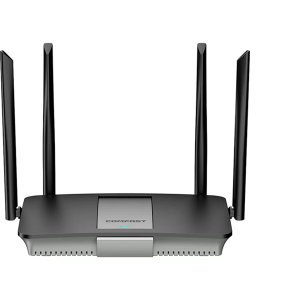
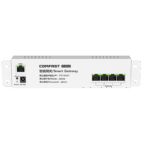
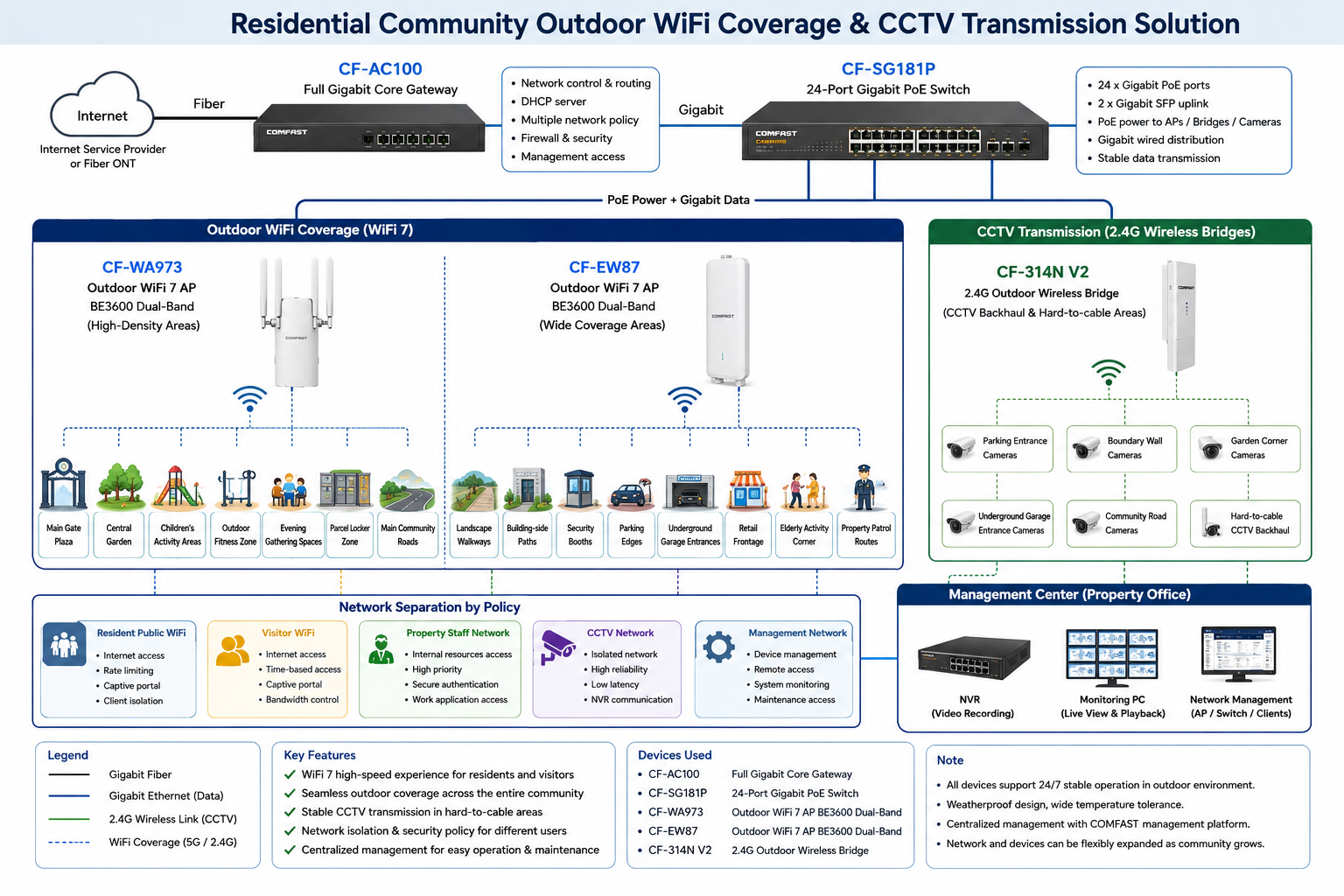
CF-AC100 Full Gigabit Core Gateway: The CF-AC100 was deployed as the community’s core gateway. It handled network control, DHCP, resident public WiFi policy, visitor WiFi policy, property staff network, CCTV network, and management access.
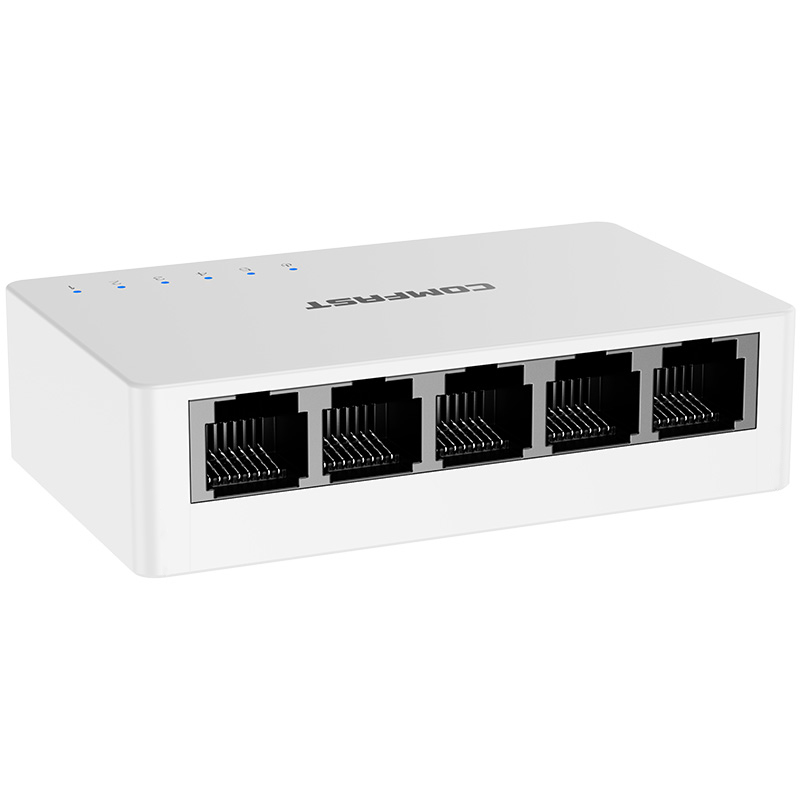
CF-SG181P 24-Port Gigabit PoE Switch: The CF-SG181P was used as the main PoE distribution switch for outdoor APs, wireless bridges, and selected monitoring devices. It provided centralized PoE power and gigabit wired distribution from the property equipment room to outdoor zones.
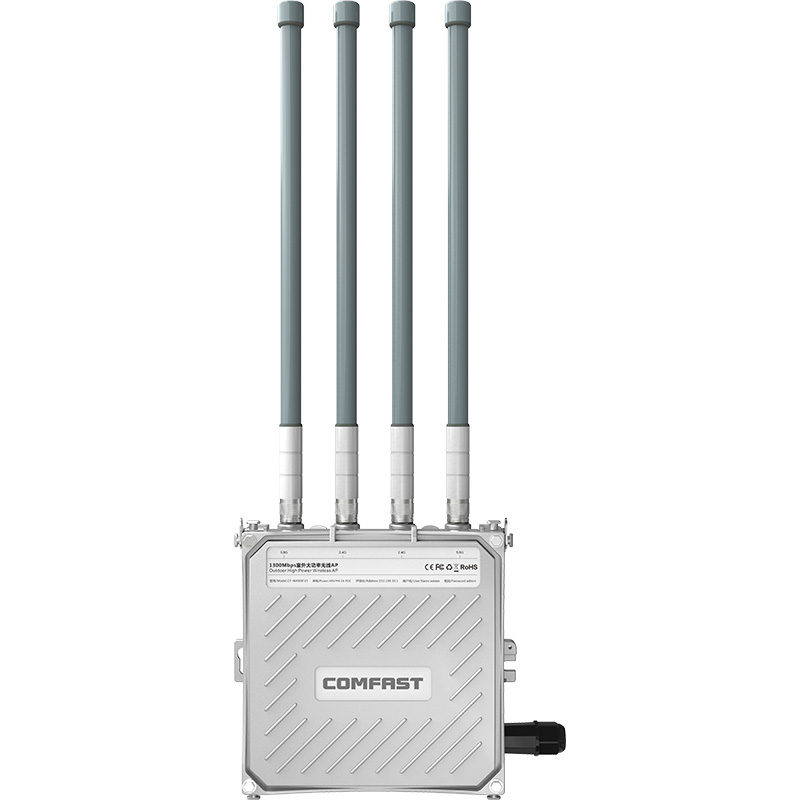
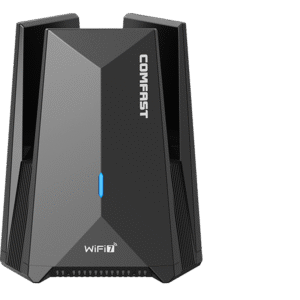
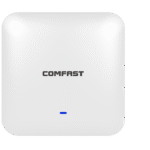
CF-WA973 Outdoor WiFi 7 AP: The CF-WA973 was used in high-density outdoor areas, including the main gate plaza, central garden, children’s activity areas, outdoor fitness zone, evening gathering spaces, parcel locker zone, and main community roads.
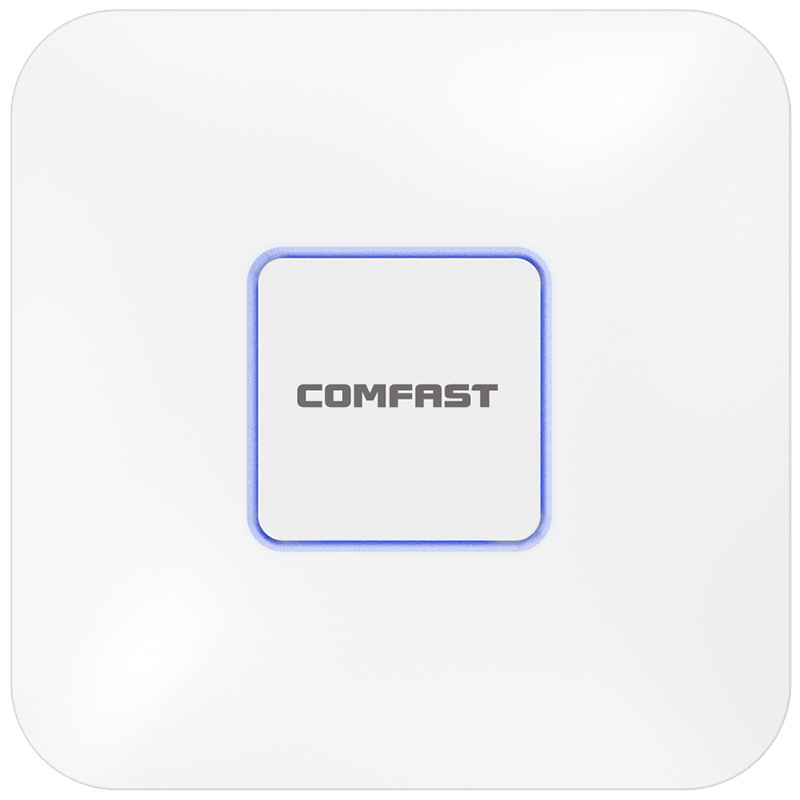
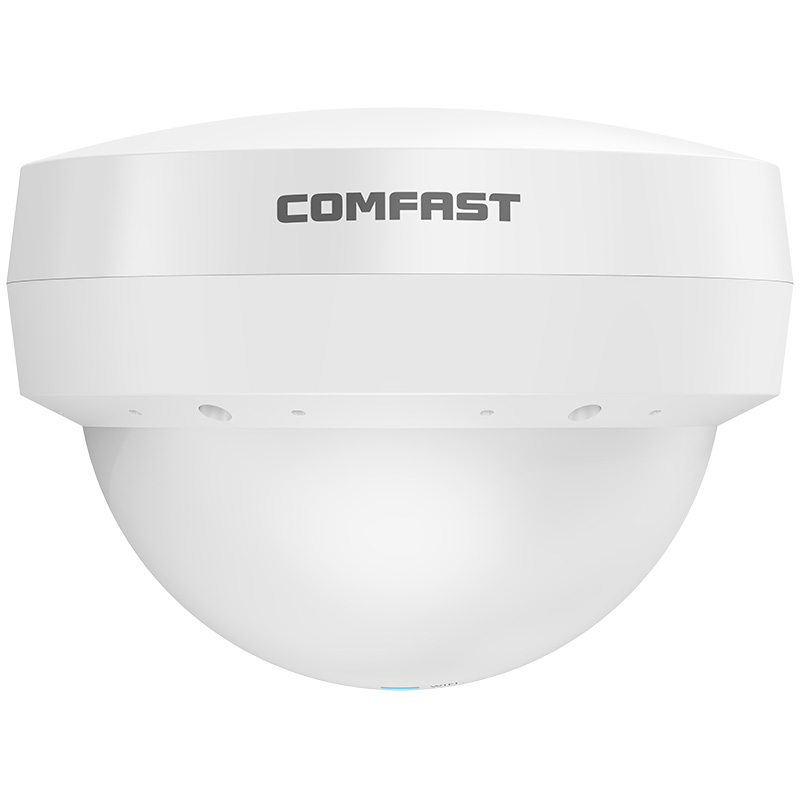
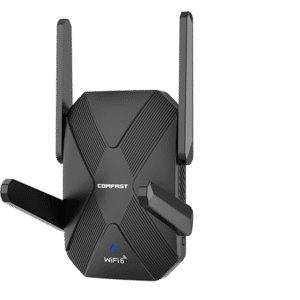
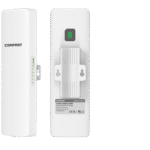
CF-EW87 Outdoor WiFi 7 AP: The CF-EW87 was used in medium-density and coverage continuity areas, including landscape walkways, building-side paths, security booths, parking edges, underground garage entrances, retail frontage, elderly activity corner, and property patrol routes.
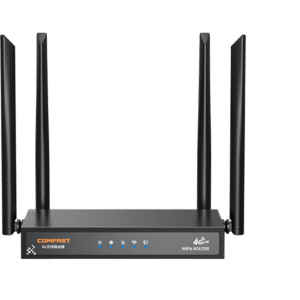
CF-314N V2 2.4G Wireless Bridge: The CF-314N V2 was used for CCTV wireless transmission from parking entrance cameras, boundary wall cameras, garden corner cameras, underground garage entrance cameras, community road cameras, and hard-to-cable remote monitoring points.
5. Project Topology Diagram
6. Site Survey and Troubleshooting Process
We began the project with a full site survey together with the property manager, security supervisor, IT maintenance technician, community service center manager, parking manager, landscape maintenance leader, and resident committee representative. We walked the actual resident routes from building lobbies to gardens, from parking entrances to elevators, from main gate to parcel lockers, from security booth to patrol routes, and from children’s areas to elderly activity spaces.
At the main gate plaza, we tested resident entry flow, visitor registration points, access control terminals, security booth device access, camera angles, and outdoor WiFi demand. This area required both strong public coverage and stable property staff access.
In the central garden, we tested signal strength, user density, AP mounting options, garden lighting poles, tree obstruction, bench locations, children’s stroller paths, and evening gathering patterns. The garden needed higher capacity because residents stayed there for long periods.
At the children’s activity areas, we checked parent waiting zones, activity equipment, landscape walls, camera coverage, and safe AP mounting locations. Equipment had to be installed out of children’s reach and without creating visual clutter.
At the outdoor fitness area and elderly activity corner, we tested evening user density, mobile app usage, lighting pole positions, benches, and nearby building obstruction. These zones needed stable coverage for residents and property service apps.
Along landscape walkways, we checked curved paths, tree canopy, garden structures, low walls, decorative lighting, and blind spots between buildings. Several weak areas were caused by turns and greenery rather than distance alone.
At underground garage entrances and parking edges, we inspected camera positions, vehicle movement, entry barriers, access control equipment, cable routes, and wireless bridge visibility. Some CCTV points were difficult to cable because the routes crossed road surfaces or garage entrance structures.
At the parcel locker zone and retail frontage, we tested QR code pickup, merchant devices, resident waiting flow, and camera coverage. These areas required reliable connectivity during evening parcel pickup peaks.
At boundary wall cameras and garden corner cameras, we confirmed line of sight for CF-314N V2 wireless bridge transmission, power source availability, mounting height, tree obstruction, and maintenance access. We also checked whether new cable trenching would damage landscaping.
In the equipment room, we inspected the core gateway position, PoE switch placement, old adapters, cable labels, uplink condition, grounding, ventilation, and field cable records. We prepared a new labeling and documentation plan before final commissioning.
7. Problems Found During Implementation
The old network was extended gradually without a complete community outdoor WiFi plan. Some APs covered small zones, but there was no consistent design for resident movement, garden user density, security patrol, parking access, and CCTV return.
The central garden issue was not only weak signal. It was a high-density outdoor usage problem. Many residents stayed in the garden for video calls, social media, short video apps, and messaging. We used CF-WA973 APs in this zone because it required stronger outdoor capacity.
Landscape walkways had signal shadows caused by trees, building corners, garden walls, and curved paths. We used CF-EW87 APs to provide coverage continuity in medium-density movement zones instead of overloading the entire community with high-power APs.
Security patrol access was unstable because staff devices were sometimes connected to the same public network used by residents. We separated the property staff network from resident and visitor WiFi.
Several CCTV dropouts were not camera failures. The real causes included unstable field power, weak cable protection, unclear old routing, poor wireless link placement, and tree obstruction. CF-314N V2 wireless bridges were used for selected hard-to-cable camera points.
New cabling across garden areas and parking entrances would have disturbed residents and damaged landscaping. Wireless bridge backhaul reduced civil work and shortened the project schedule.
Outdoor AP installation had to balance performance and appearance. Residents do not want visible messy cables or devices placed in unsafe positions. We selected clean mounting locations near lighting poles, building-side walls, and property-managed structures.
Construction could not disturb residents’ daily life. Work had to avoid morning commuting, evening walking peak, children’s activity hours, lunch rest periods, underground garage rush periods, and community quiet hours.
8. Final Engineering Solution
The CF-AC100 full gigabit core gateway was deployed as the central network control device. It separated resident public WiFi, visitor WiFi, property staff network, CCTV network, and management network by policy, so public traffic would not affect patrol devices, monitoring systems, or management access.
The CF-SG181P 24-port gigabit PoE switch was deployed in the main property equipment room for PoE power and gigabit wired distribution. It powered outdoor APs, wireless bridges, and selected monitoring devices while keeping the equipment room cleaner and easier to manage.
CF-WA973 outdoor WiFi 7 APs were installed in high-density and high-value outdoor areas, including the main gate plaza, central garden, children’s activity areas, outdoor fitness zone, evening gathering spaces, parcel locker zone, and main community roads.
CF-EW87 outdoor WiFi 7 APs were installed in medium-density coverage continuity zones, including landscape walkways, building-side paths, security booths, parking edges, underground garage entrances, retail frontage, elderly activity corner, and property patrol routes.
CF-314N V2 2.4G wireless bridges were deployed for CCTV wireless backhaul from parking entrance cameras, boundary wall cameras, garden corner cameras, underground garage entrance cameras, community road cameras, and hard-to-cable monitoring points.
After installation, we tuned AP direction, transmit power, channel planning, and roaming behavior. We did not simply increase AP power. In a residential community, excessive power can create overlap, sticky clients, and interference between buildings, gardens, and walking paths.
9. Different Area Network Design
Main Gate Plaza Coverage: The main gate plaza used CF-WA973 APs to cover visitor registration, resident entry, security booth surroundings, property announcements, and waiting areas. The CCTV network remained separated from public access.
Pedestrian Entrance Coverage: Pedestrian entrances used outdoor WiFi coverage for resident access apps, visitor QR code verification, and security staff devices. APs were mounted discreetly near property-managed structures.
Security Booth Network: Security booths used CF-EW87 coverage and separated staff network policy for patrol terminals, visitor registration tablets, incident reporting devices, and property communication tools.
Property Service Center Exterior: The property service center exterior required stable WiFi for residents waiting outdoors, property staff devices, service announcements, and temporary activity registration.
Central Garden Coverage: The central garden used CF-WA973 APs because it had the highest resident density in the evening. Coverage was planned around benches, walking loops, landscape structures, and children’s waiting zones.
Landscape Walkway Coverage: CF-EW87 APs were used along curved walkways and building-side paths to provide smooth coverage continuity. The design reduced disconnection when residents moved from building exits to garden areas.
Children’s Activity Area Coverage: CF-WA973 APs provided stable service for parents and residents around play areas. Equipment was installed outside child-touchable zones, with clean cable routing and safe mounting height.
Outdoor Fitness Area Coverage: Outdoor fitness zones used CF-WA973 coverage for resident WiFi, property notices, and patrol access. AP direction was adjusted to cover activity spaces without excessive overlap into residential windows.
Elderly Activity Corner Coverage: The elderly activity corner used CF-EW87 APs for stable medium-density coverage. The focus was reliable messaging, property service app access, and emergency contact convenience.
Parcel Locker Zone Coverage: The parcel locker zone required stable connectivity for QR code pickup, locker terminals, resident phones, and cameras. CF-WA973 APs improved peak-time access during evening parcel pickup periods.
Retail Frontage Coverage: CF-EW87 APs provided coverage for small shops, resident waiting areas, and outdoor merchant access. The merchant network remained controlled and separated from CCTV and management devices.
Underground Garage Entrance Network: CF-EW87 APs and CF-314N V2 wireless bridges supported garage entrance WiFi and CCTV backhaul. The design avoided long exposed cable runs around entrance ramps.
Parking Edge Coverage: Parking edges used CF-EW87 coverage and bridge-backed CCTV where cabling was difficult. This improved security monitoring around vehicle movement zones.
Community Road Coverage: Main community roads used CF-WA973 APs and CCTV backhaul planning to support resident movement, patrol routes, service vehicles, and property maintenance tasks.
Boundary Wall Camera Backhaul: Boundary wall cameras used CF-314N V2 wireless bridges where cable routes would cross green belts or landscaped areas. The links were tested for stable video return.
Garden Corner CCTV Backhaul: Garden corner cameras used wireless bridge return to avoid new trenching through finished landscape areas. Camera views and bridge directions were recorded for future maintenance.
10. Outdoor AP and Wireless Bridge Installation Details
Outdoor AP installation was planned around performance, safety, and community appearance. We avoided messy exposed cables, low mounting positions, child-touchable locations, and device placements that would affect residential building façades or garden design.
CF-WA973 APs were placed in high-density outdoor areas where residents stay for longer periods. These APs served the main gate plaza, central garden, children’s activity spaces, outdoor fitness zones, and main roads with stronger capacity.
CF-EW87 APs were placed along movement and medium-density zones. These APs helped maintain coverage continuity along walkways, building-side paths, security booths, parking edges, retail frontage, and patrol routes.
CF-314N V2 wireless bridges were aligned for CCTV video return rather than only simple connection status. We checked signal, video continuity, NVR preview, playback quality, and power stability before acceptance.
All outdoor cable routes were protected with proper entry direction, drip loops, conduit protection, and field box labeling. We avoided routes that would interfere with residents, gardeners, cleaning staff, delivery personnel, or children’s activity areas.
Every AP, bridge, switch port, and camera-related uplink was labeled. The property management team received AP maps, wireless bridge direction records, switch port maps, and maintenance notes.
11. Network Segmentation and Security Design
Resident Public WiFi Network: This network served residents in gardens, walkways, activity areas, outdoor fitness zones, and community roads. It was separated from CCTV, property staff, and management access.
Visitor WiFi Network: Visitor WiFi was available near the main gate, property service center exterior, waiting zones, and selected public outdoor areas. It had controlled access and did not reach property management systems.
Property Staff Network: The property staff network supported security patrol terminals, property service tablets, maintenance devices, and community operations tools. This network was separated from resident and visitor access.
CCTV Network: The CCTV network carried video traffic from wired cameras and CF-314N V2 wireless bridge-connected cameras. Keeping video traffic separate improved monitoring stability and made troubleshooting easier.
Management Network: The management network was reserved for the CF-AC100 gateway, CF-SG181P PoE switch, outdoor APs, wireless bridges, and authorized maintenance devices. Access was limited to property IT staff and approved engineers.
12. What We Did Differently from Other Engineering Teams
We did not simply install a few outdoor APs and call it community coverage. We analyzed resident movement, evening user density, children’s activity areas, property patrol routes, parcel pickup behavior, garage entrance traffic, and remote CCTV points.
We did not judge the design only by signal bars. We tested actual outdoor user experience, roaming, evening peak connections, mobile app access, patrol device access, CCTV video return, and property management usage.
We did not put resident WiFi, visitor WiFi, staff devices, CCTV, and management equipment into one flat network. Each service was separated by policy to improve stability and security.
We did not solve every weak area by raising transmit power. In residential communities, excessive power can create interference, sticky clients, and complaints from nearby building residents. We adjusted AP placement, direction, channel, and power carefully.
We did not trench through completed landscaping when wireless bridge backhaul could solve remote CCTV return more cleanly. CF-314N V2 bridge links reduced construction damage and shortened project time.
We did not interrupt residents’ daily life. Construction was completed by zone during approved windows, avoiding morning commute, evening walking peak, children’s playtime, lunch rest, garage rush hours, and quiet hours.
We did not leave unclear equipment records behind. The property team received topology notes, AP location records, bridge direction records, switch port labels, and maintenance guidance.
13. Project Acceptance Results
Main gate plaza WiFi coverage test passed.
Pedestrian entrance coverage test passed.
Security booth staff network test passed.
Property service center exterior coverage test passed.
Central garden high-density WiFi test passed.
Landscape walkway roaming test passed.
Children’s activity area coverage test passed.
Outdoor fitness area coverage test passed.
Elderly activity corner coverage test passed.
Parcel locker zone connectivity test passed.
Retail frontage WiFi test passed.
Underground garage entrance coverage test passed.
Parking edge CCTV backhaul test passed.
Boundary wall camera wireless bridge test passed.
Garden corner camera backhaul test passed.
Community road coverage test passed.
Resident public WiFi, visitor WiFi, property staff network, CCTV network, and management network isolation test passed.
PoE power supply test passed.
Outdoor AP labeling inspection passed.
Topology diagram, AP location records, bridge direction records, switch port labels, network policy notes, and acceptance report were delivered to the property management team.
14. Customer and User Feedback
Property Manager Feedback: “The outdoor WiFi experience has improved significantly. The central garden, gate plaza, children’s area, and parcel locker zone now have much more stable coverage.”
Security Supervisor Feedback: “Security patrol devices are more stable now, and the camera backhaul from parking entrances and boundary points is easier to manage.”
IT Maintenance Technician Feedback: “The AP labels, switch port records, and wireless bridge direction notes are very useful. We can identify device paths quickly during maintenance.”
Community Service Center Manager Feedback: “Residents can use property service apps more smoothly near the service center, garden, gate, and parcel locker area.”
Parking Manager Feedback: “The garage entrance and parking edge camera feeds are more stable, and we did not need to dig up the finished ground.”
Resident Feedback: Several residents reported smoother WiFi when walking in the garden, waiting near the parcel lockers, exercising outdoors, and accompanying children in the activity areas.
Resident Committee Feedback: “The installation looks clean and did not damage the community landscape. The construction team also avoided disturbing residents during peak activity hours.”
15. Project Summary
Project Harmony Garden Link was a successful outdoor WiFi coverage and CCTV wireless transmission project for a residential living community in China. The project solved weak garden WiFi, disconnection along walkways, unstable children’s area coverage, weak security booth access, poor garage entrance coverage, parcel locker connectivity issues, remote CCTV transmission instability, unclear network separation, and disorganized equipment-room records.
The final COMFAST solution used the CF-AC100 full gigabit core gateway, CF-SG181P 24-port gigabit PoE switch, CF-WA973 outdoor WiFi 7 APs, CF-EW87 outdoor WiFi 7 APs, and CF-314N V2 2.4G wireless bridges. This combination supported high-density outdoor resident WiFi, medium-density walkway coverage, property staff access, CCTV wireless backhaul, centralized PoE power, and separated network policies.
The key value of this project was not simply installing more APs. The real value was designing the community network around resident movement, evening outdoor density, children’s safety, property patrol, parcel pickup, garage entrance monitoring, landscape protection, CCTV backhaul, network separation, and long-term property maintenance.
16. Lessons Learned and Advice to Other Contractors
Residential community WiFi must be designed around resident behavior, not only coverage distance.
Central gardens, children’s activity areas, parcel locker zones, and evening gathering spaces need higher-density planning than ordinary walkways.
Security patrol networks should be separated from resident and visitor WiFi.
CCTV backhaul should not be mixed with public WiFi traffic. Monitoring links need stable and isolated network policy.
Outdoor AP placement must consider trees, building corners, garden walls, activity equipment, lighting poles, residential windows, and visual appearance.
Wireless bridges are useful for cameras where cabling would damage landscaping, cross roads, or disturb residents.
Do not solve every weak signal by increasing AP power. Channel planning, AP direction, mounting height, and roaming behavior matter more in dense communities.
Construction must avoid resident commuting peaks, children’s activity times, evening walking periods, garage entrance rush hours, lunch rest periods, and community quiet hours.
Professional handover must include topology diagrams, AP location records, wireless bridge direction records, switch port labels, network policy notes, and maintenance guidance.
For residential community projects, engineers should walk the real resident path from building lobby to garden, from gate to parcel lockers, from parking entrance to community road, from children’s activity area to elderly rest space, and from security booth to patrol route. Drawings are useful, but resident behavior determines the final WiFi experience.
A Residential Community Outdoor WiFi Coverage Solution is complete only when residents stay connected outdoors, property staff can work efficiently, CCTV backhaul remains stable, outdoor equipment is safe and clean, networks are separated by policy, and the property management team can maintain the system confidently. That was the standard we delivered for Project Harmony Garden Link.