










Project SkyBridge CargoNet: Full WiFi Coverage and CCTV Wireless Transmission Solution for an Air Cargo Terminal in Frankfurt
Contractor Team Introduction
We are a local WiFi engineering contractor with long-term experience in airport cargo terminal WiFi, bonded warehouse networks, customs inspection zone networks, logistics warehouse WiFi, cold chain storage coverage, cargo sorting area networks, forklift PDA roaming, loading dock outdoor WiFi, truck queue area coverage, security screening networks, CCTV wireless transmission, perimeter camera backhaul, PoE-powered deployment, and multi-service network isolation projects.
An air cargo terminal network is very different from a normal warehouse WiFi project. The site has metal racks, cargo pallets, moving forklifts, handheld scanners, ULD handling areas, security screening devices, weighing systems, e-AWB printing terminals, customs inspection workflows, cold chain rooms, dangerous goods areas, loading docks, truck queues, airport security restrictions, and 24-hour cargo operation pressure. The WiFi system must support low-latency scanning, mobile roaming, stable business devices, separated customs and security networks, outdoor operation coverage, and reliable CCTV backhaul without interrupting cargo flow.
Our team has used COMFAST equipment in many logistics parks, industrial warehouses, airport support facilities, outdoor monitoring, and enterprise campus projects. From our field experience, COMFAST gateways, WiFi 6 routers, PoE switches, ceiling APs, in-wall APs, outdoor APs, and long-distance wireless bridges are practical for industrial wireless projects because they support stable deployment, flexible installation, centralized PoE power, and clear network structure. For this project, we selected COMFAST CF-AC400 full gigabit core router, CF-SG1241P 24-port gigabit PoE switch, CF-WR630AX WiFi 6 router, CF-E391AX WiFi 6 ceiling APs, CF-E395AX WiFi 6 ceiling APs, CF-E591AX WiFi 6 in-wall APs, CF-WA937 outdoor WiFi 6 APs, CF-WA933 outdoor WiFi 6 APs, and CF-E319A V3 long-distance wireless bridges.
This case study documents our Air Cargo Terminal Full Solution for SkyBridge Cargo Terminal at Frankfurt Airport in Germany. The project covered the main cargo terminal entrance, carrier offices, airline agent offices, cargo operation hall, cargo receiving area, e-AWB printing area, weighing zone, security screening area, customs inspection area, sorting area, general cargo warehouse, high-rack storage area, cold chain warehouse front room, dangerous goods temporary storage perimeter, valuable cargo storage area, ULD handling area, loading docks, truck queue area, driver rest area, forklift charging area, equipment maintenance room, IT operations room, security monitoring room, staff passages, access gates, parking entrance, perimeter roads, remote CCTV camera points, and hard-to-cable monitoring locations.
1. Project Overview
Project Name: Project SkyBridge CargoNet
Project Location: Frankfurt Airport Cargo District, Germany
Site Type: International air cargo terminal with cargo receiving, screening, customs inspection, sorting, storage, ULD handling, loading dock operation, truck queue management, and perimeter CCTV monitoring
Total Terminal Area: Approximately 94,000 square meters
Indoor Coverage Area: Approximately 68,000 square meters
Outdoor Operation Area: Approximately 26,000 square meters
Daily Cargo Throughput: Approximately 1,200 tons of inbound, outbound, and transfer cargo
Daily Truck Flow: Around 850 truck movements on normal operating days, with higher pressure during overnight departure waves and early-morning inbound sorting windows
Mobile Operation Devices: More than 320 handheld PDA scanners, forklift terminals, label printers, inspection tablets, and maintenance handheld devices
Main Coverage Areas: Cargo operation hall, receiving area, printing area, weighing zone, security screening area, customs inspection area, sorting area, general cargo warehouse, high-rack storage area, cold chain front room, ULD handling area, loading docks, truck queue area, driver rest area, forklift charging area, office rooms, monitoring room, parking entrance, perimeter roads, and remote CCTV points
Project Cycle: Eight weeks from site survey to final acceptance, completed through phased construction during low-volume cargo windows, scheduled maintenance periods, overnight split windows, and airport security-approved work slots.
2. Customer Pain Points Before the Project
The cargo operation hall became congested during peak cargo waves. Handheld PDA scanners, forklift terminals, label printers, office tablets, and operation workstations were online at the same time. The old wireless system showed signal, but the network could not consistently support the device load and movement pattern.
PDA scanning devices sometimes disconnected while operators moved between receiving, sorting, high-rack storage, and loading dock transition zones. The issue was not only weak signal. It was caused by rack obstruction, moving forklifts, changing cargo stacks, poor AP overlap, and roaming behavior that was not tuned for industrial movement.
Sorting area scan uploads had occasional delay. When multiple operators scanned cargo labels and uploaded status updates in the same time window, the old network caused delayed confirmation on handheld screens.
High-rack storage areas had unstable coverage because of metal racks, cargo pallets, ULD containers, and changing cargo height. Some aisles were acceptable when racks were half-empty but became unstable when loaded with dense cargo.
The cold chain warehouse front room had inconsistent WiFi. Temperature-controlled doors, insulated panels, metal frames, and restricted installation points affected signal quality. The customer needed stable scanning and monitoring access near the cold chain handover area.
E-AWB printing stations occasionally went offline. Label printers and e-AWB workstations were business-critical because a delay in document printing could slow cargo receiving and outbound processing.
The weighing zone and security screening area had unstable device access. Cargo scales, inspection terminals, screening equipment tablets, and operation PCs needed a more reliable and separated network path.
The customs inspection network was not clearly separated from ordinary office and warehouse traffic. The customer required a clearer network policy to support inspection workflows, audit requirements, and controlled access.
Loading dock WiFi was discontinuous. Forklift operators and dock coordinators lost connectivity near several dock doors, especially when trucks and pallets blocked signal paths.
Truck queue areas and parking entrances had no stable network. Dock coordinators and security staff needed mobile access outside the building, but the old design relied too much on signal leaking from inside the warehouse.
Perimeter and remote CCTV cameras had unstable backhaul. Several camera points were far from the nearest cabinet, and new cabling would have crossed secured routes, truck lanes, perimeter roads, and airport-controlled areas.
The weak current rooms and network records were incomplete. AP names, switch ports, old bridge links, and camera routes were not clearly labeled, which made troubleshooting slow during active cargo operations.
3. Customer Requirements
Stable indoor and outdoor WiFi coverage across cargo operation areas, warehouses, offices, loading docks, truck areas, and security points.
Low-latency PDA scanning and stable roaming for forklift-mounted terminals and handheld scanners.
Reliable e-AWB printing, cargo label printing, weighing system access, security screening system access, and customs inspection network access.
Stable coverage for cargo operation hall, receiving area, sorting area, general cargo warehouse, high-rack storage area, cold chain front room, valuable cargo area, ULD handling area, and loading dock zones.
Outdoor WiFi coverage for loading docks, truck queue area, parking entrance, perimeter road, staff entrance, forklift charging exterior, and security booth areas.
Stable CCTV wireless backhaul for parking cameras, perimeter road cameras, loading dock remote cameras, truck queue cameras, temporary cargo yard cameras, and remote security points.
Cargo operation network, customs and security inspection network, office network, guest WiFi, CCTV network, and management network separated by policy.
Centralized PoE power supply for APs, outdoor APs, wireless bridges, and selected monitoring devices.
Installation that does not block cargo aisles, forklift routes, fire lanes, rack access, customs inspection flow, security screening flow, or truck movement.
Construction that does not affect flight cargo deadlines, customs inspection windows, night cargo operations, truck loading schedules, or airport security procedures.
Clear handover documents including AP location maps, bridge alignment records, switch port labels, topology diagram, network segmentation notes, and maintenance guidance.
4. COMFAST Equipment Used in This Project
The following are the main COMFAST equipment models used in this project and their usage descriptions.
| Equipment Model |
Type | Project Use | Reason for Use |
|---|---|---|---|
| CF-AC400 | Full gigabit core router | Network control, DHCP, cargo operation network, customs and security inspection network, office network, guest WiFi, CCTV network, and management access | Suitable as the air cargo terminal core router, separating business-critical cargo systems from office, guest, CCTV, customs, and management traffic |
| CF-SG1241P | 24-port gigabit PoE switch | PoE power supply and gigabit distribution for ceiling APs, in-wall APs, outdoor APs, wireless bridges, and selected monitoring devices | Centralized PoE deployment reduces local power adapters, keeps weak-current rooms cleaner, and simplifies maintenance across warehouse, office, dock, and outdoor areas |
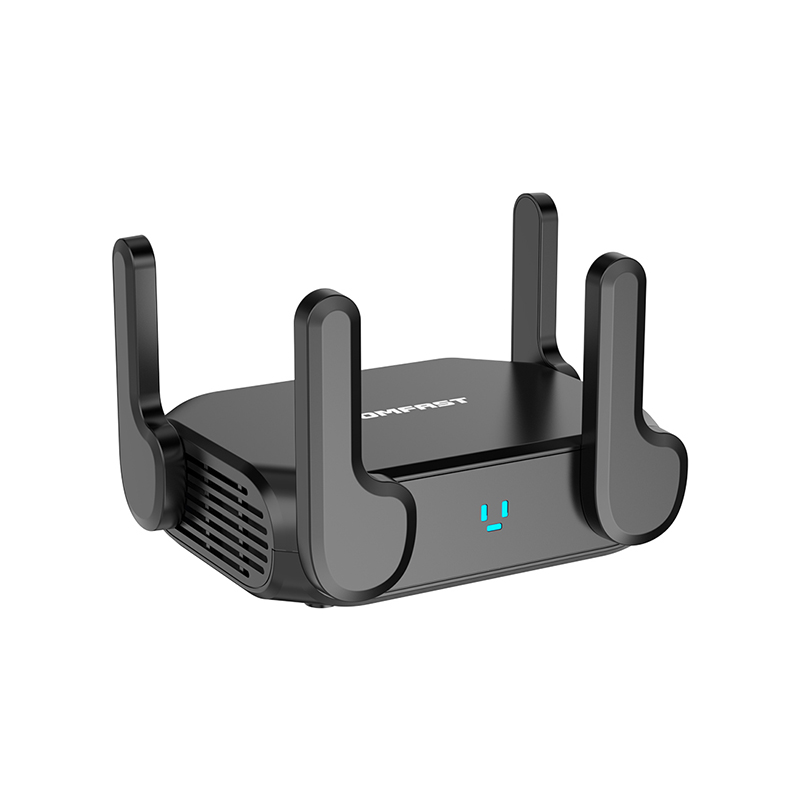
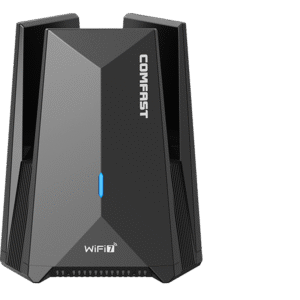
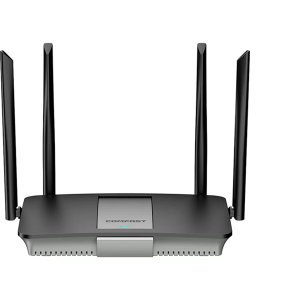
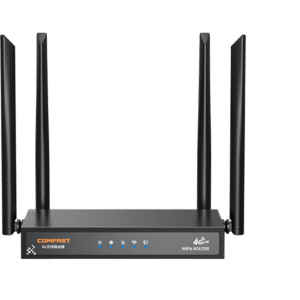
| CF-WR630AX | WiFi 6 router | IT operations room, security monitoring room, temporary commissioning area, emergency network support, and maintenance tool connectivity | Provides controlled WiFi 6 management access for authorized engineers without exposing cargo operation or customs systems to guest or office networks |
| CF-E391AX | WiFi 6 ceiling AP | Cargo operation hall, sorting area, weighing zone, security screening area, customs inspection area, ULD handling area, and critical processing zones | Selected for high-bandwidth and high-operation-density zones with many PDA scanners, forklift terminals, printers, inspection tablets, and workflow devices |
| CF-E395AX | WiFi 6 ceiling AP | General cargo warehouse, high-rack storage aisles, forklift routes, cold chain front room, staff passages, driver rest area, and medium-to-high-density indoor operation areas | Suitable for warehouse aisle coverage, improving roaming stability around metal racks, cargo pallets, ULD containers, forklift movement, and changing cargo stacks |
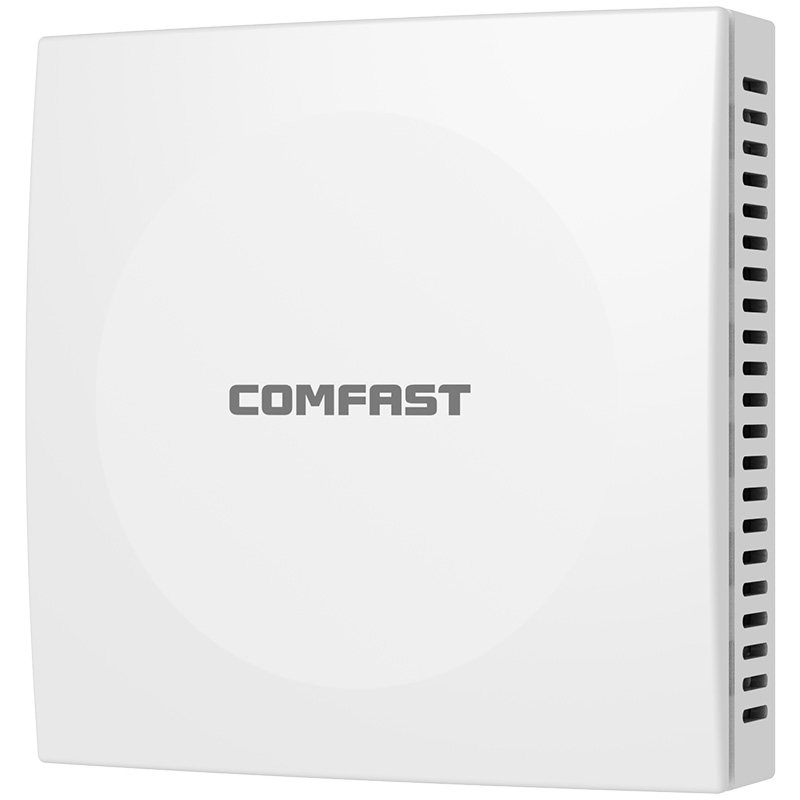
| CF-E591AX | WiFi 6 in-wall AP | Carrier offices, airline agent offices, small meeting rooms, IT operations room, security monitoring room, equipment maintenance room, and duty rooms | Provides room-level coverage for wall-separated office and functional rooms where warehouse AP signal cannot provide stable access |
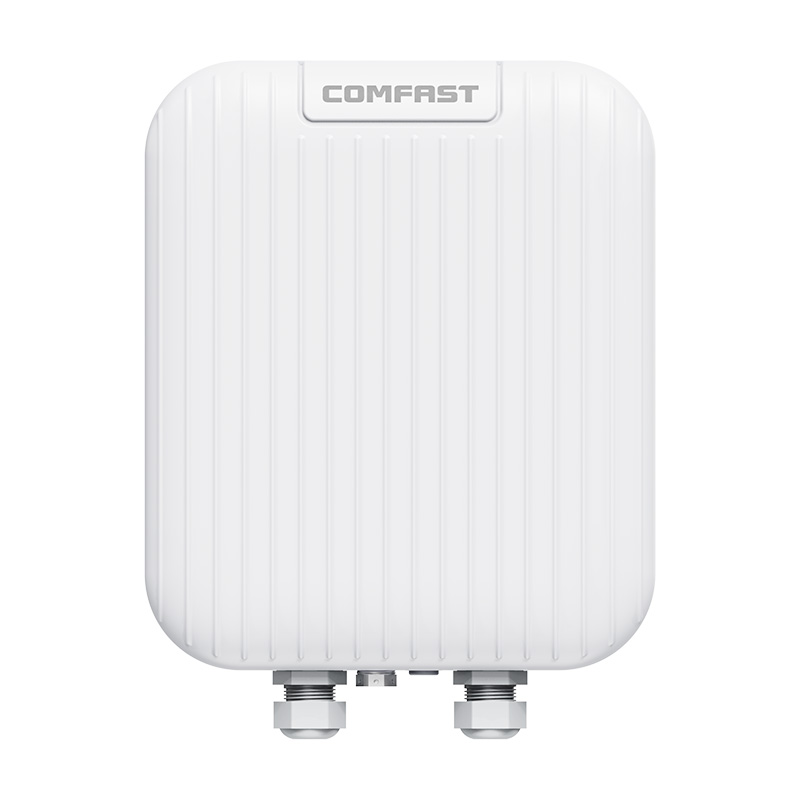
| CF-WA937 | Outdoor WiFi 6 AP | Loading docks, truck queue area, cargo terminal entrance, parking entrance, perimeter roads, staff entrances, and high-flow outdoor operation zones | Provides stable outdoor WiFi for dock coordinators, truck queue management, forklift movement, staff access, and security operations instead of relying on indoor signal leakage |
| CF-WA933 | Outdoor WiFi 6 AP | Forklift charging exterior, equipment maintenance exterior, logistics routes, perimeter corners, temporary loading zones, dangerous goods storage perimeter, and medium-density outdoor zones | Complements outdoor coverage in operational and medium-density zones without overbuilding every area with higher-density outdoor APs |
| CF-E319A V3 | Long-distance wireless bridge | 5.8G CCTV wireless backhaul for parking cameras, perimeter road cameras, loading dock remote cameras, truck queue cameras, temporary cargo yard cameras, and remote security points | Avoids trenching across secured routes, truck lanes, perimeter roads, and airport-controlled areas while maintaining stable CCTV transmission |
5. Project Equipment Configuration Quantity
Based on the approximately 94,000 square meter air cargo terminal area, 68,000 square meter indoor coverage area, 26,000 square meter outdoor operation area, around 1,200 tons of daily cargo throughput, about 850 daily truck movements, more than 320 mobile operation devices, warehouse aisles, sorting zones, loading docks, truck queue lanes, customs and security areas, office rooms, perimeter roads, and remote CCTV points, the recommended equipment configuration for this project was as follows:
| Equipment Model | Quantity | Deployment Location |
|---|---|---|
| CF-AC400 | 1 unit | Main equipment room, used as the core router for cargo operation, customs and security inspection, office, guest WiFi, CCTV, and management networks |
| CF-SG1241P | 9 units | Main equipment room, cargo operation hall distribution cabinets, warehouse distribution points, office area weak-current rooms, loading dock cabinets, outdoor operation area cabinets, parking entrance cabinet, and perimeter monitoring distribution points for PoE power, AP connection, bridge connection, uplink ports, and maintenance reserve |
| CF-WR630AX | 3 units | IT operations room, security monitoring room, and temporary commissioning area for authorized management access, emergency network support, testing access, and maintenance tool connectivity |
| CF-E391AX | 36 units | Cargo operation hall, sorting area, weighing zone, security screening area, customs inspection area, ULD handling area, cargo receiving area, e-AWB printing area, and other high-density processing zones |
| CF-E395AX | 42 units | General cargo warehouse, high-rack storage aisles, forklift routes, cold chain front room, valuable cargo storage area, staff passages, driver rest area, and medium-to-high-density indoor operation areas |
| CF-E591AX | 24 units | Carrier offices, airline agent offices, small meeting rooms, IT operations room, security monitoring room, equipment maintenance room, duty rooms, and wall-separated functional rooms |
| CF-WA937 | 14 units | Loading docks, truck queue lanes, cargo terminal entrance, parking entrance, perimeter roads, staff entrances, outdoor cargo movement zones, and high-flow outdoor operation points |
| CF-WA933 | 10 units | Forklift charging exterior, equipment maintenance exterior, logistics routes, perimeter corners, temporary loading zones, dangerous goods storage perimeter, and medium-density outdoor operation zones |
| CF-E319A V3 | 10 pairs | Parking camera points, perimeter road cameras, loading dock remote cameras, truck queue cameras, temporary cargo yard cameras, remote security points, and hard-to-cable CCTV monitoring locations |
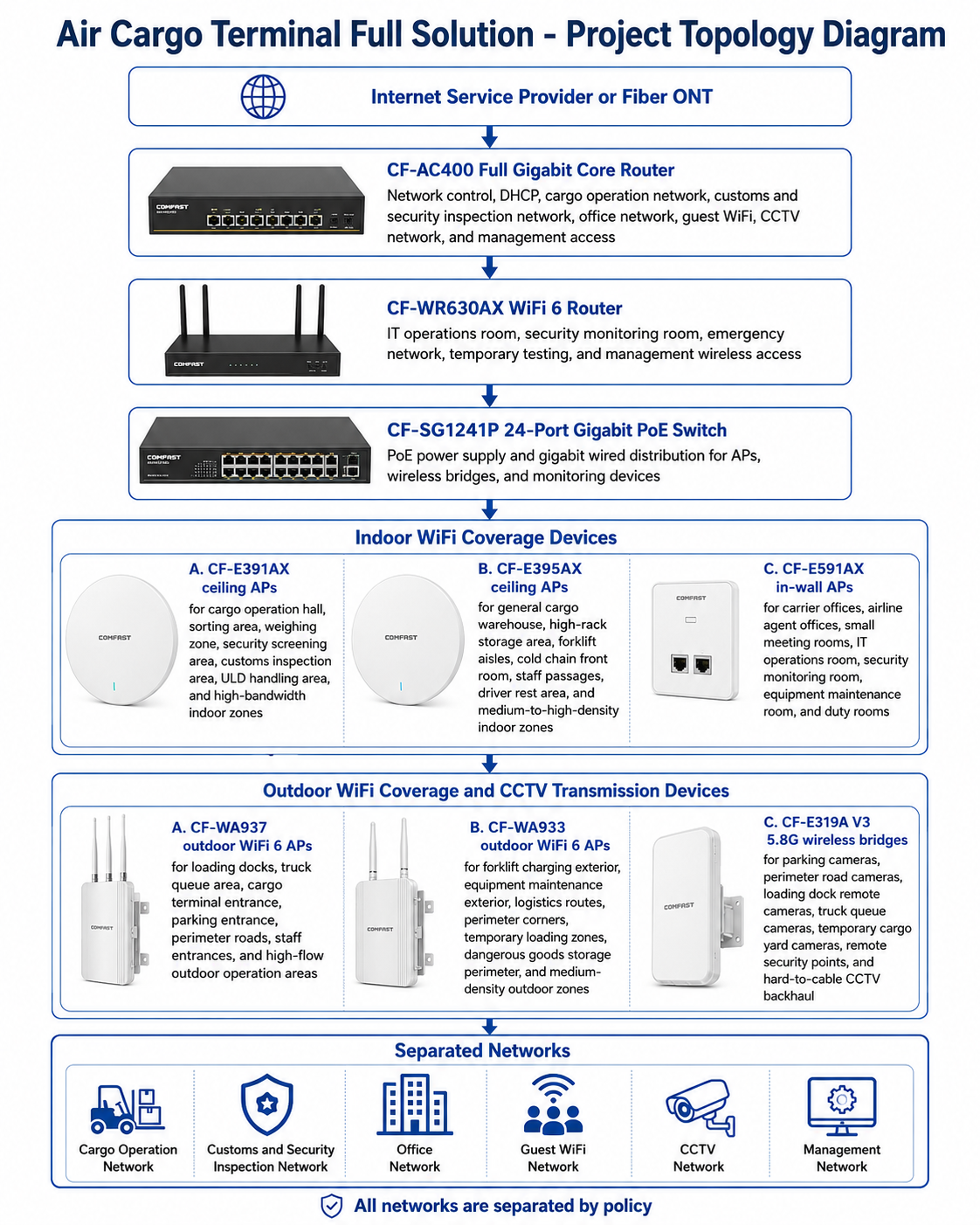
6. Project Topology Diagram
7. Site Survey and Troubleshooting Process
We began the project with a full operational walkthrough together with the air cargo terminal operations manager, warehouse supervisor, IT supervisor, customs inspection coordinator, security screening manager, forklift team leader, truck dock coordinator, CCTV security supervisor, and maintenance team. The survey followed real cargo movement from receiving to screening, inspection, sorting, storage, ULD handling, dock loading, and truck exit.
In the cargo receiving area, we tested PDA scanning response, cargo label reading, e-AWB workstation access, printer status, and operator movement between receiving lanes. We confirmed that scanning reliability was more important than raw speed alone.
In the sorting area, we tested concurrent scan uploads during simulated peak sorting activity. Multiple handheld terminals, forklift terminals, and operation tablets were active at the same time, so this area needed high-capacity AP planning.
Along forklift aisles, we performed mobile roaming tests. Engineers walked and rode through routes with handheld scanners while forklifts moved pallets between receiving, racks, sorting, and loading docks. This helped us identify roaming gaps and poor AP overlap.
In the high-rack storage area, we tested RF behavior in different aisles and cargo loading conditions. Metal racks, cargo containers, pallet stacks, and ULD frames created reflection and shadowing. AP placement had to follow aisle direction and cargo movement, not only ceiling geometry.
In the e-AWB printing area and weighing zone, we tested printer connection stability, scale terminal response, workstation access, and handheld confirmation workflows. These areas were assigned to a stable cargo operation network.
In the security screening area, we tested inspection terminals, screening support tablets, operation PCs, and device access. This area required a separated customs and security inspection network to avoid interference from warehouse traffic.
In the customs inspection area, we interviewed inspection coordinators and reviewed access needs for customs terminals, inspection tablets, document verification devices, and controlled workstations. The customs network could not be mixed with office or guest WiFi.
At the cold chain warehouse front room, we reviewed temperature-controlled door positions, insulated wall panels, metal surfaces, safety rules, and maintenance restrictions. AP placement had to avoid interfering with cold chain operations while maintaining scanner stability.
At the dangerous goods temporary storage perimeter, we confirmed safety distance, installation restrictions, inspection routes, and device access needs. Network coverage had to support staff devices without violating safety procedures.
At loading docks and truck queue lanes, we tested outdoor WiFi, dock coordinator devices, forklift terminal roaming, and truck movement influence. Trucks, dock shelters, open doors, and metal cargo platforms affected signal behavior.
For CCTV wireless transmission, we checked parking cameras, perimeter road cameras, loading dock remote cameras, truck queue cameras, temporary cargo yard cameras, and remote security points. For each CF-E319A V3 bridge link, we verified line of sight, mounting height, obstruction, cable protection, grounding, power source, and long-term maintenance access.
8. Problems Found During Implementation
The original wireless system was designed like a normal office-and-warehouse network. It could not support 24-hour cargo operations, forklift roaming, PDA scanning, printing, weighing, security screening, customs inspection, loading docks, outdoor truck areas, and CCTV backhaul as separate business services.
PDA disconnection was not caused by one simple dead zone. It was the result of metal rack obstruction, moving forklifts, dynamic cargo stacks, poor AP overlap, and roaming settings that did not match mobile scanning routes. We redesigned coverage around cargo movement and forklift aisles.
High-rack storage required aisle-based coverage. A flat ceiling AP layout could not handle metal racks and changing pallet height. CF-E395AX APs were positioned and tuned to improve aisle coverage and reduce unnecessary overlap.
The sorting area required high concurrent upload stability. Multiple scanners and terminals uploaded scan records at the same time, so CF-E391AX APs were placed to support high operation density.
E-AWB printing, weighing, screening, and customs inspection systems required business network priority. These devices were separated from guest WiFi and general office access.
Cold chain and dangerous goods zones required safety-aware installation. We avoided restricted mounting points and coordinated all work with terminal safety staff and airport operation rules.
Loading docks and truck queue areas could not rely on indoor signal leakage. CF-WA937 and CF-WA933 outdoor APs were installed for dock, truck, staff entrance, and perimeter coverage.
Remote CCTV cameras were not practical to cable. For parking, perimeter, dock, truck queue, and temporary cargo yard cameras, CF-E319A V3 bridges provided stable wireless backhaul without trenching across secured areas or truck routes.
Construction had to avoid cargo cut-off times, customs inspection peaks, night loading peaks, forklift routes, dock operations, and truck movement. We used phased construction and airport-approved work windows to reduce operational impact.
9. Final Engineering Solution
The CF-AC400 was deployed as the terminal’s full gigabit core router. It handled DHCP, network control, and policy separation for cargo operation, customs and security inspection, office, guest WiFi, CCTV, and management networks.
The CF-WR630AX was installed in the IT operations room and security monitoring room to provide authorized management wireless access, emergency network support, temporary testing, and maintenance tool connectivity.
The CF-SG1241P 24-port gigabit PoE switch provided centralized PoE power and gigabit wired distribution for indoor APs, outdoor APs, wireless bridges, and selected monitoring devices. This reduced local power adapters and simplified future maintenance.
CF-E391AX ceiling APs were deployed in critical high-density processing zones, including cargo operation hall, sorting area, weighing zone, security screening area, customs inspection area, and ULD handling area.
CF-E395AX ceiling APs were deployed in the general warehouse, high-rack storage aisles, forklift routes, cold chain front room, staff passages, and driver rest area. These APs were placed according to rack direction and forklift movement.
CF-E591AX in-wall APs were installed in carrier offices, airline agent offices, small meeting rooms, IT operations room, security monitoring room, equipment maintenance room, and duty rooms for room-level access.
CF-WA937 outdoor APs were installed in loading dock areas, truck queue lanes, cargo terminal entrance, parking entrance, perimeter roads, staff entrances, and high-flow outdoor operation zones.
CF-WA933 outdoor APs were installed around forklift charging exterior, equipment maintenance exterior, logistics routes, perimeter corners, temporary loading areas, dangerous goods storage perimeter, and medium-density outdoor zones.
CF-E319A V3 wireless bridges were installed for CCTV backhaul from parking cameras, perimeter road cameras, loading dock remote cameras, truck queue cameras, temporary cargo yard cameras, and remote security points.
10. Different Area Network Design
Main Cargo Terminal Entrance Coverage: The terminal entrance used CF-WA937 outdoor APs for staff entrance, driver access, visitor coordination, and security checkpoint support. Traffic at the entrance was separated from cargo operation systems.
Carrier Office Network: Carrier offices used CF-E591AX in-wall APs to provide room-level office access for document processing, communication, dispatch coordination, and staff devices.
Airline Agent Office Network: Airline agent offices used the office network with separated access from cargo operation and customs inspection traffic. This improved stability for booking, cargo status, and communication tools.
Cargo Operation Hall Coverage: The cargo operation hall used CF-E391AX APs to support PDA scanning, workflow terminals, tablets, printers, and operation supervisors. AP placement matched cargo movement and workstation locations.
Cargo Receiving Area Coverage: The receiving area required stable scanning when cargo entered the terminal. PDA devices, label confirmation, and receiving terminals were connected through the cargo operation network.
E-AWB Printing Area Network: E-AWB printing workstations and label printers were separated from guest WiFi and office browsing. The network was tested for printer online status and rapid document output.
Weighing Zone Network: The weighing zone used controlled cargo operation access for scale terminals, weighing workstations, handheld confirmation devices, and supervisor tablets.
Security Screening Area Network: Security screening devices were placed on the customs and security inspection network. This kept screening traffic separate from warehouse scanning and office usage.
Customs Inspection Area Network: Customs terminals, inspection tablets, document verification devices, and controlled workstations used a dedicated network policy to improve reliability and access clarity.
Sorting Area Coverage: The sorting area used CF-E391AX APs for high concurrent scan uploads. APs were positioned around conveyor points, sorting lanes, handheld scanner traffic, and forklift crossings.
General Cargo Warehouse Coverage: The general warehouse used CF-E395AX APs for stable coverage in storage aisles and cargo movement zones. Coverage was validated with real pallet positions and scanning routes.
High-Rack Storage Area Coverage: The high-rack area was designed around aisle direction, rack height, metal obstruction, and changing cargo load. AP power was tuned to reduce interference between aisles.
Cold Chain Warehouse Front Room Coverage: The cold chain front room used AP placement that avoided restricted cold-room structures while supporting scanners and monitoring devices near the handover area.
Dangerous Goods Temporary Storage Perimeter Network: The dangerous goods perimeter used CF-WA933 outdoor APs and controlled access. Installation respected safety distances and terminal safety procedures.
Valuable Cargo Storage Network: Valuable cargo storage used controlled network access for authorized staff terminals, monitoring devices, and inspection workflows. Network access was separated from guest and ordinary office traffic.
ULD Handling Area Coverage: The ULD handling area used CF-E391AX APs for cargo tracking, forklift terminals, and handling status updates. Coverage was tested around ULD movement and metal container reflection.
Loading Dock Coverage: Loading docks used CF-WA937 outdoor APs to provide stable coverage for dock coordinators, forklift terminals, truck loading staff, and dock-side scanning devices.
Truck Queue Area Coverage: Truck queue lanes used CF-WA937 APs for outdoor access. Security staff, dock coordinators, and truck flow managers could use mobile devices without relying on indoor signal leakage.
Driver Rest Area Coverage: The driver rest area used CF-E395AX APs to support driver communication, check-in updates, and staff coordination while keeping access controlled.
Forklift Charging Area Network: Forklift charging exterior areas used CF-WA933 APs for maintenance staff devices, charging management tablets, and forklift operation support.
Equipment Maintenance Room Network: The equipment maintenance room used CF-E591AX in-wall APs for maintenance laptops, diagnostic tools, inventory terminals, and work order devices.
IT Operations Room Network: The IT operations room used CF-WR630AX for authorized management wireless access and temporary troubleshooting. Access was limited to approved maintenance users.
Security Monitoring Room Network: The security monitoring room used controlled access for CCTV viewing, bridge monitoring, incident review, and security supervisor devices.
Staff Passage and Access Gate Coverage: Staff passages and access gates used indoor and outdoor APs to support access control terminals, staff devices, and security checkpoints.
Parking Entrance Coverage: Parking entrances used CF-WA937 APs and CF-E319A V3 bridge links to support entry monitoring, staff mobile access, and CCTV transmission.
Perimeter Road Coverage: Perimeter roads used CF-WA937 and CF-WA933 APs depending on traffic density and camera locations. The design supported security patrol, maintenance teams, and monitoring points.
Remote CCTV Wireless Bridge Backhaul: CF-E319A V3 wireless bridges connected remote CCTV points without trenching through truck routes, secured perimeter areas, dock zones, or cargo operation paths.
11. Indoor and Outdoor AP Installation Details
Indoor APs were installed according to cargo flow, rack direction, forklift aisle layout, ceiling height, metal obstruction, fire lanes, inspection zones, and maintenance access. We avoided locations where APs or cables could be hit by forklifts, cargo pallets, or maintenance equipment.
In high-rack areas, AP direction and placement followed warehouse aisles. We did not treat the warehouse as one open space because metal racks and changing cargo stacks caused signal reflection and shadowing.
In customs, security screening, and weighing zones, APs were placed to support business devices without interfering with inspection workflows or equipment service access.
Outdoor APs were mounted around loading docks, truck queue lanes, terminal entrances, staff entry points, perimeter roads, and logistics routes. Device height and direction were selected for coverage, safety, and maintenance access.
At loading docks, APs were installed away from direct vehicle impact zones, dock door movement, cargo lift routes, and forklift turning paths. Cable routes were protected and labeled.
After installation, we tuned channels and transmit power. We did not set every AP to maximum power because industrial warehouses require controlled overlap, stable roaming, and reduced interference.
Every AP, wireless bridge, and important switch port was labeled. We cleaned weak current rooms, updated port records, documented bridge directions, and delivered maintenance notes to the terminal IT team.
12. Wireless Bridge Transmission Design
Parking entrance cameras used CF-E319A V3 wireless bridges to avoid trenching across vehicle lanes and secured airport access routes. The links were tested during truck and staff entry peaks.
Perimeter road cameras were connected by wireless bridge links where cabling would have crossed controlled airport service areas. Each link was aligned for stable CCTV return.
Loading dock remote cameras used bridge backhaul to avoid long cable runs across dock shelters, truck lanes, and cargo movement areas. Video feeds were verified in the security monitoring room.
Truck queue cameras used CF-E319A V3 bridges to support traffic monitoring and dock coordination. The links were checked during queue congestion and nighttime operation.
Temporary cargo yard cameras used reserved bridge positions to support seasonal overflow, peak cargo handling, and temporary security monitoring.
Remote security points used wireless bridges where new cabling would have required airport security approvals and route interruption. Each bridge was documented with alignment direction and service notes.
13. Network Segmentation and Security Design
Cargo Operation Network: The cargo operation network supported PDA scanners, forklift terminals, e-AWB printers, cargo receiving devices, sorting terminals, weighing confirmation devices, and cargo workflow tablets.
Customs and Security Inspection Network: This network supported customs inspection terminals, security screening systems, inspection tablets, and controlled access devices. It was separated from cargo operation, office, guest, and CCTV traffic.
Office Network: The office network supported carrier offices, airline agent offices, meeting rooms, administrative PCs, supervisor tablets, and office printers.
Guest WiFi Network: Guest WiFi was limited to approved visitor and waiting areas. It was isolated from cargo operation, customs, security, CCTV, and management devices.
CCTV Network: The CCTV network carried video traffic from wired cameras and CF-E319A V3 wireless bridge links. Keeping camera traffic separate improved monitoring reliability and made troubleshooting clearer.
Management Network: The management network was reserved for the core router, WiFi 6 router, PoE switch, APs, wireless bridges, and authorized maintenance devices. Access was limited to terminal IT and approved engineering staff.
14. What We Did Differently from Other Engineering Teams
We did not extend office WiFi into the warehouse. Air cargo operation requires a structured network for cargo scanning, customs inspection, security screening, office work, guest access, CCTV, and management devices.
We did not judge the design only by signal bars. We tested cargo flow, PDA scanning, forklift movement, rack obstruction, sorting concurrency, printing, weighing, security screening, customs inspection, dock operation, and CCTV backhaul stability.
We did not blindly increase AP transmit power. In a metal-rack warehouse, excessive power causes interference, sticky clients, and roaming problems. We tuned AP height, aisle direction, channel plan, power level, and overlap.
We did not place cargo operation, customs inspection, office users, guests, cameras, and management equipment in one flat network. Each critical workflow received its own network policy.
We did not pull cables blindly across secured areas. Where CCTV cabling would affect truck lanes, perimeter roads, cargo routes, or airport-controlled zones, we used CF-E319A V3 wireless bridges.
We did not interrupt cargo operations. Construction was coordinated around flight cargo deadlines, customs inspection peaks, night loading windows, forklift routes, and truck schedules.
We did not leave a messy weak current environment behind. The customer received AP maps, switch port labels, bridge alignment records, topology notes, and maintenance guidance.
15. Project Acceptance Results
Main cargo terminal entrance coverage test passed.
Carrier office network test passed.
Airline agent office network test passed.
Cargo operation hall high-concurrency test passed.
PDA scanning latency test passed.
Forklift mobile roaming test passed.
Cargo receiving area test passed.
E-AWB printing area test passed.
Weighing zone device test passed.
Security screening area network test passed.
Customs inspection area access test passed.
Sorting area scan upload test passed.
General cargo warehouse coverage test passed.
High-rack storage aisle coverage test passed.
Cold chain front room network test passed.
Dangerous goods temporary storage perimeter test passed.
Valuable cargo storage network test passed.
ULD handling area test passed.
Loading dock WiFi test passed.
Truck queue area WiFi test passed.
Driver rest area network test passed.
Forklift charging area network test passed.
Parking entrance WiFi test passed.
CF-E319A V3 wireless bridge CCTV backhaul test passed.
Cargo operation, customs and security inspection, office, guest WiFi, CCTV, and management network isolation test passed.
Device labels, AP map, bridge alignment records, switch port map, topology diagram, and IT handover completed.
16. Customer and User Feedback
Air Cargo Terminal Operations Manager Feedback: “The new network fits our cargo workflow much better. Receiving, sorting, screening, customs inspection, loading docks, and CCTV are now managed as separate and reliable systems.”
Warehouse Supervisor Feedback: “PDA scanning is much more stable in the warehouse and high-rack aisles. Operators no longer report frequent disconnects while moving between zones.”
IT Supervisor Feedback: “The AP records, port labels, bridge alignment notes, and network segmentation make maintenance much easier. We can identify issues faster during active cargo operations.”
Customs Inspection Coordinator Feedback: “The customs inspection network is clearer and more reliable. Inspection terminals and verification tablets are no longer mixed with ordinary office traffic.”
Security Screening Manager Feedback: “Screening support devices and inspection tablets are more stable, especially during cargo peak windows.”
Airline Cargo Agent Feedback: “E-AWB printing and cargo document workflows are more reliable. We see fewer printer offline issues during outbound processing.”
Forklift Team Leader Feedback: “Forklift terminals roam more smoothly between receiving, racks, sorting, and loading docks. The operators can keep scanning while moving.”
Truck Dock Coordinator Feedback: “The loading dock and truck queue areas finally have stable coverage. Dock staff can coordinate trucks without walking back indoors for network access.”
CCTV Security Supervisor Feedback: “Camera feeds from the parking entrance, perimeter road, loading dock, and truck queue area became much more stable after the bridge deployment.”
Maintenance Technician Feedback: “The labeled APs, switch records, and service-friendly installation positions make inspection and maintenance easier, especially in warehouse aisles and outdoor dock areas.”
17. Project Summary
Project SkyBridge CargoNet was a successful Air Cargo Terminal Full Solution in Frankfurt. The project solved cargo operation hall congestion, PDA scanner disconnects, forklift roaming gaps, sorting scan upload delay, high-rack signal obstruction, cold chain front room instability, e-AWB printer offline issues, weighing and screening network instability, customs network mixing, loading dock coverage gaps, truck queue outdoor WiFi problems, remote CCTV backhaul instability, and incomplete network documentation.
The final COMFAST solution used the CF-AC400 full gigabit core router, CF-SG1241P 24-port gigabit PoE switch, CF-WR630AX WiFi 6 router, CF-E391AX ceiling APs, CF-E395AX ceiling APs, CF-E591AX in-wall APs, CF-WA937 outdoor APs, CF-WA933 outdoor APs, and CF-E319A V3 wireless bridges. This combination supported cargo operation WiFi, customs and security inspection access, office network, limited guest WiFi, CCTV wireless backhaul, loading dock outdoor coverage, truck queue coverage, warehouse aisle coverage, and centralized management.
The key value of this project was not simply adding more APs. The real value was designing an air cargo terminal network around cargo flow, PDA scanning stability, forklift roaming, rack obstruction, customs and security separation, dock operation, truck movement, CCTV backhaul, airport safety restrictions, and long-term maintenance.
18. Lessons Learned and Advice to Other Contractors
Air cargo terminal WiFi must be designed around cargo workflow, not only building size.
PDA scanning stability and forklift roaming are more important than simple speed test results.
High-rack storage areas need aisle-based RF planning because metal racks and cargo height change signal behavior.
Printing, weighing, screening, customs inspection, and cargo scanning systems must be protected from office and guest traffic.
Loading docks and truck queue lanes need dedicated outdoor AP coverage because indoor signal leakage is not reliable.
Cold chain and dangerous goods areas require safety-aware installation and close coordination with terminal safety rules.
Wireless bridges are effective for remote CCTV points where cabling would affect truck routes, perimeter roads, secured areas, or cargo operations.
Construction windows must be planned around flight cargo deadlines, customs inspection peaks, night loading waves, forklift routes, and airport security approvals.
Professional handover must include AP maps, bridge records, switch port labels, topology notes, network segmentation notes, and maintenance guidance.
For air cargo terminal projects, do not design only from warehouse drawings. Walk the cargo route from receiving to sorting, from screening to customs inspection, from high-rack aisles to loading docks, from truck queue lanes to perimeter roads, and from remote camera points to the security monitoring room. The network must follow how cargo, forklifts, scanners, trucks, customs staff, security teams, and operators actually move.
Do not solve industrial wireless problems by increasing AP power. In a metal-rack environment, excessive power creates interference, sticky clients, and unstable roaming. Correct AP placement, aisle direction, channel planning, power tuning, and scanner-based acceptance testing are more important.
Do not mix cargo operation devices, customs inspection terminals, office users, guests, cameras, and management devices in one flat network. A professional air cargo network must protect critical workflows from unnecessary traffic and access risk.
An Air Cargo Terminal Full Solution is complete only when PDA scanners stay online, forklifts roam smoothly, e-AWB printers remain reliable, weighing and screening devices are stable, customs inspection access is clear, loading docks stay connected, truck queue areas have coverage, CCTV cameras transmit clearly, and the terminal IT team can maintain the system confidently. That was the standard we delivered for Project SkyBridge CargoNet.