










One router in the living-room, five bars there, one bar in the bedroom—sound familiar? Two weapons promise to fix the dead zones: Mesh routers and repeaters. Pick the wrong one and you either burn cash or keep buffering. Here is the short version.
1. Repeaters – the quick, cheap patch
What it does: listens to your existing router, then shouts the signal farther.
Pros
– Costs about the same as a pizza.
– Sets up in five minutes: plug in, press WPS, done.
– Works with any brand of router you already own.
Cons
– Half the speed (or less) because the same radio has to talk to router and devices in turn.
– Second network name (SSID) or clumsy “auto” switch that still drops you when you walk around.
– Add more repeaters and the air gets noisy; they do not cooperate with each other.
Use when: you have one stubborn dead corner—garden room, attic, smart-TV at the far end—and you just want a £30 band-aid.
2. Mesh – the whole-home rebuild
What it does: replaces the single router with two, three or more boxes that behave like one giant, co-ordinated access point.
Pros
– One network name, seamless hand-over as you move (phone hops to the strongest node in milliseconds).
– Dedicated back-haul channel or even a wired link keeps speed close to 100 %.
– Add or remove nodes at will; the system self-heals if one unit disappears.
Cons
– Higher up-front cost (though prices have fallen below £80 per node).
– Best results mean parking nodes in the open, which can clash with décor plans.
Use when: the house is big, walls are thick, or you simply want “it just works” Wi-Fi from basement to back garden.
3. The cheat sheet
– Flat or small terrace + one weak room → repeater.
– Two-storey, thick brick, long corridor, or you already plan to replace the ageing router → Mesh kit.
4. COMFAST shortcut
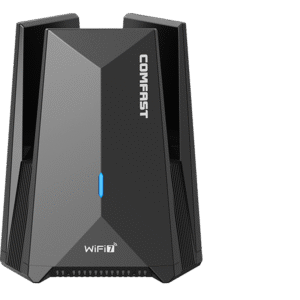
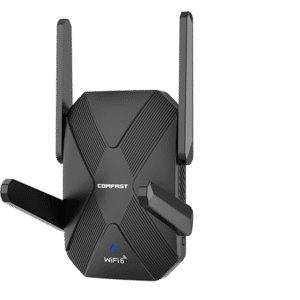
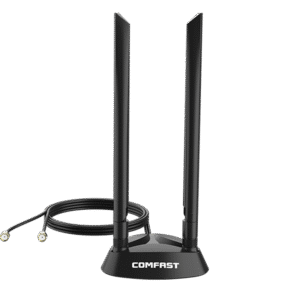
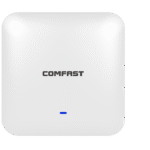
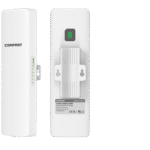
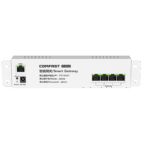
Repeater route: CF-WR773BE – first Wi-Fi 7 repeater on the shelf, 3 570 Mbps, browser-only set-up, no app required.
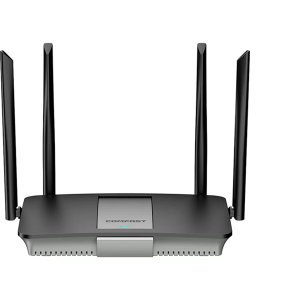
Mesh route: CF-WR633AX V2 – Wi-Fi 6, 3 000 Mbps, one-touch Mesh button, five Gigabit ports per node, scales from one-room loft to five-bed house.

Pick the tool that matches the size of the problem, park the node halfway between source and dead zone, and every room becomes the best room for streaming.