










1. Age is not the boss—stability is
3–5 years is the average life, not a deadline. If your 2017 box still covers every room and hits 90 % of your plan speed, keep it. Just reboot it once a week and blow the dust out of the vents. When it starts dropping you daily, read on.
2. Hard failures = instant pension
– Flashing red every other day.
– Burning-hot case even at idle.
– Needs power-cycling to bring Wi-Fi back.
One-off glitch? Update firmware and relocate it. Two weeks of the same dance? Time to shop.
3. Head-count has outgrown the chipset
Log in to the admin panel and look at the client list. If eight phones, two TVs, a thermostat and a doorbell are already connected, a 2016 entry-level SoC is sweating. Modern Wi-Fi 6/7 chips double the number of simultaneous sessions and queue them intelligently. No more “connected, no internet” badges.
4. Broadband tier moved, router did not
– 100 Mbps fibre + Wi-Fi 5 = fine.
– 300 Mbps or more + Wi-Fi 5 = you leave 30-40 % of the pipe in the box.
– 1 Gbps + Wi-Fi 5 = you are literally paying for packets you will never see.
Upgrade at least to Wi-Fi 6 (AX) or Wi-Fi 7 (BE) with a gig-or-better WAN port so the speed you buy is the speed you feel.
5. New toys need new tricks
160 MHz channels, 4K-QAM, WPA3, OFDMA, MLO—none of those exist on pre-2019 hardware. If you just bought a Wi-Fi 6E laptop or a 2.5 Gb NAS, the old router becomes the obvious bottleneck.

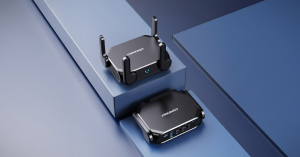
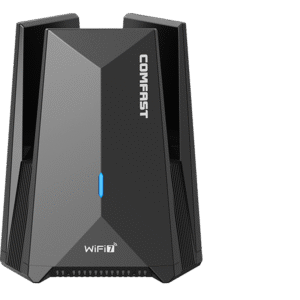
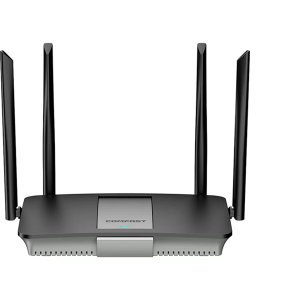
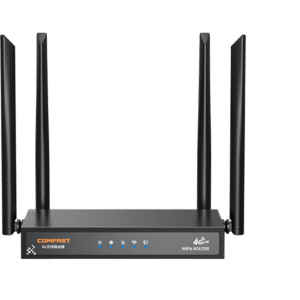
If two or more of the boxes above are ticked, retire the veteran. Something like COMFAST CF-WR632AX (AX3000, 2.5 G WAN, USB 3.0 file sharing, pocket-size) will handle today’s gigabit tiers and still look sane in 2028.