










Project CivicLink Downtown: Urban Public WiFi Coverage and CCTV Wireless Transmission Solution for a City Public District
Contractor Team Introduction
We are a local WiFi engineering contractor with extensive experience in urban public WiFi coverage, municipal square WiFi, pedestrian street WiFi, public park WiFi, transportation waiting area coverage, outdoor CCTV wireless transmission, smart city network deployment, hotel WiFi, shopping mall WiFi, scenic area WiFi, logistics park WiFi, and large outdoor PoE network projects. Our team has served municipal public spaces, open commercial streets, waterfront walkways, tourist service zones, urban plazas, night market areas, security booths, public service windows, parking entrances, and remote public safety camera points.
An urban public WiFi project is not the same as a simple outdoor AP installation. Public users move quickly, stay for different lengths of time, and connect with many types of devices. A city public area also has merchants, public service staff, security teams, CCTV cameras, smart poles, parking systems, event organizers, and maintenance teams using the same outdoor environment. The network must be stable, secure, weather-resistant, visually clean, easy to maintain, and able to support high-density visitor activity during evenings, weekends, holidays, and public events.
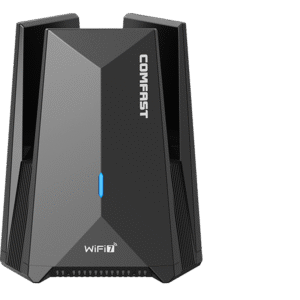
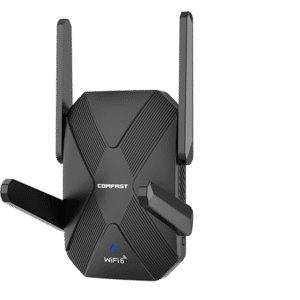
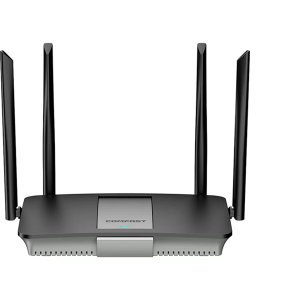
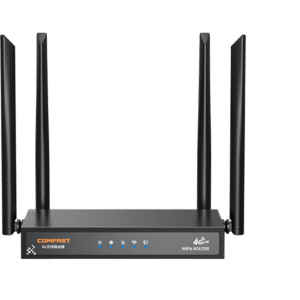
Our team has used COMFAST equipment in many outdoor public network and surveillance transmission projects. From our field experience, COMFAST outdoor WiFi 7 APs, gigabit gateways, PoE switches, WiFi 6 routers, and 5.8G wireless bridges provide a practical balance of performance, installation flexibility, network control, and long-term maintenance. For this Urban Public Coverage Solution, we selected COMFAST CF-AC200 full gigabit core gateway, CF-WR633AX V2 WiFi 6 dual band router, CF-SG1241P 24-port gigabit PoE switch, CF-WA973 outdoor WiFi 7 APs, CF-EW87 outdoor WiFi 7 APs, CF-E115A 5.8G wireless bridges, and CF-E312A V2 5.8G wireless bridges.
This case study documents our Urban Public Coverage Solution for CivicLink Downtown, a mixed public space project covering a municipal square, pedestrian street, public rest areas, park entrance, bus stops, taxi waiting area, tourist service booth, merchant kiosks, night activity zone, temporary event area, smart pole locations, security booth, parking entrance, road intersection cameras, and remote public safety CCTV points.
1. Project Overview
Basic Project Information
Project Name: Project CivicLink Downtown
Project Location: Seattle, Washington, USA
Site Type: Urban public district with municipal square, pedestrian street, transit waiting areas, merchant kiosks, public service points, and outdoor CCTV monitoring locations
Total Outdoor Coverage Area: Approximately 58,000 square meters
Average Daily Foot Traffic: Around 38,000 visitors and commuters
Peak Foot Traffic: More than 9,000 users during weekend events, night market hours, and public holiday periods
Main Coverage Areas: Civic square, pedestrian street, public rest area, park entrance, bus stops, taxi waiting area, tourist service booth, merchant kiosk zone, temporary market area, night event area, smart pole area, security booth, parking entrance, and remote CCTV camera points
Project Type: Urban Public Coverage Solution with public WiFi, merchant network, public service network, CCTV wireless backhaul, and management network separation
Project Cycle: Seven weeks from site survey to final acceptance
Construction Window: Early morning, late night, traffic-controlled periods, and low-activity windows to avoid disrupting pedestrians, transit operations, merchants, events, and municipal services
The city operations department wanted to upgrade public wireless access and public safety video transmission across a high-traffic downtown district. The existing wireless coverage was inconsistent and depended too much on nearby building networks, temporary hotspots, and isolated camera links. The city needed a professional outdoor network that could support citizens, tourists, commuters, merchants, public service staff, CCTV monitoring, and future smart city applications.
2. Customer Pain Points Before the Project
Public WiFi Was Unstable in the Civic Square
The civic square had strong visitor flow but inconsistent WiFi. Signal was usable near service buildings but weak in the center of the square. During public events, too many devices tried to connect through limited coverage points, causing slow access and frequent disconnections.
Pedestrian Street Coverage Was Not Continuous
The pedestrian street had many walking users, shopfronts, kiosks, signs, trees, and outdoor seating areas. The old WiFi design created coverage islands rather than continuous service. Users often connected near one block and lost connection when moving to the next.
Bus Stops and Taxi Waiting Areas Had Short-Stay User Pressure
Bus stops and taxi waiting zones had many short-stay users who needed quick connection for maps, ride updates, transit apps, messaging, and payment services. The previous network was not optimized for quick association and short user sessions.
Night Market and Event Areas Overloaded the Network
The public area hosted evening food markets, weekend cultural events, and seasonal public activities. During these periods, visitor density increased sharply. Existing APs could not handle the number of smartphones, vendor devices, mobile payment terminals, and event staff devices.
Merchant POS and Public Service Devices Were Affected by Public Traffic
Merchant kiosks and public service booths used POS terminals, tablets, service computers, and small printers. When public WiFi became congested, merchant and service devices sometimes experienced delays. The city required separated business and public service networks.
Remote CCTV Cameras Were Difficult to Cable
Several public safety cameras were located at road intersections, parking entrances, square edges, and remote public activity corners. Running new cable would have required pavement work, traffic coordination, and underground utility review. Wireless bridge transmission was a better solution for these locations.
Outdoor Installation Had to Match City Appearance Standards
The city did not allow messy cable runs, random wall mounting, or visually disruptive equipment. APs and bridges had to be mounted cleanly on approved poles, smart pole structures, utility boxes, or service locations while maintaining good coverage.
Public, Merchant, CCTV, and Management Traffic Were Not Clearly Separated
The old network did not clearly separate public WiFi, merchant access, public service devices, CCTV transmission, and management equipment. This made troubleshooting difficult and increased the risk of public user traffic affecting operational services.
3. Customer Requirements
Confirmed Requirements from City Operations
Stable public WiFi coverage across the civic square, pedestrian street, public rest areas, park entrance, transit waiting zones, and activity areas.
Better capacity for night markets, weekend events, holiday activity, and high-density public gatherings.
Quick and reliable connection experience for users at bus stops and taxi waiting areas.
Stable merchant network for kiosks, POS terminals, vendor tablets, and payment devices.
Stable public service network for tourist service booths, information kiosks, and municipal service devices.
Reliable CCTV wireless transmission for remote cameras at road intersections, parking entrances, public event areas, and square edges.
Public WiFi, merchant network, public service network, CCTV network, and management network separated by policy.
Centralized PoE power supply for outdoor APs and wireless bridge devices.
Outdoor equipment suitable for rain, dust, sun exposure, wind, vibration, and long-term public area installation.
Clean, city-friendly installation that does not affect public appearance or pedestrian safety.
Construction without blocking traffic, pedestrian movement, merchant operation, public events, or emergency access routes.
4. COMFAST Equipment Used in This Project
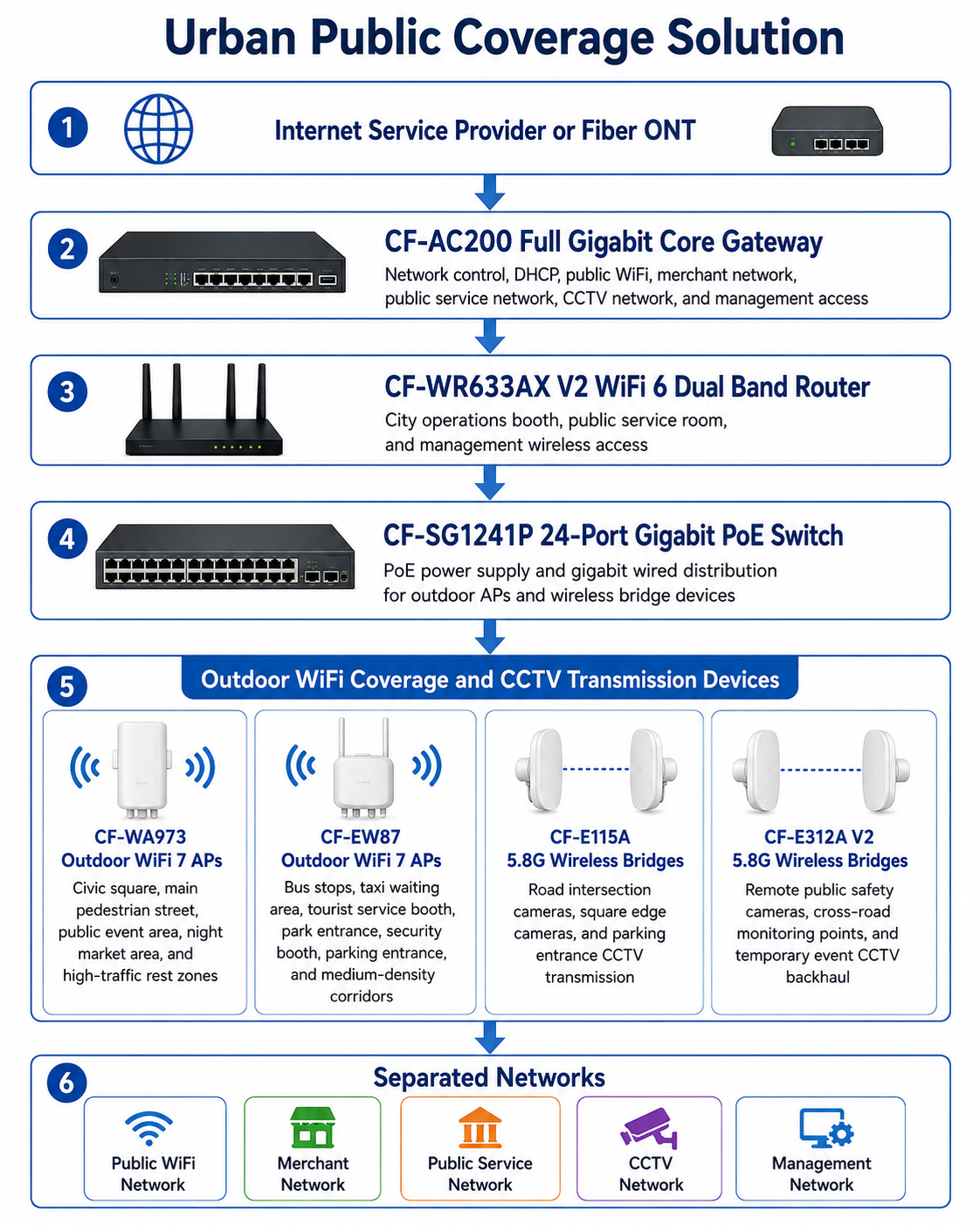
CF-AC200 Full Gigabit Core Gateway
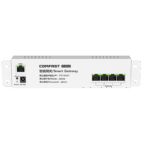
The CF-AC200 was used as the full gigabit core gateway. It handled DHCP, public WiFi policy, merchant network policy, public service network policy, CCTV network planning, and management access. For an urban public network, the gateway is critical because public user traffic must never affect merchant POS devices, public service systems, CCTV streams, or network management equipment.
CF-WR633AX V2 WiFi 6 Dual Band Router
The CF-WR633AX V2 was deployed in the city operations booth and central management area. It provided WiFi 6 dual band wireless access for authorized maintenance users, municipal staff, and field engineers. It also supported controlled access for temporary setup, troubleshooting, and local management tasks.
CF-SG1241P 24-Port Gigabit PoE Switch
The CF-SG1241P 24-port gigabit PoE switch was used as the main PoE power and wired distribution device. It powered outdoor APs, wireless bridges, smart pole network points, and selected monitoring devices. The 24-port design also reserved capacity for future cameras, event APs, and smart city expansion.
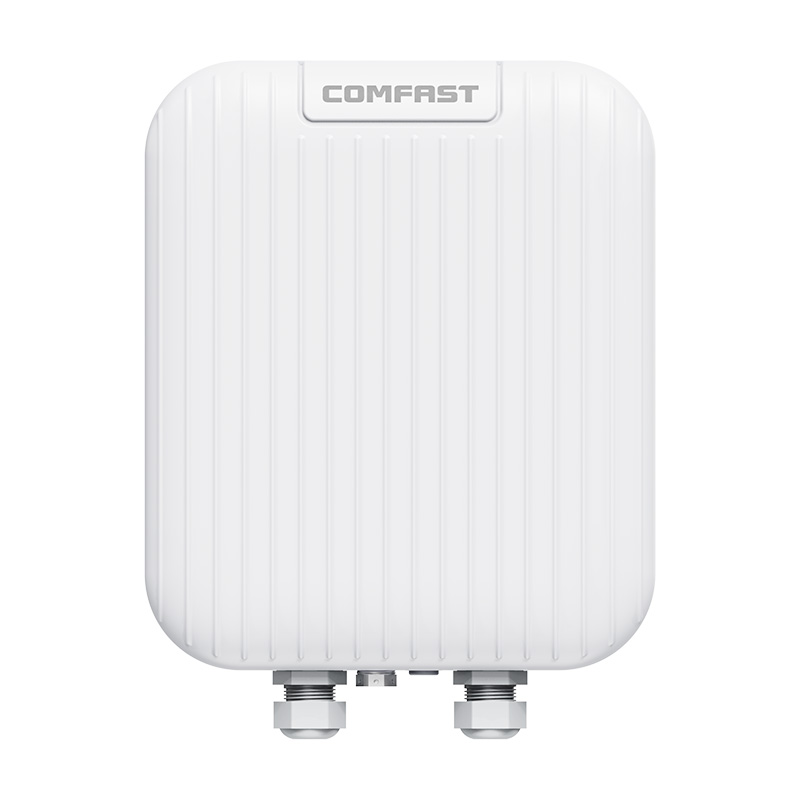
CF-WA973 Outdoor WiFi 7 AP
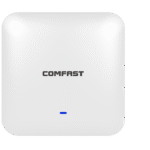
The CF-WA973 outdoor WiFi 7 AP was used for high-density public areas such as the civic square center, public event area, pedestrian street main zone, night activity area, and high-traffic public rest area. These locations needed stronger capacity and better performance for many simultaneous users.
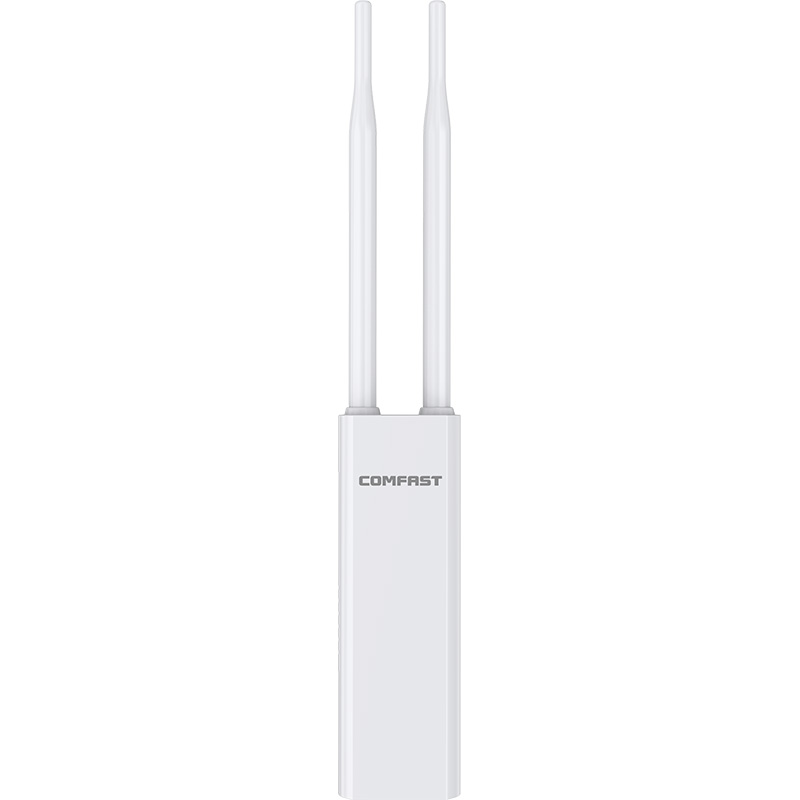
CF-EW87 Outdoor WiFi 7 AP
The CF-EW87 outdoor WiFi 7 AP was used for focused coverage zones, including bus stops, taxi waiting areas, tourist service booths, park entrance, security booth, parking entrance, and medium-density pedestrian corridors. It helped improve continuity between large public zones and transit waiting areas.
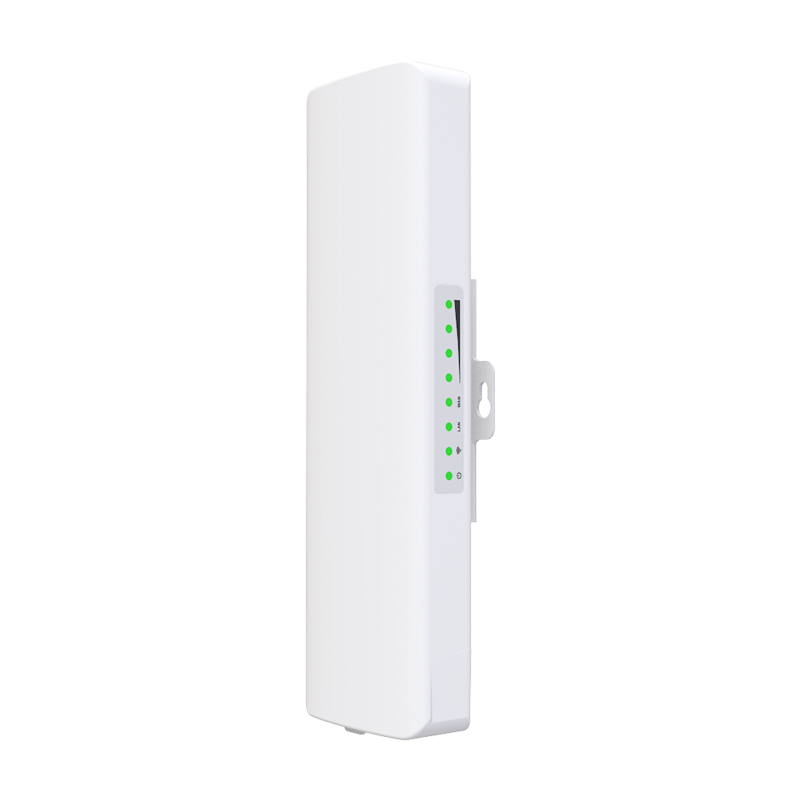
CF-E115A 5.8G Wireless Bridge
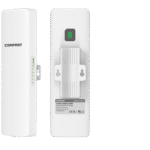
The CF-E115A wireless bridge was used for medium-distance CCTV transmission, including road intersection cameras, square edge cameras, parking entrance monitoring, and public safety cameras near service routes.
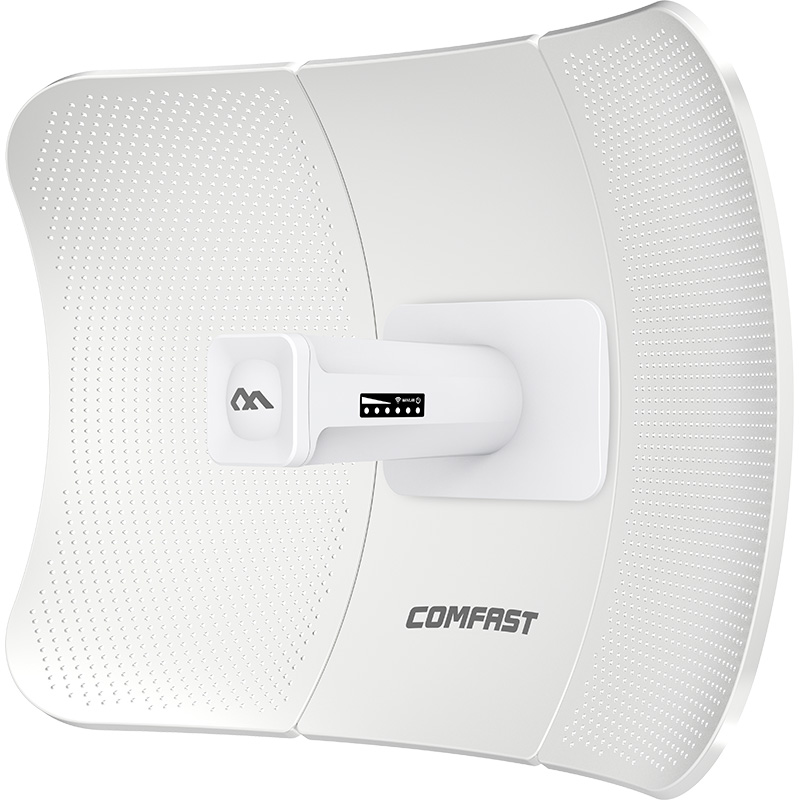
CF-E312A V2 5.8G Wireless Bridge
The CF-E312A V2 wireless bridge was used for longer-distance CCTV backhaul, including remote public safety cameras, cross-road monitoring points, temporary event monitoring points, and locations where trenching or new cable routes were not practical.
5. Project Topology Diagram
Overall Network Topology
6. Site Survey and Troubleshooting Process
Public Flow and Activity Survey
We walked the full public district with the city operations manager, municipal IT supervisor, public safety supervisor, merchant representative, and maintenance technician. We tracked user movement from the civic square to the pedestrian street, from the park entrance to transit waiting zones, from merchant kiosks to rest areas, and from parking entrance to the public service booth. This allowed us to design the network around real urban movement instead of only map distance.
Peak-Time Observation
We observed the district during daytime traffic, evening activity, and weekend visitor flow. The highest density appeared around the civic square, public event area, pedestrian street center, night market zone, bus stops, and taxi waiting area. These zones needed more than basic long-range WiFi coverage.
Outdoor RF Testing
We tested WiFi signal, throughput, and roaming across the square, pedestrian street, park entrance, bus stops, taxi waiting zone, public rest areas, merchant kiosk zone, tourist booth, and security booth. The old network had signal in some locations but lacked stability and continuity.
Smart Pole and Utility Box Inspection
We inspected smart poles, lighting poles, utility boxes, existing conduit routes, service cabinets, and approved mounting positions. Public area projects require clean installation and must meet city appearance and safety requirements.
Merchant and Public Service Device Testing
We tested POS terminals, service tablets, information booth devices, small printers, and public service computers. These devices required more controlled access than general public WiFi and needed separate policy protection.
CCTV Bridge Path Survey
We inspected road intersection cameras, square edge cameras, parking entrance cameras, public safety cameras, and temporary event monitoring points. For each wireless bridge link, we checked line of sight, mounting height, tree obstruction, vehicle obstruction, pole availability, power source, and safety access.
Construction Window and Safety Review
We coordinated with traffic control, public safety, merchant management, and city maintenance teams. Installation windows were arranged around pedestrian flow, transit activity, night market operation, and public event schedules.
7. Problems Found During Implementation
Nearby Building WiFi Could Not Cover an Open Public Square
The old design depended partly on signal from nearby service buildings and merchant spaces. This could not provide reliable public square coverage. We designed a dedicated outdoor system using CF-WA973 APs for high-density public zones.
Pedestrian Movement Required Better Roaming Planning
Users moved continuously along the pedestrian street. Some devices held onto weak APs instead of moving naturally between coverage areas. We adjusted AP placement, channels, and transmit power to improve continuity.
Short-Stay Transit Users Needed Fast Access
Bus stop and taxi waiting users often stayed only a few minutes. The network had to be stable and quick to connect, not only strong in signal. We placed CF-EW87 APs for focused transit zone coverage.
Night Events Created High-Density Load
The night market and temporary event zone created short-term high-density traffic. We treated these zones as capacity areas and used CF-WA973 APs for stronger outdoor WiFi 7 performance.
Merchant and Service Devices Needed Isolation
POS terminals and public service devices could not share the same policy as public users. We separated merchant and public service traffic through the CF-AC200 gateway policy.
Remote Camera Cabling Was Not Practical
Some camera points crossed roads, landscaped areas, underground utility zones, or public pavement. We used CF-E115A and CF-E312A V2 wireless bridges to avoid disruptive trenching.
Installation Had to Meet Public Appearance Standards
The city required clean mounting and protected cable routes. We coordinated device placement with approved poles, smart pole structures, utility cabinets, and existing service points to avoid messy public installations.
8. Final Engineering Solution
Core Gateway and Policy Control
We installed the CF-AC200 full gigabit core gateway as the network control center. It managed DHCP, public WiFi access, merchant access, public service access, CCTV traffic, and management access. This gave the city a structured and secure public network foundation.
Operations Booth and Management Wireless Access
The CF-WR633AX V2 WiFi 6 router was installed in the city operations booth and central management area. It provided authorized wireless access for municipal staff, field engineers, and temporary maintenance tasks.
Centralized PoE Distribution
The CF-SG1241P 24-port gigabit PoE switch powered outdoor APs, wireless bridges, and selected monitoring points. Centralized PoE reduced local adapters and simplified maintenance from the equipment cabinet.
High-Density Outdoor WiFi 7 Coverage
CF-WA973 outdoor WiFi 7 APs were deployed in the civic square, main pedestrian street, public event area, night market area, and high-traffic public rest zones. These locations required stronger capacity and wider public access support.
Focused Outdoor WiFi 7 Coverage
CF-EW87 outdoor WiFi 7 APs were deployed for bus stops, taxi waiting areas, tourist service booths, park entrance, security booth, parking entrance, and medium-density public corridors. This helped support short-stay users and service zones.
CCTV Wireless Bridge Transmission
CF-E115A wireless bridges were used for medium-distance CCTV backhaul, while CF-E312A V2 wireless bridges were used for longer-distance or cross-road camera links. This reduced construction impact and improved monitoring reliability.
9. Different Area Network Design
Civic Square Coverage
The civic square was treated as a high-density public area. CF-WA973 APs were placed around real gathering points, public seating areas, open event zones, and pedestrian flow lines.
Pedestrian Street Coverage
The pedestrian street required continuous coverage. We designed AP overlap carefully so users could move between blocks, kiosks, storefronts, and rest areas with fewer connection drops.
Public Rest Area Coverage
Public rest areas had longer user dwell time. The network was designed to support browsing, maps, messaging, video calls, and public service access for users sitting in the area.
Park Entrance Coverage
The park entrance required public WiFi, staff device access, and visitor information service coverage. CF-EW87 APs were selected for focused coverage around the entrance and service points.
Bus Stop Coverage
Bus stops required fast and stable access for short-stay users. We placed CF-EW87 APs to cover waiting zones, route information boards, and user standing areas.
Taxi Waiting Area Coverage
The taxi waiting area required stable access for ride coordination, maps, and messaging. AP placement avoided vehicle obstruction and focused on actual user waiting positions.
Tourist Service Booth Coverage
The tourist service booth used the public service network for service terminals and staff devices. Public users could connect to guest WiFi nearby without reaching internal service devices.
Merchant Kiosk and POS Network
Merchant kiosks and POS terminals were placed on a separated merchant network. This protected payment devices from public WiFi traffic and improved stability during busy hours.
Night Market and Temporary Event Area Coverage
The night market and temporary event area required extra capacity. CF-WA973 APs provided better support for dense public users, vendor devices, event staff, and temporary public activity needs.
Security Booth Coverage
The security booth required stable staff access and CCTV viewing support. CF-EW87 APs provided focused wireless coverage, while CCTV traffic remained separated through the camera network.
Parking Entrance Coverage
The parking entrance required staff access, camera transmission, and vehicle monitoring support. CF-EW87 APs and CF-E115A bridges were used according to coverage and CCTV path requirements.
10. Outdoor AP Placement and Installation Details
Smart Pole and Utility Box Deployment
Where possible, outdoor APs and bridge devices were mounted on approved smart poles, lighting poles, and service structures. We avoided random wall mounting and worked with city maintenance staff to ensure every location was safe, accessible, and visually clean.
Mounting Height and Direction
Mounting height was selected based on pedestrian coverage, vandalism resistance, cable access, and maintenance access. AP direction was adjusted toward real public activity zones rather than empty roads or building walls.
Weather and Vandalism Protection
Outdoor devices had to handle rain, dust, heat, vibration, and public exposure. We used protected cable routes, secure fastening, drip loops, and approved mounting positions to improve long-term reliability.
Channel and Power Optimization
After installation, we tuned AP channels and transmit power. We did not simply set every AP to maximum power. Correct tuning helped reduce interference, improve roaming, and support more stable public access across the square and pedestrian street.
Port Labeling and Documentation
Every AP and bridge device was labeled at the switch port and field location. We delivered an AP location map, bridge alignment record, port map, network segmentation notes, and maintenance guide to the municipal IT team.
11. Wireless Bridge Transmission Design
Road Intersection CCTV Wireless Transmission
Road intersection cameras were connected through CF-E115A 5.8G wireless bridges. We selected mounting locations with stable line of sight while avoiding traffic signal obstruction and public safety risks.
Parking Entrance Camera Backhaul
The parking entrance camera required stable monitoring but was difficult to cable through existing pavement and traffic lanes. CF-E115A wireless bridge transmission avoided disruptive trenching.
Remote Public Safety Camera Backhaul
Remote public safety cameras used CF-E312A V2 wireless bridges where longer-distance backhaul was needed. These links supported monitoring points that were not close to existing wired infrastructure.
Temporary Event CCTV Support
The city occasionally needed temporary cameras for public events. We reserved PoE capacity and bridge planning options so event monitoring points could be added with minimal disruption.
Bridge Stability Testing
Each wireless bridge link was tested for video continuity, delay, stability, and night monitoring quality. We verified camera feeds from the public safety monitoring room before final handover.
12. Network Segmentation and Security Design
Public WiFi Network
The public WiFi network provided internet access for citizens, tourists, commuters, and event visitors. It was isolated from merchant devices, public service equipment, CCTV, and management systems.
Merchant Network
The merchant network supported kiosk POS terminals, vendor tablets, and payment devices. It was separated to protect business stability during high public user load.
Public Service Network
The public service network supported tourist booths, information terminals, service tablets, public service counters, and municipal staff devices. It was separated from public WiFi and merchant traffic.
CCTV Network
The CCTV network carried video traffic from public safety cameras, road intersection cameras, parking entrance cameras, and wireless bridge backhaul links. Keeping camera traffic separate improved stability and troubleshooting clarity.
Management Network
The management network was reserved for gateway, router, PoE switch, AP, and wireless bridge maintenance. Access was limited to authorized municipal IT and engineering staff.
13. What We Did Differently from Other Engineering Teams
We Did Not Extend Merchant WiFi into the Public Square
Some teams solve public coverage by extending nearby merchant or service booth WiFi. We built a dedicated public outdoor network with proper AP placement, PoE distribution, and policy control.
We Designed Around Public Movement and Dwell Time
We studied where users passed through quickly and where they stayed longer. Bus stops, taxi areas, event zones, rest areas, and merchant zones all required different coverage logic.
We Protected Merchant and Public Service Networks
Merchant POS devices and public service terminals were separated from public WiFi. This protected business and city service traffic during high-density public activity.
We Used Wireless Bridges Instead of Disruptive Trenching
For remote cameras, we used CF-E115A and CF-E312A V2 bridges instead of cutting pavement, crossing roads, or disturbing underground utilities. This reduced construction impact and shortened deployment time.
We Protected City Appearance Standards
We coordinated with city maintenance and public space teams to keep device installation clean. APs, bridges, and cables were mounted in approved locations with careful attention to appearance and safety.
We Delivered a Maintainable System
The city received AP location records, bridge alignment notes, switch port labels, topology documentation, network segmentation notes, and troubleshooting guidance. The system was built for long-term municipal operations.
14. Project Acceptance Results
Final Acceptance Checklist
Civic square WiFi coverage test passed.
Pedestrian street continuous coverage test passed.
Public rest area WiFi test passed.
Park entrance WiFi test passed.
Bus stop quick connection test passed.
Taxi waiting area WiFi test passed.
Tourist service booth network test passed.
Merchant POS network test passed.
Night market high-density test passed.
Road intersection CCTV bridge test passed.
Parking entrance CCTV bridge test passed.
Remote public safety camera bridge test passed.
Public WiFi, merchant network, public service network, CCTV network, and management network isolation test passed.
Device labels, AP location map, bridge alignment records, port map, topology notes, and municipal IT handover completed.
15. Customer and User Feedback
City Operations Manager Feedback
The city operations manager said, “The public WiFi experience is much more stable across the square and pedestrian street. The installation is clean and fits the public space requirements.”
Municipal IT Supervisor Feedback
The municipal IT supervisor said, “The documentation is very helpful. We can clearly identify each AP, each bridge link, and each network group. Maintenance is much easier than before.”
Public Safety Supervisor Feedback
The public safety supervisor confirmed that the road intersection cameras and remote public safety cameras became more stable after the wireless bridge deployment. Night monitoring also improved.
Merchant Representative Feedback
A merchant representative said, “Our POS terminals are more reliable during night market hours. Public WiFi traffic no longer affects our payment devices the way it did before.”
Tourist Service Staff Feedback
Tourist service staff reported more stable access for service tablets, information screens, and visitor assistance tools at the service booth.
Bus Station Coordinator Feedback
The bus station coordinator said that WiFi around the bus stop became more reliable for passengers checking routes, transfer information, and ride updates.
Citizen User Feedback
Citizens reported smoother access to public WiFi around the square, rest area, pedestrian street, and event zone. Several users noted that maps, messaging, and public service pages loaded faster than before.
16. Project Summary
Final Result
Project CivicLink Downtown was a successful Urban Public Coverage Solution for a high-traffic city public district. The project solved unstable square WiFi, discontinuous pedestrian street coverage, weak transit waiting area access, night event congestion, merchant POS instability, remote CCTV backhaul challenges, and mixed network traffic.
The final COMFAST solution used the CF-AC200 full gigabit core gateway, CF-WR633AX V2 WiFi 6 dual band router, CF-SG1241P 24-port gigabit PoE switch, CF-WA973 outdoor WiFi 7 APs, CF-EW87 outdoor WiFi 7 APs, CF-E115A 5.8G wireless bridges, and CF-E312A V2 5.8G wireless bridges. This combination supported public WiFi, merchant access, public service devices, CCTV transmission, and centralized management.
The key value of this project was not simply adding more APs. The real value was building an urban public network around user movement, high-density event behavior, transit waiting patterns, public safety monitoring, merchant service stability, city appearance standards, and long-term maintenance.
17. Lessons Learned and Advice to Other Contractors
Lessons Learned
Urban public WiFi must be designed around real pedestrian flow and dwell time.
High-density public zones need capacity planning, not only signal coverage.
Bus stops and taxi waiting areas need fast, focused access for short-stay users.
Merchant POS and public service terminals must be separated from public WiFi.
Wireless bridges are effective for CCTV points where trenching would affect roads, pavements, or underground utilities.
Outdoor AP placement must consider smart poles, city appearance standards, vandalism resistance, and maintenance access.
Channel and power tuning are essential in open public areas with multiple APs and many mobile devices.
A professional handover should include AP maps, bridge records, port labels, topology notes, and maintenance guidance.
Advice to Other WiFi Engineering Contractors
For urban public coverage projects, do not design only from drawings or satellite maps. Walk the square, pedestrian street, transit stops, service booths, merchant zones, parking entrances, and event areas. The network must follow actual public behavior.
Do not solve every problem by increasing transmit power. In a public area, uncontrolled power can create interference and poor roaming. Correct AP location, channel planning, power tuning, and network segmentation matter more.
Do not place public users, merchant devices, public service terminals, cameras, and management devices in one flat network. A city public network must protect business and public safety services from general public traffic.
An Urban Public Coverage Solution is complete only when citizens connect smoothly, merchants process payments reliably, public service devices stay online, CCTV cameras transmit clearly, city appearance is protected, and the municipal IT team can maintain the system confidently. That was the standard we delivered for Project CivicLink Downtown.