










Project BlueSteel Plant Bridge Network: Factory Wireless Bridge Monitoring Solution for a Manufacturing Plant in Penang, Malaysia
Contractor Team Introduction
We are a local WiFi and wireless CCTV transmission engineering contractor with long-term experience in factory surveillance backhaul, industrial park CCTV transmission, warehouse perimeter monitoring, loading dock camera return, production workshop perimeter monitoring, parking lot camera backhaul, temporary cargo yard monitoring, security gate CCTV links, PoE-powered camera deployment, outdoor bridge installation, and industrial weak-current room optimization.
Factory wireless bridge monitoring is different from ordinary WiFi coverage. The core target is not public wireless access, but stable CCTV video return to the NVR and monitoring room. A factory site has metal buildings, moving forklifts, trucks, containers, pallet stacks, boundary walls, outdoor cabinets, long road crossings, and remote camera points. These conditions change the wireless environment every day, so a professional project must focus on line of sight, bridge height, transmission direction, channel planning, PoE power, waterproof cabling, grounding, video bitrate, NVR stability, and safe construction.
Our team has used COMFAST equipment in many factory monitoring, warehouse CCTV backhaul, outdoor bridge transmission, logistics yard monitoring, temporary yard surveillance, and industrial WiFi projects. From field experience, COMFAST gateways, PoE switches, wireless bridges, outdoor APs, and WiFi 6 routers provide a practical balance of stable transmission, flexible deployment, clean wiring, and maintainable operation. For this project, we selected COMFAST CF-AC100 full gigabit AC gateway router, CF-SG181P 8-port gigabit PoE switches, CF-WR632AX OpenWrt WiFi 6 mini router, CF-E312A V2 5.8G wireless bridges, CF-E113A V2 5.8G wireless bridges, CF-E112N V2 2.4G wireless bridges, and CF-WA933 outdoor WiFi 6 APs.
This case study documents our Factory Wireless Bridge Monitoring project for BlueSteel Precision Manufacturing Plant in Penang, Malaysia. The project focused on stable CCTV wireless backhaul for the main factory entrance, security gate, vehicle entrance and exit, staff passage, production workshop perimeter, warehouse perimeter, raw material yard, finished goods temporary storage area, loading docks, parking area, forklift routes, factory boundary, fence corners, dangerous goods warehouse perimeter, equipment maintenance area, temporary cargo yard, and remote camera points where new cabling was difficult or disruptive.
1. Project Overview
Project Name: Project BlueSteel Plant Bridge Network
Project Location: Penang Industrial Zone, Malaysia
Factory Type: Large precision metal parts and electronics assembly manufacturing plant with production workshops, raw material storage, finished goods storage, loading docks, parking areas, maintenance facilities, dangerous goods storage perimeter, and boundary surveillance points
Factory Area: Approximately 86,000 square meters
Main Buildings: 5 production workshops, 2 warehouses, 1 office building, 1 equipment maintenance building, 1 security gatehouse, and multiple outdoor yards
Total CCTV Cameras Included in Upgrade: 68 cameras
Remote Camera Points Requiring Wireless Backhaul: 31 cameras
NVR Location: Central security monitoring room beside the IT operations room
Main Monitoring Areas: Main gate, vehicle entrance and exit, staff passage, workshop perimeter, warehouse exterior, raw material yard, finished goods area, loading docks, parking lot, forklift routes, boundary walls, fence corners, dangerous goods storage perimeter, equipment maintenance area, and temporary cargo yard
Project Goal: Upgrade unstable CCTV transmission links and connect remote cameras to the NVR through reliable wireless bridges without large-scale trenching or production interruption
Project Cycle: Four weeks from site survey to final acceptance, completed through phased construction during low-traffic production windows, loading off-peak periods, approved maintenance windows, and safety-supervised outdoor work slots
2. Customer Pain Points Before the Project
Several cameras were connected through temporary outdoor network cables. Some cables had been exposed to sun, rain, forklift movement, and maintenance activity for too long. The customer wanted to remove unstable temporary wiring and replace it with a more maintainable wireless bridge transmission structure.
Parking area and fence corner cameras dropped offline frequently. The camera devices were functional, but their transmission path was unstable because the old bridges were installed too low and were often blocked by trucks, containers, and parked vehicles.
Loading dock video was not smooth during busy hours. Trucks, dock shelters, forklifts, pallets, and workers frequently moved through the transmission path. The old wireless links were installed without considering the real loading height and vehicle movement pattern.
Temporary cargo yard cameras could not reliably connect to the NVR. The yard location changed depending on production volume, so fixed deep-buried cabling was not suitable. The customer needed flexible but stable wireless monitoring for temporary storage areas.
Remote warehouse perimeter cameras were expensive and difficult to re-cable. Cable routes would have crossed roads, drainage channels, loading paths, and green belts. The factory preferred wireless backhaul to reduce civil work and shorten the project cycle.
Several road-crossing cable routes required approval from the facility and safety team. Because production trucks and forklifts use these roads continuously, trenching or overhead cable pulling would have created safety and scheduling problems.
Cargo trucks and container stacks blocked the wireless signal. The old bridge layout was tested only when the yard was empty. During actual operation, high containers and loaded trucks changed the transmission environment and caused video freezing.
Several old bridges used the same channel. This created interference between multiple CCTV links. The result was unstable throughput, packet loss, and occasional NVR recording gaps.
Some weak-current boxes had unstable power and poor labeling. Camera power adapters, old switch ports, bridge cables, and camera labels were mixed together, which made troubleshooting slow and risky during production hours.
The NVR occasionally showed frame loss during night recording. When infrared cameras increased bitrate at night, the old transmission links had insufficient margin. The customer needed stable daytime and night video recording, not only live preview during daytime.
3. Customer Requirements
Remote CCTV cameras must connect stably to the NVR in the security monitoring room.
Main gate, security gate, parking area, loading dock, warehouse perimeter, production workshop perimeter, raw material yard, finished goods temporary storage area, dangerous goods warehouse perimeter, temporary cargo yard, and factory boundary cameras must return video reliably.
Wireless bridges should be used where new cabling would be expensive, unsafe, or disruptive.
Critical monitoring links must support continuous NVR recording, not only real-time viewing.
Outdoor equipment must be mounted cleanly, securely, and in positions that are convenient for maintenance.
Wireless bridge installation must consider line of sight, mounting height, transmission direction, waterproof cabling, lightning protection, and grounding.
CCTV network and management network must be separated from general office access.
PoE power supply should be centrally managed through the NVR room, security gate, and regional weak-current boxes.
Weak-current boxes should be cleaned, relabeled, and documented.
Construction must not affect production lines, forklift routes, truck access, loading operations, safety patrols, or gate control.
Project handover must include a topology diagram, equipment labels, bridge alignment records, signal test results, and acceptance test results.
4. COMFAST Equipment Used in This Project
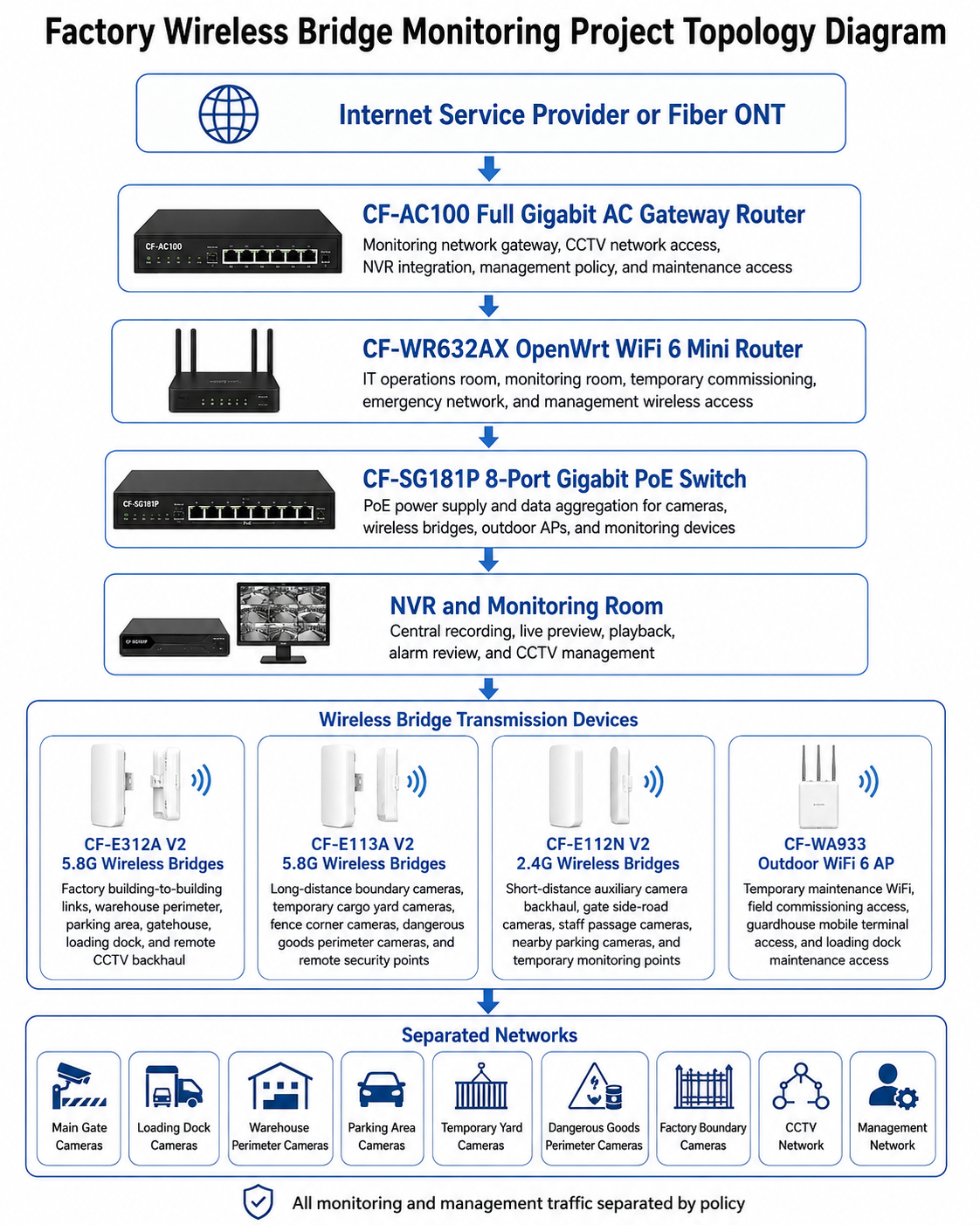
CF-AC100 Full Gigabit AC Gateway Router: The CF-AC100 was used as the monitoring network gateway and management entry point. It handled CCTV network access, NVR integration, management policy, and basic network control for the bridge transmission system.
CF-SG181P 8-Port Gigabit PoE Switch: The CF-SG181P was deployed in the NVR room, security gatehouse, and selected regional weak-current boxes. It provided PoE power and data aggregation for cameras, wireless bridges, outdoor APs, and monitoring devices.
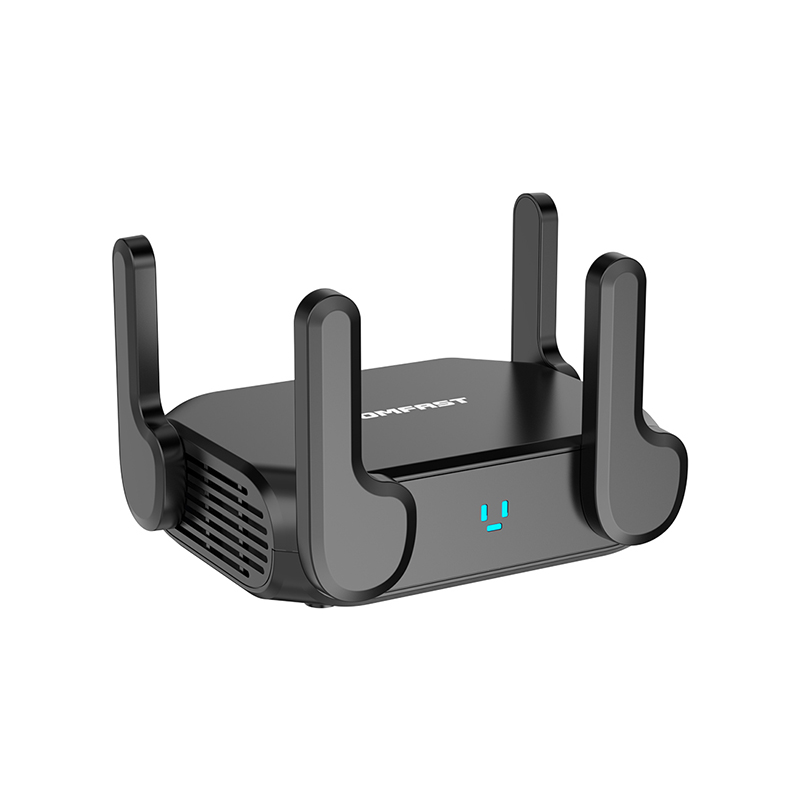
CF-WR632AX OpenWrt WiFi 6 Mini Router: The CF-WR632AX was installed in the IT operations room and monitoring room for management wireless access, temporary commissioning, emergency troubleshooting, and maintenance tool connection.
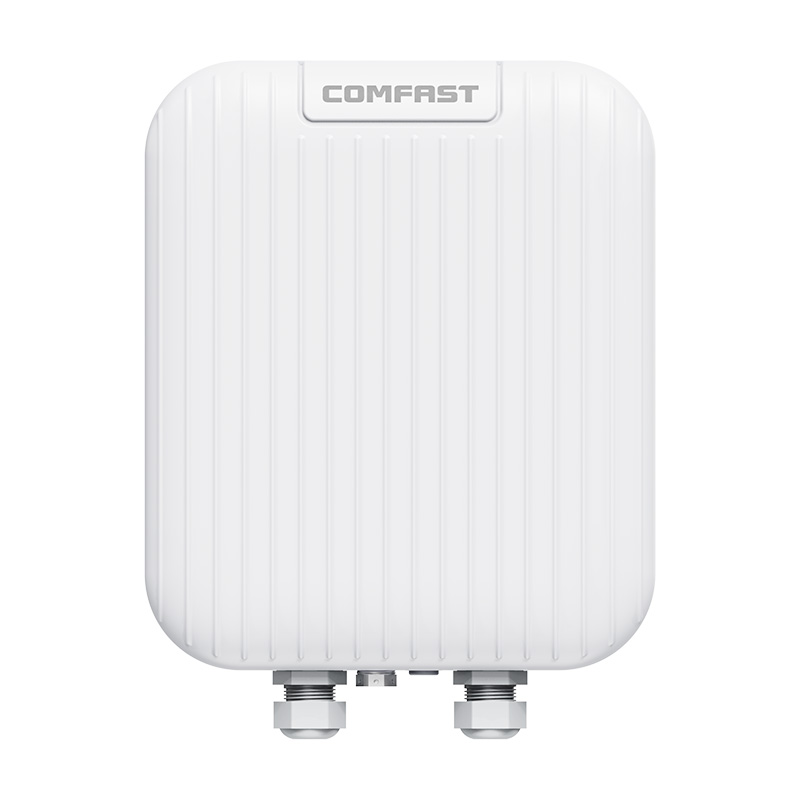
CF-E312A V2 5.8G Wireless Bridge: The CF-E312A V2 was used for main CCTV backhaul links between buildings, warehouse exterior points, parking areas, gatehouse positions, loading docks, and remote cameras where stable 5.8G transmission was required.
CF-E113A V2 5.8G Wireless Bridge: The CF-E113A V2 was used for longer-distance and higher-stability monitoring links, including boundary cameras, temporary cargo yard cameras, fence corner cameras, dangerous goods warehouse perimeter cameras, and remote security points.
CF-E112N V2 2.4G Wireless Bridge: The CF-E112N V2 was used for short-distance or more complex line-of-sight auxiliary camera backhaul, including guardhouse side-road cameras, staff passage cameras, nearby parking cameras, and temporary monitoring points.
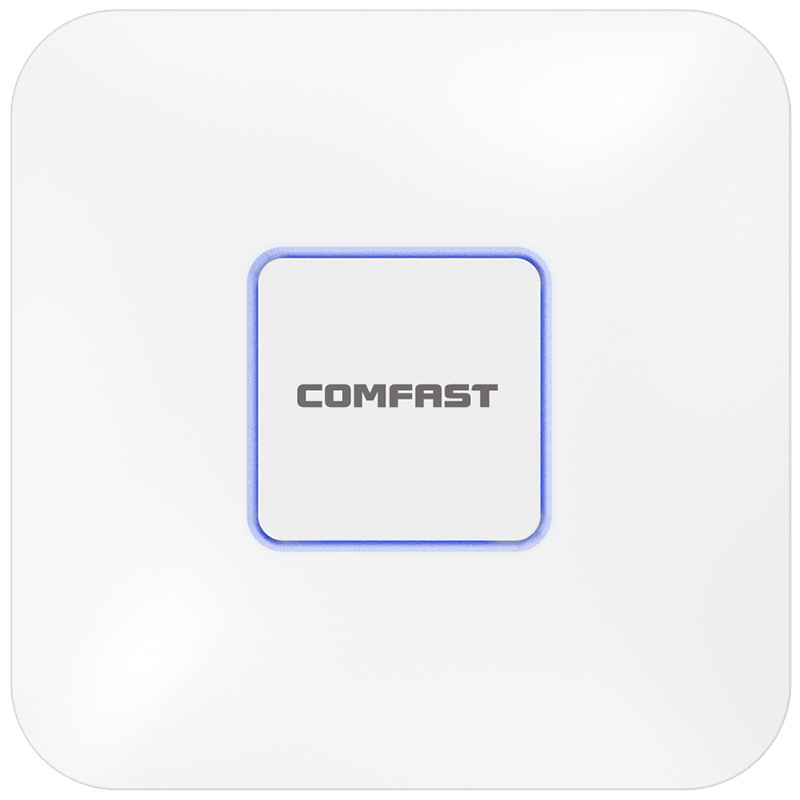
CF-WA933 Outdoor WiFi 6 AP: The CF-WA933 was used to provide temporary wireless access during installation and maintenance, as well as limited mobile terminal access for guardhouse staff, loading dock coordinators, and monitoring maintenance personnel during field testing.
5. Project Topology Diagram
6. Site Survey and Troubleshooting Process
We began with a full camera point audit together with the factory operations manager, security supervisor, IT supervisor, warehouse manager, loading dock coordinator, forklift team leader, safety officer, and maintenance technician. Every existing and new camera point was checked on site instead of being confirmed only from drawings.
In the NVR monitoring room, we inspected the NVR, recording channels, switch connections, cable labels, power condition, existing uplink routes, and camera naming structure. We also reviewed which cameras had frame loss, which cameras went offline most often, and which areas needed priority monitoring.
At the main gate and security gatehouse, we checked weak-current boxes, camera power, existing switches, bridge mounting points, gate camera angles, vehicle entrance and exit views, and available PoE capacity. The gatehouse became one of the important aggregation points for the new wireless bridge system.
Between factory buildings, we confirmed line of sight for wireless bridge transmission. We checked building height, roof edge visibility, wall mounting options, nearby metal structures, pipe racks, ventilation ducts, and potential obstructions from temporary stacked materials.
Across internal roads, we checked truck height, container movement, forklift routes, lighting poles, traffic signs, and possible mounting heights. This was critical because old bridges were mounted too low and were frequently blocked by high vehicles.
At warehouse perimeters, we performed obstruction testing around metal walls, racks near openings, parked pallets, trucks, and outdoor storage. We confirmed that several old wireless paths worked only when the yard was empty, not during actual daily operation.
At fence corners and boundary walls, we tested line of sight and camera visibility. These locations were important for security, but they were far from cable routes and frequently affected by trees, wall height, and road curves.
At the loading dock, we tested bridge paths during active loading. Trucks, forklifts, dock doors, and pallet stacks changed the transmission path throughout the day. We selected bridge mounting points above the vehicle obstruction zone.
At the dangerous goods warehouse perimeter, we confirmed safety distances, restricted work areas, camera needs, power source options, and installation approval requirements. No bridge or cable route was selected without safety confirmation.
At the temporary cargo yard, we confirmed the need for flexible camera backhaul. The storage position could change seasonally, so we used wireless bridge planning that allowed future adjustment without civil work.
We scanned the wireless environment and grouped links by distance, direction, and interference condition. The old system had several bridge pairs using similar channels. We planned new links with separated channels and controlled transmission directions.
We checked PoE capacity, waterproof boxes, grounding, lightning protection path, cable glands, outdoor conduit, and serviceability for every planned installation point. The final design had to be stable, safe, and easy to maintain.
7. Problems Found During Implementation
The original temporary outdoor cables were not suitable for long-term surveillance backhaul. Some cables had poor protection and unclear routes. We replaced selected unstable wired segments with wireless bridge links and protected PoE distribution points.
Camera dropouts were not caused by the cameras alone. Several dropouts were caused by unstable power, weak bridge alignment, low installation height, signal obstruction, and interference from other bridge links. We corrected the transmission system instead of replacing cameras unnecessarily.
Metal buildings, containers, trucks, forklifts, and cargo stacks changed the wireless path. We raised bridge installation height and avoided mounting positions where common vehicle movement would block the signal.
Parking area and fence corner cameras needed higher bridge mounting positions. Several old links were installed at a height where trucks and parked containers could block transmission. We installed new bridge points above normal obstruction height.
Loading dock links could not be installed at truck body height. The final bridge positions were selected above the loading activity zone, with safer cable routing and clearer line of sight to the receiving point.
Multiple bridge links could not share the same channel. We grouped CF-E312A V2, CF-E113A V2, and CF-E112N V2 links by distance and direction, then assigned different channels to reduce interference and improve video stability.
Night infrared video required more transmission margin. Several cameras increased bitrate at night, so we tested both daytime and night conditions and kept sufficient link capacity for stable NVR recording.
Temporary cargo yard monitoring required flexibility. We used wireless bridge backhaul instead of fixed buried cable, making it easier for the factory to adjust camera points when the yard layout changed.
Dangerous goods warehouse perimeter installation required safety approval. We selected safe mounting points, avoided restricted zones, and scheduled work under the supervision of the factory safety officer.
Outdoor bridge installation required waterproofing, stable brackets, grounding, and future maintenance access. We used protected cable entry, weather-resistant routing, labeled cables, and documented alignment directions.
8. Final Engineering Solution
The CF-AC100 was deployed as the full gigabit AC gateway router for the CCTV transmission network. It provided the management entry point for the monitoring network and supported integration between the NVR, PoE switches, wireless bridge groups, and maintenance access.
CF-SG181P 8-port gigabit PoE switches were installed in the NVR room, security gatehouse, and selected regional weak-current boxes. These switches provided stable PoE power and data aggregation for wireless bridges, cameras, and field monitoring devices.
The CF-WR632AX OpenWrt WiFi 6 mini router was installed in the monitoring room and IT operations room. It allowed authorized engineers and maintenance staff to access the management network during testing, emergency troubleshooting, and future maintenance.
CF-E312A V2 5.8G wireless bridges were used as the main factory CCTV backhaul devices for building-to-building links, warehouse perimeter cameras, parking area cameras, gatehouse cameras, loading dock cameras, and medium-distance remote camera points.
CF-E113A V2 5.8G wireless bridges were used for longer-distance or higher-priority links, especially boundary cameras, fence corner cameras, temporary cargo yard cameras, dangerous goods warehouse perimeter cameras, and remote security points where stable video return was critical.
CF-E112N V2 2.4G wireless bridges were used for short-distance auxiliary links, including guardhouse side-road cameras, staff passage cameras, nearby parking cameras, and temporary monitoring points where the line of sight was more complex or the distance was shorter.
CF-WA933 outdoor WiFi 6 APs were installed for field maintenance access, temporary commissioning, and limited mobile terminal access around the gatehouse and loading dock. This allowed technicians to check bridge status, camera view, and NVR return without repeatedly returning to the monitoring room.
All wireless links were aligned, labeled, grouped by function, and tested under real operation conditions. The final design focused on video stability, NVR recording continuity, interference control, and long-term maintainability.
9. Different Area CCTV Backhaul Design
NVR Monitoring Room Network: The NVR monitoring room became the central point for live preview, continuous recording, playback, alarm review, and bridge link supervision. CF-AC100 and CF-SG181P formed the core network structure for CCTV aggregation and management access.
Main Factory Entrance CCTV Backhaul: Main entrance cameras were connected through stable bridge and PoE links to support vehicle identification, visitor entry review, and delivery vehicle recording. These cameras were treated as high-priority monitoring points.
Security Gate CCTV Backhaul: The security gatehouse used CF-SG181P for local aggregation and CF-E312A V2 wireless bridge links to return gate cameras to the NVR room. Camera labels and switch ports were documented for guardhouse maintenance.
Vehicle Entrance and Exit Camera Backhaul: Entrance and exit cameras required stable video during shift changes and truck peaks. Bridge positions were selected to avoid vehicle-height obstruction and gate structure blockage.
Staff Passage Camera Backhaul: Staff passage cameras used CF-E112N V2 short-distance bridge links where direct cabling was not practical. These cameras helped record staff movement and shift-change traffic.
Production Workshop Perimeter Monitoring: Workshop perimeter cameras were connected through CF-E312A V2 bridge links. Camera positions covered side roads, delivery paths, emergency exits, and outdoor storage near the workshops.
Warehouse Perimeter Camera Backhaul: Warehouse perimeter cameras used CF-E312A V2 wireless bridges for video return. Bridge directions followed open exterior routes instead of low paths blocked by pallets and trucks.
Raw Material Yard Monitoring: The raw material yard had changing stack heights and truck movement. We installed bridge links above normal obstruction height and tested video return during active material movement.
Finished Goods Temporary Storage Monitoring: Finished goods storage cameras used wireless bridge backhaul to avoid temporary cable routes across forklift paths. The solution supported flexible yard adjustment.
Loading Dock Camera Backhaul: Loading dock cameras used CF-E312A V2 bridges installed above truck obstruction height. We tested video return during truck docking, forklift movement, and pallet transfer.
Parking Area Camera Backhaul: Parking cameras used CF-E312A V2 and CF-E112N V2 links depending on distance and line-of-sight conditions. This solved previous dropouts caused by low bridge height and vehicle blocking.
Forklift Route Monitoring: Forklift route cameras were positioned to monitor intersections, loading paths, and blind corners. Bridge paths were kept away from frequent forklift mast and cargo obstruction zones.
Factory Boundary Camera Backhaul: Boundary cameras used CF-E113A V2 bridges for longer and more stable links. These points were essential for night security patrol and perimeter monitoring.
Fence Corner Camera Backhaul: Fence corner cameras were upgraded with higher bridge positions and clearer alignment. This solved repeated offline problems in the corners farthest from the monitoring room.
Dangerous Goods Warehouse Perimeter Monitoring: Dangerous goods perimeter cameras used CF-E113A V2 links and safety-approved mounting locations. Work was completed with safety supervision and proper access control.
Equipment Maintenance Area Monitoring: Maintenance area cameras monitored spare parts access, repair equipment movement, and service paths. The backhaul used a combination of PoE aggregation and wireless bridge return.
Temporary Cargo Yard Wireless Monitoring: Temporary cargo yard cameras used CF-E113A V2 links because the yard layout changed with production volume. The bridge-based design allowed later adjustment without trenching.
Remote CCTV Wireless Bridge Backhaul: Remote monitoring points used point-to-point and grouped bridge links based on distance, line of sight, and camera bitrate. All links were tested for live preview and NVR recording.
Temporary Maintenance WiFi Access: CF-WA933 outdoor APs provided controlled maintenance WiFi during commissioning and future inspection. This helped technicians check camera views and bridge status directly from field locations.
10. Wireless Bridge Installation and Alignment Details
Bridge installation height was selected according to truck height, container height, forklift movement, fence height, factory building structure, and maintenance safety. We avoided low positions that could be blocked by daily operations.
Each wireless bridge was aligned based on actual receiving point visibility. We did not rely only on approximate direction. During installation, technicians checked line of sight, signal strength, link quality, and camera video return at the same time.
CF-E312A V2 links were mainly used for medium-distance CCTV backhaul between warehouses, gatehouses, parking points, and loading docks. These links handled daily factory monitoring video with stable throughput.
CF-E113A V2 links were used for longer-distance or higher-priority remote points. These links were carefully aligned for boundary cameras, dangerous goods perimeter cameras, and temporary cargo yard monitoring.
CF-E112N V2 links were used for short-distance auxiliary cameras where 2.4G transmission was suitable for near-field or more complex line-of-sight conditions. This helped avoid overloading the 5.8G bridge plan with small auxiliary points.
Bridge channels were planned by link group. Links facing different directions and operating in nearby zones were assigned carefully to reduce mutual interference. This was one of the most important improvements over the old installation.
Outdoor cable routes used protected entry points, drip loops, secured conduits, and waterproof cable glands. Weak-current boxes were checked for weather protection, power condition, and maintenance access.
Grounding and lightning protection were reviewed for outdoor bridge and camera mounting points. The final installation followed factory safety requirements and avoided unsafe temporary wiring.
Every bridge was labeled with its source, destination, direction, camera group, and switch port. We also photographed and documented key bridge alignment directions for future maintenance.
11. NVR and Monitoring Room Integration
The NVR monitoring room was reorganized as the central receiving point for CCTV video. CF-AC100 provided the monitoring network gateway, while CF-SG181P handled PoE and data aggregation for local devices and bridge-connected camera groups.
Camera groups were renamed based on real monitoring areas, including main gate, vehicle entrance, staff passage, warehouse perimeter, loading dock, parking area, boundary, fence corner, dangerous goods perimeter, and temporary cargo yard.
We checked NVR channel load, recording status, preview quality, playback smoothness, and storage continuity. Several channels that previously had frame loss became stable after bridge alignment and channel planning.
The monitoring team received a clear map showing which cameras returned through each bridge link. This allowed security staff and IT technicians to identify link problems quickly during future maintenance.
The CF-WR632AX provided controlled management WiFi for authorized maintenance devices inside the monitoring room. This allowed engineers to access the bridge and camera management interface during troubleshooting without using the office network.
12. Network Segmentation and Maintenance Design
CCTV Network: The CCTV network carried video traffic from wired cameras and wireless bridge-connected cameras to the NVR. Camera traffic was kept separate from office traffic and temporary maintenance WiFi.
Management Network: The management network was reserved for the gateway, PoE switches, wireless bridges, outdoor APs, NVR access, and authorized maintenance tools. Access was limited to IT staff and approved engineering personnel.
Temporary Maintenance WiFi: CF-WA933 outdoor WiFi 6 APs provided limited field access for commissioning and maintenance. This was not designed as a public WiFi network. It was used for technicians checking camera video, bridge signal, and link status on site.
PoE Power Design: CF-SG181P switches provided centralized PoE supply in the NVR room, security gatehouse, and selected weak-current boxes. This reduced scattered power adapters and made camera or bridge power troubleshooting more direct.
Labeling and Documentation: Every bridge, camera, cable, switch port, and field box was labeled. The handover package included topology, bridge direction records, device locations, test results, and maintenance notes.
13. What We Did Differently from Other Engineering Teams
We did not simply connect cameras to wireless bridges and leave. We tested video stability, NVR recording continuity, daytime preview, night infrared bitrate, packet loss, bridge signal strength, and camera playback.
We did not install bridge pairs randomly. Every bridge direction was selected based on line of sight, vehicle height, factory structure, cargo movement, and future maintenance access.
We did not test the system only when the yard was empty. We tested during forklift movement, truck loading, parking activity, shift changes, and night recording conditions.
We did not put every bridge link on the same channel. The wireless links were grouped by distance, direction, and interference condition. Proper channel planning improved video stability and reduced packet loss.
We did not mount bridges at low convenient points. We selected mounting heights based on truck clearance, container height, forklift routes, fence corners, wall structures, and service safety.
We did not blindly pull cable across production roads or forklift areas. Point-to-point and grouped wireless bridge transmission reduced construction disruption and shortened the project cycle.
We did not interrupt production. Construction was completed by zone during approved windows, away from loading peaks, shift-change crowds, forklift-dense periods, and safety patrol routes.
We did not leave unclear weak-current boxes behind. The customer received equipment labels, switch port records, bridge alignment photos, topology notes, and acceptance test results.
14. Project Acceptance Results
NVR continuous recording test passed.
Daytime live video preview test passed.
Night infrared video recording test passed.
Camera playback and search test passed.
Wireless bridge signal strength test passed.
Bridge alignment angle inspection passed.
Bridge bandwidth test passed.
Bridge latency test passed.
Packet loss test passed.
Main gate camera test passed.
Security gate camera test passed.
Vehicle entrance and exit camera test passed.
Staff passage camera test passed.
Production workshop perimeter camera test passed.
Warehouse perimeter camera test passed.
Raw material yard camera test passed.
Finished goods temporary storage camera test passed.
Loading dock camera test passed.
Parking area camera test passed.
Forklift route camera test passed.
Factory boundary camera test passed.
Fence corner camera test passed.
Dangerous goods warehouse perimeter camera test passed.
Temporary cargo yard camera test passed.
Power-off recovery test passed.
PoE power supply test passed.
Waterproof box inspection passed.
Device label inspection passed.
Topology diagram, bridge direction records, switch port labels, camera list, and acceptance report were delivered to the customer.
15. Customer and User Feedback
Factory Operations Manager Feedback: “The project solved a long-term monitoring problem without interrupting production. We now have stable video return from the gate, loading dock, yard, and boundary areas.”
Security Supervisor Feedback: “The NVR recordings are more continuous now. Parking cameras and fence corner cameras no longer drop offline during night shifts.”
IT Supervisor Feedback: “The bridge direction records, switch port labels, and topology diagram are very useful. We can identify each camera path quickly during maintenance.”
Warehouse Manager Feedback: “Warehouse perimeter cameras are much more stable, even when trucks and pallets are moving around the yard.”
Loading Dock Coordinator Feedback: “The dock camera video is smoother. We can review truck loading and forklift movement without the old freezing problem.”
Forklift Team Leader Feedback: “The installation did not block our routes, and the cameras now cover several important crossing points better than before.”
Night Shift Security Guard Feedback: “Night infrared images are more stable on the monitoring screen. The boundary cameras stay online during patrol hours.”
Maintenance Technician Feedback: “The outdoor boxes are cleaner, the bridge labels are clear, and the alignment notes make future inspection much easier.”
16. Project Summary
Project BlueSteel Plant Bridge Network was a successful Factory Wireless Bridge Monitoring project. The project solved unstable temporary cable links, parking camera dropouts, fence corner camera disconnections, loading dock video freezing, temporary cargo yard camera instability, remote warehouse perimeter cabling difficulty, road-crossing cabling restrictions, truck and container signal blocking, same-channel bridge interference, weak-current box disorder, and night recording frame loss.
The final COMFAST solution used the CF-AC100 full gigabit AC gateway router, CF-SG181P 8-port gigabit PoE switches, CF-WR632AX OpenWrt WiFi 6 mini router, CF-E312A V2 5.8G wireless bridges, CF-E113A V2 5.8G wireless bridges, CF-E112N V2 2.4G wireless bridges, and CF-WA933 outdoor WiFi 6 APs. This combination provided stable CCTV backhaul, PoE aggregation, maintenance access, bridge grouping, remote camera connection, and NVR integration.
The key value of this project was not simply installing several wireless bridges. The real value was engineering the CCTV transmission network around line of sight, mounting height, truck obstruction, factory metal structures, video bitrate, night infrared load, channel planning, PoE stability, NVR recording continuity, safe installation, and long-term maintenance.
17. Lessons Learned and Advice to Other Contractors
Factory wireless bridge monitoring must start with camera point verification and NVR recording requirements, not only bridge distance.
Line of sight must be checked under real factory operation conditions, including trucks, containers, forklifts, pallets, and temporary cargo stacks.
Bridge mounting height should be selected according to vehicle obstruction, factory structures, fence corners, and future maintenance safety.
Multiple bridge links must be planned by channel group and direction. Using the same channel for every link causes interference and unstable CCTV video.
Night infrared video must be tested because camera bitrate can increase after dark and expose weak transmission margins.
PoE power supply, waterproof boxes, cable glands, grounding, and lightning protection are as important as wireless signal strength.
Temporary cargo yard monitoring should remain flexible. Wireless bridge backhaul is often more practical than fixed buried cable for changing yard layouts.
Construction must avoid loading peaks, forklift-dense periods, shift changes, production-critical windows, and safety patrol routes.
Professional handover must include camera lists, bridge direction records, signal test results, switch port labels, topology notes, waterproof box records, and maintenance guidance.
For factory CCTV wireless bridge projects, do not design only from a drawing. Walk every camera point, every bridge path, every road crossing, every loading dock, every fence corner, and every weak-current box. A stable monitoring project is built on real site conditions.
Do not treat wireless bridge monitoring as a simple connection task. The final result depends on video bitrate, NVR recording, bridge alignment, link margin, channel planning, power stability, waterproofing, and maintenance documentation.
Do not install bridges at convenient low positions just because it is faster. In factories, low installation often means trucks, containers, forklifts, and goods will block the link later. Always consider the factory’s real operating height and movement pattern.
A Factory Wireless Bridge Monitoring project is complete only when cameras stay online, NVR recording is continuous, daytime and night video remain stable, remote cameras return video without cable trenching, bridge links are documented, PoE power is reliable, and the factory maintenance team can manage the system confidently. That was the standard we delivered for Project BlueSteel Plant Bridge Network.