










Let’s skip the hype and talk like grown-ups. Wi-Fi 6 is still on every new phone, laptop and router sold this year. Wi-Fi 7 hardware is here, but the spec won’t be finally signed off until early 2024 and most countries have not opened the full 6 GHz band yet. So the honest question is: “Will I feel anything if I pay the early-adopter tax?”

1. What Wi-Fi 7 really brings
– Peak raw speed: 46 Gbps vs 9.6 Gbps on Wi-Fi 6.
– Channel width: up to 320 MHz (double today’s 160 MHz).
– 4 K-QAM modulation: 20 % more bits per symbol.
– MLO (Multi-Link Operation): one device talks on two bands at the same time, cutting latency and dodging interference.
– Enhanced OFDMA & MU-MIMO: more clients served in the same slice of airtime.
Translation for humans: the air gets “wider” and “faster”, but only if every link in the chain—laptop, phone, router, broadband—supports the new tricks.
2. Scenes where you will notice
– Gig+ fibre (1 000 Mbps or more) and you actually use it—8 K TV downloads, 20 GB Steam updates, nightly cloud backups.
– Competitive gaming or VR wireless headsets where 3 ms extra lag matters.
– Live-streaming 4 K/60 fps while three housemates do the same.
– Offices that run 50–100 mixed devices on one access point.
If none of that sounds like you, Wi-Fi 6 still fills a 300–500 Mbps pipe with room to spare.
3. When to stay put
– Your broadband is 300 Mbps or less.
– Every device you own is Wi-Fi 6 or older.
– You are happy with current pings and transfer speeds.
– You would rather spend US $100 on something other than a router and a new NIC.
4. When to jump
– You are already shopping for new gear and want it future-proof (five-year horizon).
– You have, or will soon get, > 1 Gbps internet.
– You run high-bit-rate, low-latency workloads today and feel the choke.
– You like quiet kit: because Wi-Fi 7 finishes jobs faster, radios spend more time asleep, so laptops can actually gain battery life.
5. Picking hardware that is not landfill
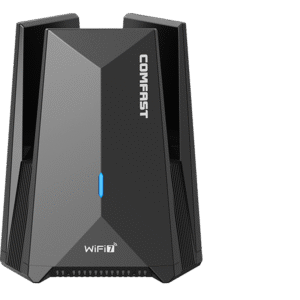
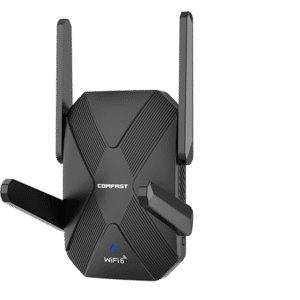
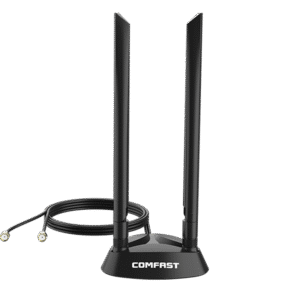
If you decide the time is right, buy products based on the draft 802.11be spec that have received Wi-Fi Alliance “Wi-Fi 7 Certified” pre-certification or the official logo once the program launches. COMFAST’s CF-BE200 series (USB/PCIe/M.2), CF-987BE, CF-986BE adapters and the CF-WR773BE mesh node are already in that queue, so you are not beta-testing on your own dime.

Bottom line (quietly)
Wi-Fi 7 is real progress, not marketing glitter—but only if you feed it fast internet and own devices that can dance the new steps. Upgrade when your use-case or replacement cycle says “now”, not when the forum crowd shouts “must”.