










Short answer: as many as you like—until you run out of speed, Ethernet ports or patience. The real ceiling is not a hidden rule from the ISP; it is simple math and radio physics.
1. Start with the pipe, not the boxes
– 100 Mbps plan: after overhead you have ≈ 90 Mbps. If every router’s average client load is 20 Mbps you can feed 4–5 routers before nobody gets a full slice.
– 300 Mbps or faster: the same sum gives you 10+ routers, but remember that one 4 K Netflix stream already wants 25 Mbps. Count devices, not routers.
2. Count radios, not routers
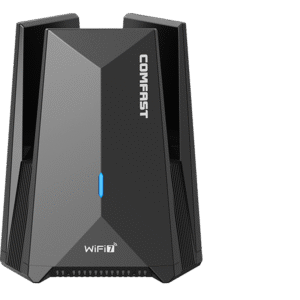
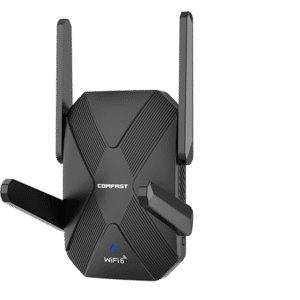
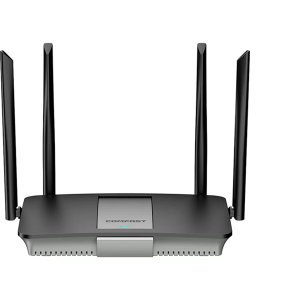
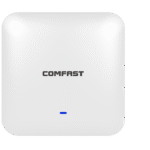
A £30 bargain box may start stalling after 10–15 active clients. Mid-range Wi-Fi 6/7 models (CF-WR631AX V3, CF-WR632AX, etc.) will happily handle 60–100 devices each. Fewer, better units always beats a pile of cheap ones fighting for channels.


3. Use the right glue
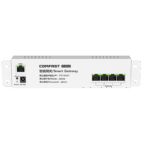
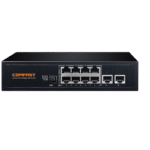
– Ethernet back-haul: each extra unit needs one LAN port on the main router or a switch. A £20 eight-port Gigabit switch instantly turns “only four ports” into “seven more routers”.
– Mesh instead of repeater soup: all nodes share one SSID, roam clients cleanly and balance load. One main router plus two satellites uses exactly one public IP; the ISP sees a single household.
4. Stay legal
Most residential T&Cs forbid sharing the line with the neighbour for money, but nothing stops you wiring your own bedrooms, garage or garden room. Just do not plug 50 routers into a 100 Mbps line and wonder why everything crawls.
Rule of thumb
One good Wi-Fi 6/7 mesh pack (2–3 nodes) on a 300–500 Mbps line covers 95 % of family houses with speed to spare. Add nodes until every room hits –70 dBm and speed tests still show 80 % of your plan. When the test drops, you have hit the real limit—stop buying routers and buy more bandwidth instead.