










Project Prairie Ridge Farm: Indoor WiFi Coverage and CCTV Wireless Transmission for a Large Agricultural Farm in the United States
Contractor Team Introduction
We are a local WiFi engineering contractor with long-term experience in agricultural WiFi coverage, large farm networks, warehouse WiFi, hotel WiFi, shopping mall WiFi, scenic area WiFi, marina WiFi, government facility WiFi, CCTV wireless transmission, PoE-powered network systems, and multi-building wireless projects. Our team has completed network deployments for farms, ranches, grain storage facilities, equipment barns, rural offices, staff housing, food processing areas, logistics yards, and remote monitoring points.
A large farm WiFi project is very different from a normal office or home network. Farm buildings are usually spread apart, construction materials vary from wood to steel to reinforced concrete, and many indoor areas contain metal equipment, cold storage walls, feed storage racks, machinery, dust, humidity, and heavy doors. A reliable farm network must support office work, staff communication, inventory systems, handheld terminals, camera monitoring, maintenance teams, farm operation devices, guest access, and remote CCTV transmission.
Our engineering team has used COMFAST equipment in many farm, warehouse, rural, and commercial WiFi projects. From our field experience, COMFAST gateways, WiFi 6 routers, in-wall APs, ceiling APs, PoE switches, and 5.8G wireless bridges provide a strong balance of stable performance, flexible installation, clean network management, and cost control. For this project, we selected COMFAST CF-AC200 full gigabit gateway, CF-SG1241P gigabit PoE switch, CF-WR627AX WiFi 6 mini router, CF-E591AX WiFi 6 in-wall APs, CF-E391AX WiFi 6 ceiling APs, and CF-E319A V2 5.8G wireless bridges.
This case study documents our indoor WiFi coverage and monitoring transmission project for Prairie Ridge Farm, a large agricultural operation in Iowa. The project covered the farm office, dispatch room, staff break room, equipment barn, grain storage office, packing room, cold storage transition area, maintenance workshop, staff dormitory rooms, meeting room, security office, indoor loading transition zones, and remote indoor CCTV transmission points.
1. Project Overview
Basic Project Information
Project Name: Project Prairie Ridge Farm
Project Location: Iowa, United States
Site Type: Large agricultural farm with office buildings, equipment barns, warehouse-style storage areas, staff housing, packing areas, and CCTV monitoring points
Indoor Coverage Area: Approximately 18,500 square meters across multiple farm buildings
Main Buildings: Farm office, dispatch room, equipment barn, maintenance workshop, packing room, grain storage support area, staff break room, meeting room, dormitory rooms, and security office
Main Network Users: Farm managers, dispatch staff, warehouse workers, equipment technicians, seasonal workers, security staff, visitors, and maintenance personnel
Project Type: Large Farm Indoor WiFi Coverage Solution with network segmentation and CCTV wireless transmission
Project Cycle: Four weeks from survey to final acceptance
Construction Window: Early morning, lunch breaks, after-shift hours, and low-traffic maintenance windows to avoid disrupting farm dispatch, packing work, equipment repair, and seasonal operations
Prairie Ridge Farm had stable fiber access at the main office, but the indoor wireless experience across the farm buildings was inconsistent. The farm office had basic connectivity, while the equipment barn, maintenance workshop, packing room, storage office, staff rooms, and indoor loading transition areas suffered from weak signal, unstable roaming, and poor device reliability. The customer needed a professional indoor WiFi solution that could support daily farm operations, staff devices, inventory systems, CCTV monitoring, and long-term maintenance.
2. Customer Pain Points Before the Project
The Main Office WiFi Could Not Support Other Farm Buildings
The old network was built around the farm office. It worked for office laptops and basic staff phones, but it could not provide reliable coverage inside the equipment barn, workshop, packing room, and staff housing areas. Workers often lost connection when moving between buildings or entering metal-heavy rooms.
Equipment Barns Had Severe Signal Reflection
The equipment barn had tractors, harvesters, metal tool racks, steel doors, and large machinery. These created signal reflection and blocked wireless coverage. A standard router placed near the office wall could not solve this type of environment.
Packing and Storage Areas Had Unstable Scanner Connections
The packing room and grain storage support area used handheld scanners and tablets for inventory, packing records, shipping preparation, and work order updates. Devices disconnected near cold storage doors, pallet stacks, and indoor loading transition zones.
Staff Housing and Break Rooms Had Weak Room-Level Coverage
Seasonal workers and full-time staff used WiFi in dormitory rooms and break rooms after work. The old WiFi was weak inside several rooms because of wall thickness, room layout, and distance from the main AP.
Remote Indoor CCTV Points Were Difficult to Cable
Some camera points in the far side of the equipment barn, packing area, and grain support building were difficult to connect by new cable. Pulling cable across active work areas would interrupt farm operations and require additional protection work. Wireless bridge transmission was selected for these monitoring paths.
Guest Devices Were Mixed with Farm Operation Devices
Visitors, vendors, and temporary contractors sometimes used the same wireless access as staff tablets, office laptops, cameras, and operation terminals. This created unnecessary risk and made troubleshooting more difficult.
The Previous Network Had Poor Documentation
Some devices were installed without clear labels. Switch ports were not documented, and several network cables were difficult to identify. The farm owner wanted a maintainable system with labels, topology records, and simple handover instructions.
3. Customer Requirements
Confirmed Requirements from Farm Management
Stable indoor WiFi coverage for the farm office, dispatch room, meeting room, staff break room, equipment barn, maintenance workshop, packing room, storage support area, and dormitory rooms.
Reliable WiFi for farm managers, dispatch staff, seasonal workers, maintenance technicians, security staff, and warehouse-style packing teams.
Stable access for tablets, handheld scanners, work order terminals, inventory devices, and office laptops.
Wireless CCTV transmission for hard-to-cable indoor monitoring points.
Separate farm office network, farm operation network, staff living network, guest WiFi network, CCTV network, and management network.
Centralized PoE power supply for APs and wireless bridge devices.
Clean indoor installation that does not affect farm production, storage safety, forklift routes, equipment maintenance, or staff living areas.
Clear documentation, including topology diagram, AP locations, switch port labels, bridge alignment records, and basic troubleshooting guidance.
4. COMFAST Equipment Used in This Project
The following are the main COMFAST equipment models used in this project and their usage descriptions.
| Equipment Model |
Type | Project Use | Reason for Use |
|---|---|---|---|
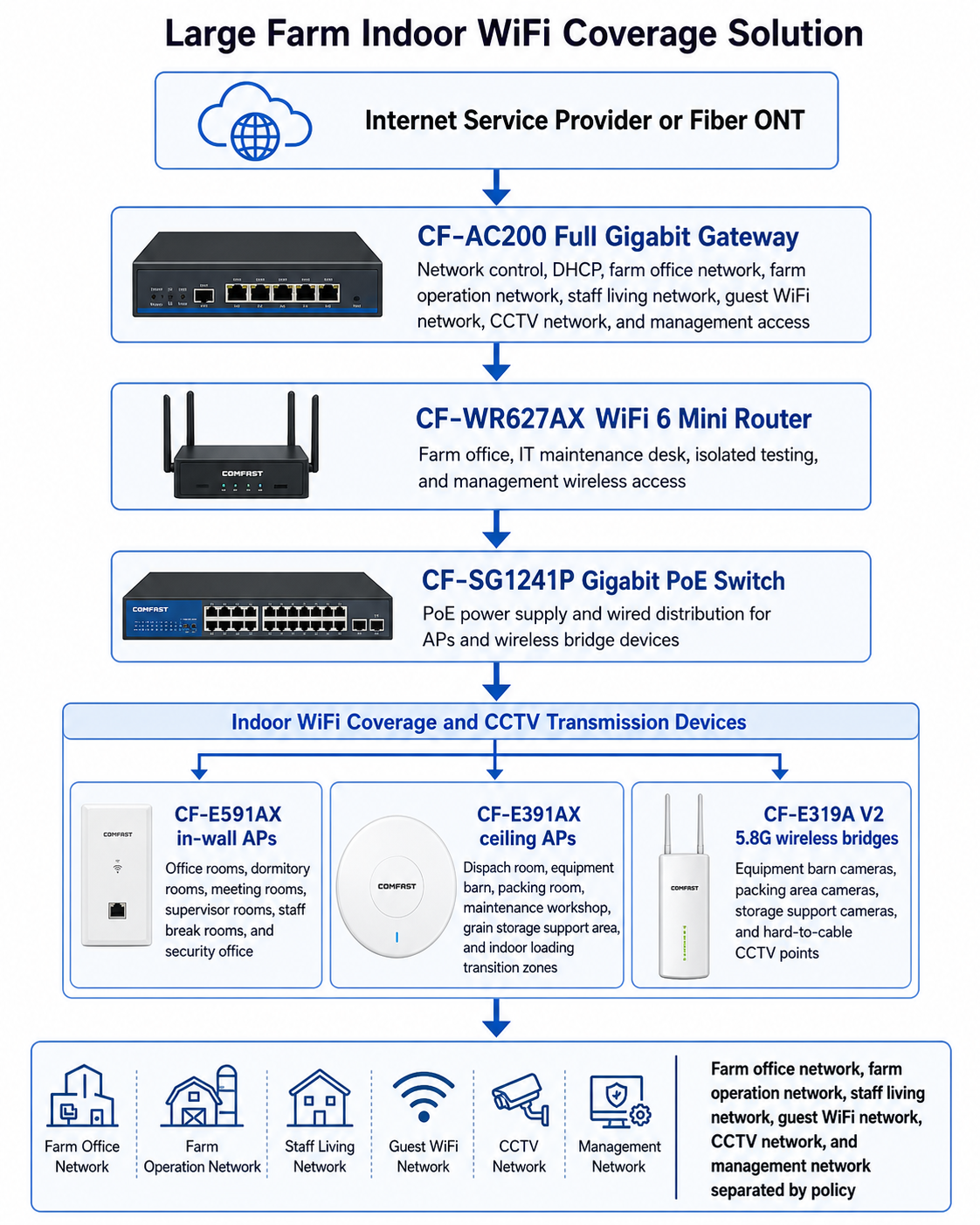
| CF-AC200 | Full gigabit gateway | Network control, DHCP, farm office network policy, farm operation network policy, staff living network policy, guest WiFi policy, CCTV network planning, and management access | Suitable as the main farm gateway, separating office users, operation devices, staff living users, guests, CCTV cameras, and management access |
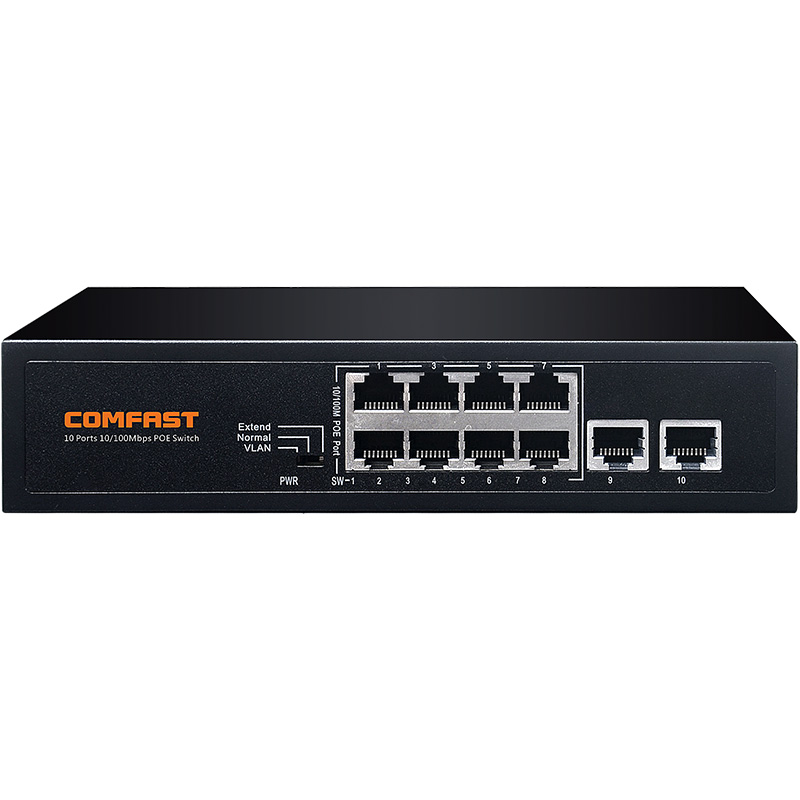
| CF-SG1241P | Gigabit PoE switch | PoE power supply and wired distribution for APs and wireless bridge devices | Provides centralized power management, reduces local adapters, and keeps barn, workshop, office, and storage area deployment easier to maintain |
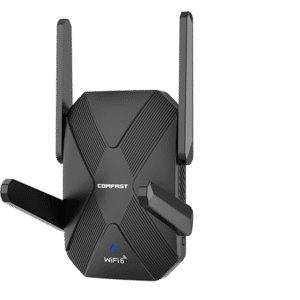
| CF-WR627AX | WiFi 6 mini router | Farm office, IT maintenance area, temporary equipment testing, isolated device setup, and quick management tasks | Compact design is suitable for the dispatch office equipment shelf and provides controlled wireless access for maintenance and testing |
| CF-E591AX | WiFi 6 in-wall AP | Office rooms, dormitory rooms, meeting rooms, supervisor rooms, staff break rooms, and security office | Selected for room-level coverage where hallway signal was not enough, improving stability for staff rooms, offices, and break areas |
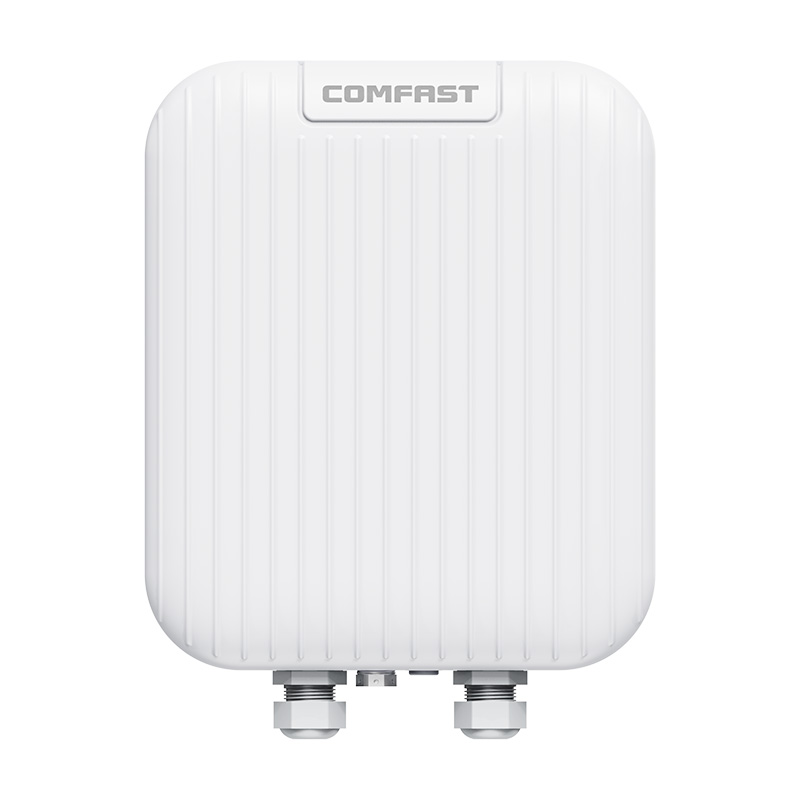
| CF-E391AX | WiFi 6 ceiling AP | Dispatch room, equipment barn, packing room, maintenance workshop, grain storage support area, indoor loading transition zone, and shared staff areas | Provides wider indoor coverage for open or semi-open farm buildings with machinery, storage racks, pallet movement, and scanner usage |
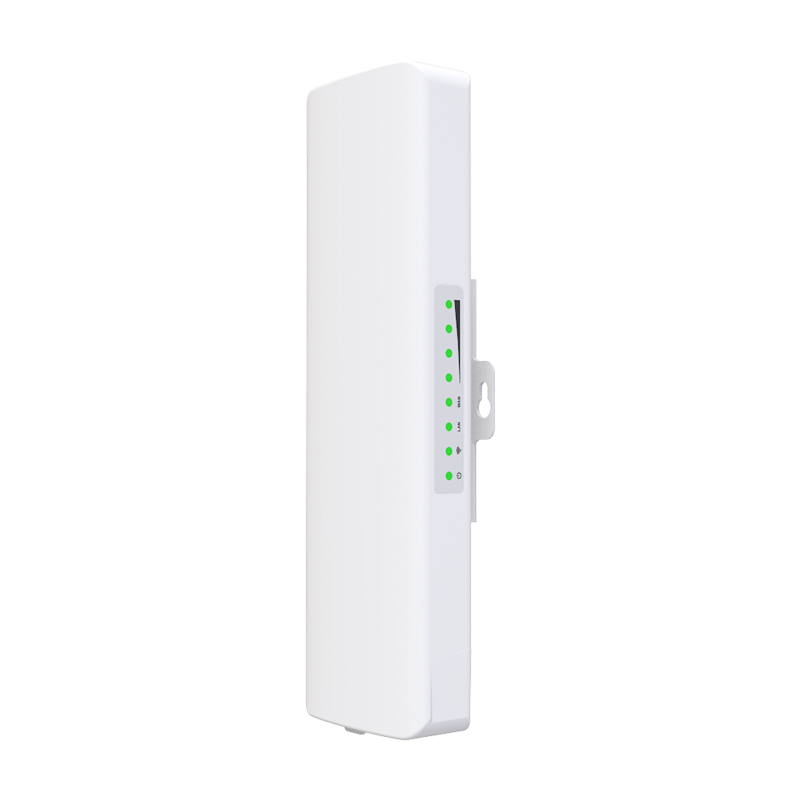
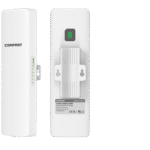
| CF-E319A V2 | 5.8G wireless bridge | CCTV wireless transmission for hard-to-cable camera points in the equipment barn, far side packing area, storage support area, and indoor transition zones | Avoids disruptive cabling across active farm work areas while maintaining stable camera transmission |
5. Project Equipment Configuration Quantity
Based on the approximately 18,500 square meter indoor coverage area across multiple farm buildings, including the farm office, dispatch room, equipment barn, maintenance workshop, packing room, grain storage support area, staff break room, meeting room, dormitory rooms, security office, indoor loading transition zones, and hard-to-cable CCTV points, the recommended equipment configuration for this project was as follows:
| Equipment Model | Quantity | Deployment Location |
|---|---|---|
| CF-AC200 | 1 unit | Main farm network cabinet, used as the full gigabit gateway for farm office, farm operation, staff living, guest WiFi, CCTV, and management networks |
| CF-SG1241P | 2 units | Main equipment cabinet and farm building distribution point, used for PoE power supply, AP connection, wireless bridge connection, uplink ports, and maintenance reserve |
| CF-WR627AX | 1 unit | Farm office and IT maintenance desk area, used for controlled wireless access, temporary testing, isolated device setup, and quick management tasks |
| CF-E591AX | 12 units | Office rooms, supervisor rooms, meeting room, staff break rooms, dormitory rooms, security office, and other room-level coverage areas |
| CF-E391AX | 14 units | Dispatch room, equipment barn, maintenance workshop, packing room, grain storage support area, shared staff areas, and indoor loading transition zones |
| CF-E319A V2 | 4 pairs | Equipment barn camera point, packing area camera point, storage support area camera point, and indoor loading transition camera point where direct Ethernet cabling would interrupt farm work |
6. Project Topology Diagram
7. Site Survey and Troubleshooting Process
Farm Building Walkthrough
We walked every target building with the farm owner, operations manager, warehouse lead, security supervisor, and maintenance technician. We reviewed the office workflow, dispatch desk layout, staff living areas, equipment barn, workshop, packing room, storage area, camera points, and indoor loading transition zones.
Indoor RF Testing
We tested signal strength, throughput, and stability in each building. The equipment barn and packing room showed the most unstable results because of metal equipment, doors, pallet stacks, and cold storage partitions.
Metal Equipment and Storage Rack Analysis
We checked the location of tractors, harvesters, tool cabinets, feed racks, storage shelves, and pallet stacks. These items affected wireless signal direction and created coverage shadows. AP placement was adjusted according to real field testing.
Scanner and Tablet Testing
We tested actual farm tablets, handheld scanners, and work order devices in the packing room, storage support area, dispatch area, and loading transition zones. This was more meaningful than testing only with mobile phones.
Dormitory and Room-Level Coverage Review
We inspected dormitory rooms, staff rest areas, supervisor rooms, and office rooms to identify weak indoor coverage. CF-E591AX in-wall APs were selected for these locations to provide focused room-level service.
CCTV Wireless Bridge Path Survey
We checked camera points in the far side of the equipment barn, packing room, grain support building, and loading transition areas. For each CF-E319A V2 bridge link, we checked mounting height, line of sight, power availability, obstruction from machinery, and cable protection.
PoE and Cabinet Readiness Check
We checked the main equipment cabinet, cable paths, PoE requirements, grounding conditions, and labeling status. The final design included clean port labeling and a clear topology map for future maintenance.
8. Problems Found During Implementation
One Router Could Not Serve Multiple Farm Buildings
The old network depended too much on one main office router. This approach could not support multiple indoor farm buildings with different layouts and materials. We redesigned the network as a multi-AP farm building system.
The Equipment Barn Needed Ceiling AP Coverage
The equipment barn had wide space, metal tools, and large machines. CF-E391AX ceiling APs were used to provide practical indoor coverage in areas where workers and maintenance teams actually used devices.
Room-Level Areas Needed Dedicated APs
Dormitory rooms and smaller office rooms could not rely on hallway signal. CF-E591AX in-wall APs were used to improve room-level stability and user experience.
Packing Area Devices Needed Stable Business Access
Inventory and packing devices had to stay online during work shifts. We placed APs according to scanner locations, pallet movement, and operator routes.
Remote Indoor Camera Points Were Not Practical to Cable
Several monitoring points were difficult to cable without interrupting work areas. CF-E319A V2 wireless bridges gave the customer stable camera transmission without major cable construction.
Network Separation Was Necessary
Farm office users, operation devices, staff living users, guest devices, CCTV cameras, and management access could not remain in one flat network. We separated traffic by policy through the CF-AC200 gateway.
9. Final Engineering Solution
Core Gateway and Network Control
We installed the CF-AC200 full gigabit gateway as the main control point. It handled DHCP, network separation, traffic control, and management access for office users, farm operation devices, staff living areas, guest WiFi, and CCTV cameras.
Farm Office and IT Access
The CF-WR627AX mini router was installed in the farm office and IT maintenance desk area. It supported local wireless access for management, temporary testing, isolated device setup, and equipment maintenance.
PoE Distribution
The CF-SG1241P PoE switch powered APs and wireless bridge devices. This reduced local adapters and made device power control easier from the main network cabinet.
Room-Level Coverage
CF-E591AX in-wall APs were installed in office rooms, supervisor rooms, meeting rooms, staff break rooms, dormitory rooms, and the security office to improve room-level signal stability.
Large Indoor Area Coverage
CF-E391AX ceiling APs were installed in the dispatch room, equipment barn, maintenance workshop, packing room, storage support area, and loading transition zone. AP locations were adjusted after field testing around machines and storage racks.
CCTV Wireless Transmission
CF-E319A V2 5.8G wireless bridges were deployed for hard-to-cable camera points in the equipment barn, packing area, storage support area, and indoor transition zones.
10. Different Area Network Design
Farm Office Coverage
The farm office used the CF-WR627AX for controlled management access and CF-E591AX in-wall APs for office rooms. This supported managers, dispatch staff, and office laptops.
Dispatch Room Coverage
The dispatch room required stable connectivity for route planning, work orders, and daily farm coordination. CF-E391AX ceiling APs provided wide indoor coverage for this shared operation area.
Equipment Barn Coverage
The equipment barn was covered with CF-E391AX ceiling APs. We placed APs according to maintenance workstations, equipment parking areas, and staff movement paths.
Maintenance Workshop Coverage
The maintenance workshop contained metal benches, tool cabinets, and repair stations. AP placement avoided the worst reflection points and focused on real work areas.
Packing Room Coverage
The packing room needed stable coverage for scanners and tablets. CF-E391AX APs were placed around packing stations, pallet movement paths, and shipping preparation areas.
Staff Break Room and Dormitory Coverage
Staff break rooms and dormitory rooms used CF-E591AX in-wall APs for room-level coverage. Staff users were placed on a separate staff living network.
Security Office Coverage
The security office required access to CCTV monitoring and management devices. We placed it on controlled network access rather than public or staff living WiFi.
Indoor Loading Transition Zone Coverage
The indoor loading transition zone was important for scanners and shipping tablets. CF-E391AX ceiling APs provided stable coverage around doors, staging areas, and movement paths.
11. Indoor AP Placement and Installation Details
Ceiling AP Placement
Ceiling APs were installed according to machinery location, ceiling height, cable route, storage rack direction, and maintenance access. We avoided placing APs directly above high-vibration machinery or hard-to-service positions.
In-Wall AP Placement
In-wall APs were installed in rooms where hallway coverage was not enough. This improved stability for staff rooms, supervisor offices, meeting rooms, and break rooms.
Cable Protection and Labeling
All AP and bridge cables were routed cleanly and labeled at both device and switch sides. In barn and workshop areas, cables were kept away from moving equipment and tool storage paths.
Channel and Power Optimization
After installation, we tuned AP channels and transmit power. We did not set every AP to maximum power. Correct tuning reduced interference and improved roaming between office rooms, barns, workshops, and packing areas.
12. Wireless Bridge Transmission Design
Equipment Barn Camera Bridge
The far side of the equipment barn required camera monitoring, but cabling was difficult around machinery and tool zones. CF-E319A V2 bridges provided a stable transmission path without major construction work.
Packing Area Camera Bridge
The packing area camera link was tested during active packing work. We confirmed stable video transmission while workers moved pallets and equipment nearby.
Storage Support Area Camera Bridge
The storage support area used wireless bridge transmission to avoid long cable runs around storage racks and utility routes. The camera feed was verified from the security office.
Bridge Stability Testing
Each CF-E319A V2 bridge link was tested for video continuity, delay, and stability during normal work activity. We verified live feeds before final acceptance.
13. Network Segmentation and Security Design
Farm Office Network
The farm office network supported managers, dispatch staff, office laptops, printers, and business systems. It was separated from guest access and staff living devices.
Farm Operation Network
The farm operation network supported tablets, scanners, work order devices, packing devices, and warehouse-style operation terminals. It was treated as a business-critical wireless network.
Staff Living Network
The staff living network served dormitory rooms and break rooms. It was separated from office systems, cameras, and farm operation devices.
Guest WiFi Network
The guest WiFi network provided internet access for vendors, visitors, contractors, and temporary guests without exposing farm office or operation systems.
CCTV Network
The CCTV network carried video traffic from cameras and CF-E319A V2 wireless bridge links. Keeping camera traffic separate improved monitoring stability.
Management Network
The management network was reserved for gateway, PoE switch, AP, router, and wireless bridge maintenance. Access was limited to authorized users.
14. What We Did Differently from Other Engineering Teams
We Did Not Treat the Farm as a Large House
A large farm has office rooms, barns, packing areas, workshops, staff living areas, and monitoring points. Each area needs a different wireless design. We did not rely on one router or a few random APs.
We Tested Real Farm Devices
We tested actual scanners, tablets, office laptops, security devices, and staff phones in real working locations. This gave more useful results than only checking signal bars.
We Planned Around Machinery and Storage Materials
We considered tractors, metal tool racks, cold storage doors, pallet stacks, and maintenance benches before deciding AP locations. This reduced signal shadows and device dropouts.
We Separated Farm Business Traffic from Guest and Staff Living Traffic
Farm operation devices, office users, staff living users, guests, cameras, and management equipment were separated by policy. This improved security and troubleshooting clarity.
We Used Wireless Bridges Where Cabling Was Disruptive
For hard-to-cable camera points, we used CF-E319A V2 wireless bridges instead of interrupting farm work with long cable routes.
We Delivered a Maintainable System
The customer received AP location records, bridge records, switch port labels, topology notes, and basic troubleshooting guidance. The system was built for long-term farm operation.
15. Project Acceptance Results
Final Acceptance Checklist
Farm office WiFi test passed.
Dispatch room coverage test passed.
Meeting room and supervisor room test passed.
Equipment barn WiFi test passed.
Maintenance workshop coverage test passed.
Packing room scanner test passed.
Storage support area WiFi test passed.
Staff break room and dormitory room coverage test passed.
Security office CCTV access test passed.
Indoor loading transition coverage test passed.
CF-E319A V2 wireless bridge camera test passed.
Farm office, farm operation, staff living, guest WiFi, CCTV, and management network isolation test passed.
Device labels, AP location map, bridge alignment records, switch port map, topology notes, and IT handover completed.
16. Customer and User Feedback
Farm Owner Feedback
The farm owner said, “The network finally works across the places where our team actually works. The barn, packing room, office, and staff rooms are much more stable now.”
Operations Manager Feedback
The operations manager said, “Our tablets and scanners are more reliable in the packing room and loading transition zones. That helps daily workflow.”
Security Supervisor Feedback
The security supervisor confirmed that camera feeds from hard-to-cable areas became more stable after the CF-E319A V2 wireless bridge installation.
Maintenance Technician Feedback
The maintenance technician appreciated the port labels and topology records. Device troubleshooting became much easier than before.
Staff Feedback
Staff members reported better WiFi in dormitory rooms and break areas, especially during evening rest hours when several users were online at the same time.
17. Project Summary
Final Result
Project Prairie Ridge Farm was a successful large farm indoor WiFi coverage and CCTV wireless transmission project in the United States. The project solved weak barn WiFi, unstable scanner connections, poor room-level coverage, hard-to-cable camera points, unmanaged guest access, and poor network documentation.
The final COMFAST solution used the CF-AC200 full gigabit gateway, CF-SG1241P gigabit PoE switch, CF-WR627AX WiFi 6 mini router, CF-E591AX WiFi 6 in-wall APs, CF-E391AX WiFi 6 ceiling APs, and CF-E319A V2 5.8G wireless bridges. This combination supported farm office access, farm operation devices, staff living WiFi, guest access, CCTV transmission, and centralized maintenance.
The key value of this project was not simply adding more WiFi devices. The real value was designing a network around farm workflow, indoor building materials, machinery layout, scanner use, staff living needs, CCTV monitoring, and long-term maintenance.
18. Lessons Learned and Advice to Other Contractors
Lessons Learned
Large farm WiFi must be designed by building function and daily workflow.
Equipment barns and workshops need real RF testing because metal machinery changes wireless behavior.
Packing rooms and storage areas should be tested with actual scanners and tablets.
Room-level coverage is important for staff dormitories, offices, and break rooms.
Wireless bridges are useful for hard-to-cable camera points inside large farm buildings.
Farm office, farm operation, staff living, guest WiFi, CCTV, and management networks should be separated by policy.
AP channel and power tuning are important in metal-heavy indoor farm environments.
Professional handover should include AP maps, bridge records, switch port labels, topology notes, and maintenance guidance.
Advice to Other WiFi Engineering Contractors
For large farm indoor WiFi projects, do not design only from a building map. Walk the office, barn, workshop, packing area, storage room, staff housing, loading zone, and camera locations. The network must follow actual farm operation.
Do not treat barns and packing rooms like office rooms. Farm buildings have machines, racks, tools, pallets, cold storage doors, and moving equipment. AP placement must be based on real signal testing and device use.
Do not mix farm business devices, staff living devices, guests, cameras, and management equipment in one flat network. A professional farm network must be segmented from the beginning.
A Large Farm Indoor WiFi Coverage Solution is complete only when office users work smoothly, farm operation devices stay online, staff rooms have stable access, cameras transmit reliably, and the farm team can maintain the system confidently. That was the standard we delivered for Project Prairie Ridge Farm.