










Project SecureBridge CCTV Network: WiFi Security Monitoring Solution for a Logistics and Commercial Park in Singapore
Contractor Team Introduction
We are a local WiFi and security monitoring transmission engineering contractor with long-term experience in outdoor CCTV wireless backhaul, logistics park monitoring, commercial park surveillance networks, parking lot camera transmission, security booth monitoring, warehouse perimeter CCTV, public area monitoring, temporary event security networks, PoE-powered camera deployment, wireless bridge installation, outdoor AP maintenance access, and NVR monitoring room integration.
A WiFi Security Monitoring Solution is not the same as ordinary guest WiFi coverage. The most important goal is stable CCTV video transmission back to the NVR and monitoring room. The wireless system must handle real-time preview, continuous recording, playback, night infrared video, outdoor interference, vehicle movement, tree obstruction, building corners, weak-current box power, bridge alignment, and maintenance access. A camera showing online for a few minutes is not enough; the system must stay stable during daytime operations, evening traffic, rain, and night security patrols.
Our team has used COMFAST equipment in many security monitoring, factory CCTV backhaul, parking surveillance, resort monitoring, warehouse perimeter, public square monitoring, and outdoor wireless transmission projects. From our field experience, COMFAST gateways, PoE switches, WiFi 6 routers, outdoor APs, and wireless bridges are practical for monitoring projects because they support flexible installation, stable video return, centralized PoE power, clear topology, and easier long-term maintenance. For this project, we selected COMFAST CF-AC200 full gigabit smart core gateway, CF-SG1241P 24-port gigabit PoE switch, CF-WR633AX V2 WiFi 6 router, CF-WA937 outdoor WiFi 6 APs, CF-E312A V2 5.8G wireless bridges, CF-E319A V3 long-distance wireless bridges, and CF-E112N V2 wireless bridges.
1. Project Overview
Project Name: Project SecureBridge CCTV Network
Project Location: Jurong West, Singapore
Scenario Type: Mixed logistics and commercial park with warehouses, parking areas, loading docks, service roads, public access zones, security booths, and outdoor perimeter monitoring points
Project Area: Approximately 116,000 square meters
Total Cameras Included in Upgrade: 92 CCTV cameras
Remote Cameras Requiring Wireless Backhaul: 38 cameras
NVR Location: Central monitoring room beside the property operations office
Core Equipment Room: Main weak-current room on the first floor of the operations building
Main Monitoring Areas: Main entrance, vehicle entrance, pedestrian passage, security booths, parking area, loading docks, warehouse perimeter, public activity area, boundary road, fence corners, night patrol points, temporary monitoring points, and remote CCTV locations
Project Goal: Upgrade unstable CCTV transmission links and build a reliable WiFi security monitoring backhaul system using wireless bridges, PoE aggregation, outdoor maintenance WiFi, separated CCTV network, and clear NVR integration.
2. Customer Pain Points Before the Project
Some cameras were connected through temporary network cables that had been exposed outdoors for years. These cables passed near roads, landscaped areas, and drainage channels, so they were difficult to protect and difficult to maintain.
Parking area cameras and boundary corner cameras went offline frequently. The cameras themselves were not the main problem. The real issues were unstable power, low bridge installation height, poor alignment, tree obstruction, and interference between several wireless links.
NVR recording had occasional frame loss. The monitoring room could usually see live preview during normal daytime periods, but playback review showed missing frames during traffic peaks and night infrared recording.
Remote camera points near the boundary road and fence corners were expensive to re-cable. Pulling new cables would have required road crossing approval, landscape repair, trenching work, and traffic control.
Several old wireless bridges were installed too low. During normal operation, trucks, buses, delivery vans, temporary booths, and tree branches could block the wireless path, causing camera video freezing or disconnection.
Multiple wireless bridge links used similar channels. When several remote camera groups transmitted video at the same time, the links interfered with each other and reduced available throughput for CCTV traffic.
The loading dock cameras were unstable during busy periods. Trucks, forklifts, pallets, and container movement changed the wireless environment throughout the day. The old bridge path had been tested when the dock was empty, not during real operation.
Public activity area cameras needed flexible deployment. The park often hosted temporary weekend markets and tenant events, so temporary monitoring points had to be connected quickly without trenching or long cable runs.
The CCTV network was mixed with office access and maintenance WiFi in several locations. This made troubleshooting unclear and allowed non-monitoring traffic to compete with camera video transmission.
Weak-current boxes were not clearly labeled. Some switch ports, camera cables, bridge links, and power adapters were not documented. When a camera failed, the maintenance team spent too much time identifying the correct device path.
3. Customer Requirements
Connect remote CCTV cameras stably to the NVR in the central monitoring room.
Provide stable video backhaul for main entrance, vehicle entrance, pedestrian passage, security booth, parking area, loading dock, warehouse perimeter, public activity area, boundary road, fence corner, night patrol point, and temporary monitoring cameras.
Use wireless bridges for camera points where new cabling would be expensive, slow, disruptive, or difficult to approve.
Ensure key cameras support continuous NVR recording, real-time preview, and reliable playback.
Separate CCTV video traffic from office network, maintenance WiFi, and management access.
Provide limited outdoor maintenance WiFi for authorized technicians, patrol supervisors, and commissioning engineers.
Use centralized PoE power for cameras, wireless bridges, outdoor APs, and monitoring devices where possible.
Install bridges at safe heights with proper line of sight, waterproof cabling, dust protection, stable brackets, and maintenance access.
Clean and relabel weak-current boxes, switch ports, camera groups, and bridge directions.
Complete construction without affecting tenant operation, vehicle movement, warehouse loading, public access, security patrol, and daily property management work.
4. COMFAST Equipment Used in This Project
The following are the main COMFAST equipment models used in this project and their usage descriptions.
| Equipment Model |
Type | Project Use | Reason for Use |
|---|---|---|---|
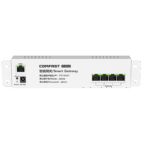
| CF-AC200 | Full gigabit smart core gateway | CCTV network access, DHCP, NVR connectivity, management policy, and separated maintenance access | Suitable as the monitoring network core gateway, separating CCTV video traffic from office network, maintenance WiFi, and management access |
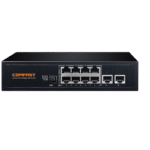
| CF-SG1241P | 24-port gigabit PoE switch | PoE power supply and gigabit aggregation for cameras, outdoor APs, wireless bridges, and monitoring devices | Centralized PoE deployment improves power stability, reduces scattered adapters, and makes weak-current boxes easier to label and maintain |
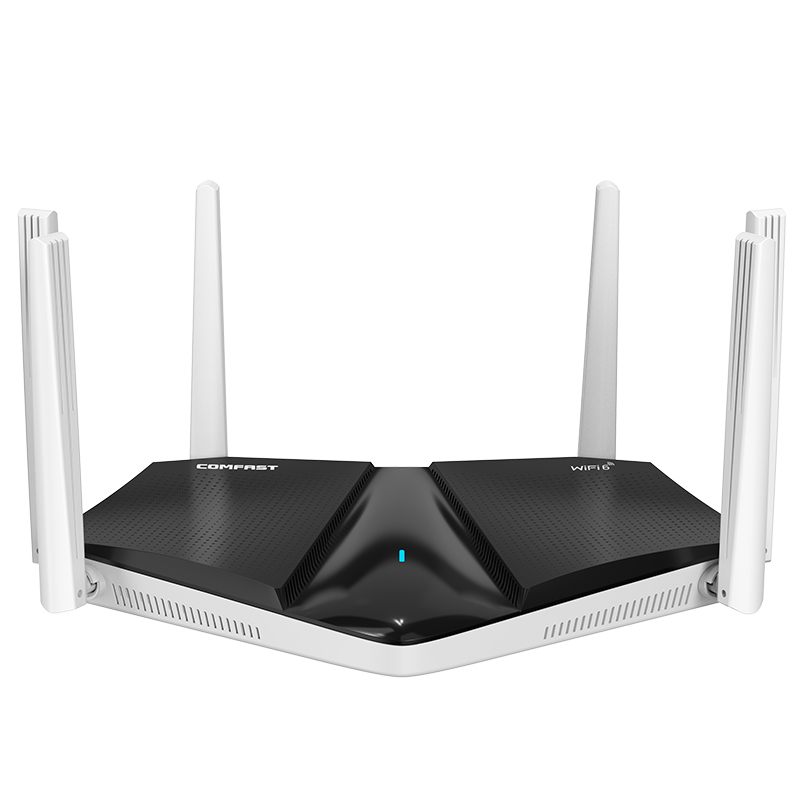
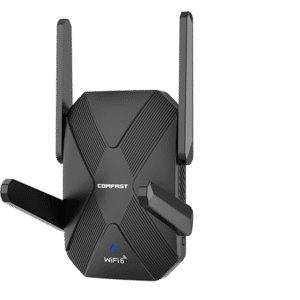
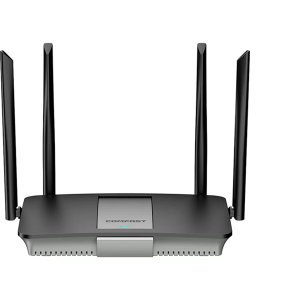
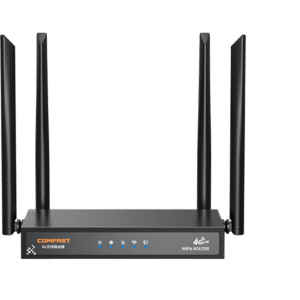
| CF-WR633AX V2 | WiFi 6 dual-band router | Security office, equipment room, authorized management wireless access, emergency support, temporary testing, and maintenance tool connectivity | Provides controlled WiFi 6 access for security staff and engineers without mixing maintenance devices with CCTV video traffic |
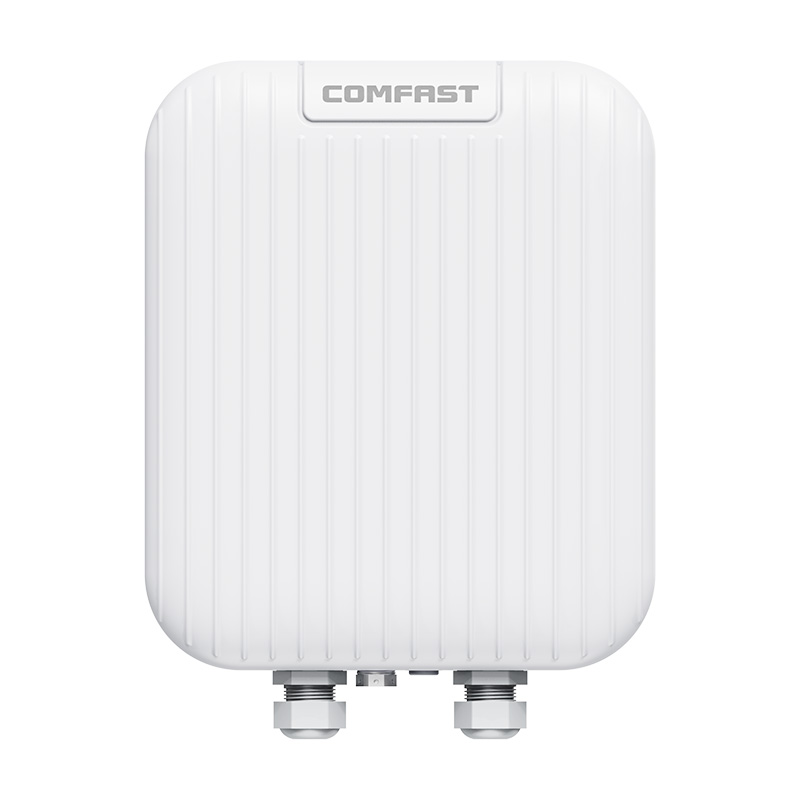
| CF-WA937 | Outdoor WiFi 6 AP | Outdoor maintenance WiFi for security booth, parking area, patrol route, public activity area, and temporary security work zones | Allows authorized technicians and patrol supervisors to check camera view, bridge signal, and NVR status in outdoor areas |
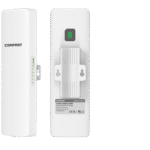
| CF-E312A V2 | 5.8G wireless bridge | Mid-distance CCTV backhaul for parking area cameras, loading dock cameras, warehouse perimeter cameras, security booth cameras, and boundary road camera groups | Suitable for replacing unstable temporary cables where road crossing, landscaping repair, and trenching would be difficult or disruptive |
| CF-E319A V3 | Long-distance wireless bridge | Long-distance CCTV backhaul for far-side boundary cameras, remote parking corner cameras, extended perimeter monitoring points, and cross-road CCTV locations | Used for remote camera points requiring stronger link margin, better alignment, and stable video return to the NVR |
| CF-E112N V2 | Wireless bridge | Short-distance auxiliary backhaul for pedestrian passage cameras, gate side-road cameras, near parking cameras, and temporary monitoring points | Practical for short and flexible camera links where long-distance bridge devices are not necessary |
5. Project Equipment Configuration Quantity
Based on the approximately 116,000 square meter logistics and commercial park, 92 CCTV cameras, 38 remote cameras requiring wireless backhaul, central NVR monitoring room, main entrance, vehicle entrance, pedestrian passage, security booths, parking area, loading docks, warehouse perimeter, public activity area, boundary road, fence corners, night patrol points, and temporary monitoring requirements, the recommended equipment configuration for this project was as follows:
| Equipment Model | Quantity | Deployment Location |
|---|---|---|
| CF-AC200 | 1 unit | Main weak-current room, used as the core gateway for CCTV access, NVR integration, management control, and separated maintenance access |
| CF-SG1241P | 6 units | Core equipment room, security booth, parking area weak-current box, loading dock distribution point, warehouse perimeter distribution point, and boundary / temporary monitoring distribution point for PoE power, camera aggregation, bridge connection, uplink ports, and maintenance reserve |
| CF-WR633AX V2 | 2 units | Security office and equipment room for authorized management wireless access, emergency network support, temporary commissioning, and maintenance tool connectivity |
| CF-WA937 | 5 units | Security booth area, parking area, patrol route, public activity area, temporary event area, and selected outdoor maintenance zones for controlled staff and technician access |
| CF-E312A V2 | 12 pairs | Parking camera groups, loading dock cameras, warehouse perimeter cameras, security booth cameras, boundary road cameras, and other mid-distance CCTV wireless backhaul links |
| CF-E319A V3 | 8 pairs | Far-side boundary cameras, remote parking corner cameras, extended perimeter monitoring points, cross-road CCTV points, and long-distance security monitoring links |
| CF-E112N V2 | 6 pairs | Pedestrian passage cameras, gate side-road cameras, near parking cameras, short auxiliary links, and temporary monitoring points with more complex line-of-sight conditions |
6. Project Topology Diagram

7. Site Survey and Troubleshooting Process
We started the project with a full site walk together with the property operations manager, security supervisor, IT supervisor, parking manager, warehouse manager, loading dock coordinator, night patrol team leader, and maintenance technician. Every camera point was checked on-site, including its viewing angle, power source, mounting height, backhaul path, and NVR status.
In the NVR monitoring room, we checked the NVR channels, recording status, preview quality, playback records, camera naming, existing uplinks, switch ports, and previous failure history. We identified which cameras had real video loss and which ones only had naming or routing confusion.
At the main entrance and vehicle entrance, we tested camera video return during vehicle flow. We checked whether buses, trucks, delivery vans, and entrance signage blocked the wireless path. Camera transmission paths were redesigned to stay above the normal vehicle obstruction zone.
At pedestrian passages, we checked short-distance camera links, lighting poles, nearby walls, side roads, and maintenance access. Some of these cameras did not need long-distance bridges; CF-E112N V2 links were more practical for short auxiliary backhaul.
At security booths, we inspected weak-current boxes, camera cables, bridge mounting positions, PoE power capacity, and staff device access requirements. These booths also required limited maintenance WiFi for authorized security and IT staff.
In the parking area, we tested far-corner camera links, tree obstruction, parked vehicle height, light pole installation options, and long-distance transmission back to the monitoring room. Several remote parking cameras required CF-E319A V3 long-distance wireless bridge links.
At loading docks, we tested bridge paths during real truck operation. Dock shelters, forklifts, containers, stacked pallets, and open truck doors changed the wireless path, so we selected bridge positions higher than the normal obstruction height.
Around warehouse perimeters, we checked walls, metal doors, cargo staging areas, delivery routes, and outdoor camera positions. The final bridge plan avoided low wall-mounted positions that would be blocked by pallets or parked trucks.
At the public activity area, we reviewed temporary market layouts, event power points, camera positions, and safety barriers. The customer needed flexible temporary monitoring without repeated cable work.
Along the boundary road and fence corners, we confirmed line of sight, tree growth, wall height, lighting pole availability, and long-distance camera backhaul needs. Several corner cameras required better bridge height and clearer alignment.
We scanned the wireless environment and grouped bridge links according to distance, direction, and interference risk. The old system used overlapping channels, so we created a new channel plan to reduce bridge-to-bridge interference.
We also checked outdoor waterproof boxes, PoE power budget, cable glands, grounding, lightning protection, equipment cabinet ventilation, and service access. A CCTV wireless backhaul project fails easily if power and outdoor protection are ignored.
8. Problems Found During Implementation
The original temporary outdoor cables were not suitable for long-term CCTV transmission. Some had unclear routing, aging jackets, poor protection, and difficult maintenance access. We replaced selected unstable segments with wireless bridge backhaul and cleaner PoE aggregation.
Camera dropouts were not caused by camera failure alone. The main causes included power instability, low bridge height, poor alignment, tree obstruction, vehicle blocking, and same-channel interference. We solved the transmission system rather than simply replacing cameras.
Remote cameras needed wireless bridges instead of more temporary cables. Several boundary and parking points would have required pavement cutting and landscape repair. Wireless bridge backhaul reduced construction impact and shortened the project cycle.
Several bridge devices were originally installed too low. Vehicles, trees, event booths, and temporary structures could block the wireless path. We moved key bridge links to higher mounting positions with better line of sight and safer maintenance access.
Multiple links could not use the same channel. We grouped CF-E312A V2, CF-E319A V3, and CF-E112N V2 links based on distance and direction, then assigned channels carefully to reduce interference.
Night infrared video required more bandwidth margin. Several cameras increased bitrate after dark, so we tested night conditions and ensured the links had enough capacity for continuous NVR recording.
Maintenance WiFi could not be mixed with CCTV video traffic. We used CF-WA937 outdoor APs for controlled maintenance access while keeping CCTV video traffic separated through policy design.
Outdoor devices required better protection. We improved waterproof entry, cable routing, device labeling, bracket stability, grounding checks, and field box organization.
Construction had to avoid vehicle peaks, loading dock busy periods, tenant delivery windows, public area events, and night security patrol routes. We used phased construction and low-traffic work windows to avoid disrupting operations.
9. Final Engineering Solution
The CF-AC200 was deployed as the full gigabit smart core gateway for the security monitoring network. It provided the central network foundation for CCTV access, NVR integration, management control, and separated maintenance access.
The CF-SG1241P 24-port gigabit PoE switch was installed in the core equipment room for PoE power supply and gigabit aggregation. It powered and aggregated cameras, wireless bridges, outdoor APs, and monitoring devices from different field zones.
The CF-WR633AX V2 WiFi 6 router was installed in the security office and equipment room to provide authorized management wireless access, emergency network support, temporary commissioning, and field maintenance tool access.
CF-WA937 outdoor WiFi 6 APs were used for maintenance WiFi around the security booth, parking area, patrol route, public activity area, and selected temporary security work zones. This access was controlled and used only for staff, patrol supervisors, and technicians.
CF-E312A V2 5.8G wireless bridges handled most mid-distance CCTV backhaul links, including loading dock cameras, warehouse perimeter cameras, parking camera groups, security booth cameras, and boundary road cameras.
CF-E319A V3 long-distance wireless bridges were used for far-side boundary cameras, remote parking corner cameras, cross-road CCTV points, and long-distance perimeter monitoring where strong link margin was required.
CF-E112N V2 wireless bridges were used for short-distance auxiliary camera backhaul, including pedestrian passage cameras, gate side-road cameras, near parking cameras, and temporary monitoring points with more complex line-of-sight conditions.
All bridge links were aligned, grouped, tested, labeled, and documented. The final system supported live preview, continuous NVR recording, playback, night infrared video, outdoor maintenance access, and simplified future troubleshooting.
10. Different Area CCTV Backhaul Design
NVR Monitoring Room Network: The monitoring room became the central receiving point for camera video. The NVR was connected to the CF-AC200 and CF-SG1241P structure for stable camera grouping, recording, playback, and management.
Core Equipment Room Network: The core equipment room was reorganized with clear switch port records, bridge group labels, camera group names, and maintenance access through the CF-WR633AX V2 router.
Main Entrance CCTV Backhaul: Main entrance cameras used stable bridge and PoE paths to support visitor recording, vehicle identification, and after-hours access review. Camera video was tested during morning and evening entrance peaks.
Vehicle Entrance and Exit CCTV Backhaul: Vehicle entrance and exit cameras required clear video during truck, van, and staff vehicle movement. Bridge installation height was selected to avoid normal vehicle obstruction.
Pedestrian Passage Camera Backhaul: Pedestrian passage cameras used CF-E112N V2 links where short-distance auxiliary backhaul was more practical than long-distance bridge devices. These cameras supported staff and visitor movement review.
Security Booth Monitoring Network: Security booth cameras and field devices used PoE aggregation and bridge backhaul. CF-WA937 outdoor APs provided controlled maintenance WiFi for authorized security staff and technicians.
Parking Area Camera Backhaul: Parking area cameras were divided into near and far groups. Near cameras used shorter auxiliary links where suitable, while far corner cameras used CF-E319A V3 long-distance wireless bridges for stronger backhaul stability.
Loading Dock Camera Backhaul: Loading dock cameras used CF-E312A V2 links mounted above truck obstruction height. The system was tested during active loading to ensure the video did not freeze when trucks and forklifts moved through the dock area.
Warehouse Perimeter Camera Backhaul: Warehouse perimeter cameras used CF-E312A V2 bridges. Bridge directions were selected to avoid low paths blocked by pallets, containers, and parked delivery vehicles.
Public Activity Area Monitoring: The public activity area used flexible wireless backhaul for temporary cameras and event monitoring. This allowed the customer to support weekend markets and temporary tenant events without running new cables each time.
Boundary Road Camera Backhaul: Boundary road cameras used CF-E312A V2 and CF-E319A V3 links depending on distance. The links were aligned to avoid tree obstruction and road-side temporary structures.
Fence Corner Camera Backhaul: Fence corner cameras were upgraded with higher bridge mounting positions and clearer link alignment. This solved the previous issue where corner cameras dropped offline during rain and evening hours.
Night Patrol Point Monitoring: Night patrol points required stable infrared camera video. These cameras were tested during night conditions to confirm NVR recording continuity and playback quality.
Temporary Monitoring Point Backhaul: Temporary camera points used CF-E112N V2 or CF-E312A V2 links depending on distance and visibility. This design made it easier to add short-term monitoring during events or temporary site changes.
Remote CCTV Wireless Bridge Backhaul: Remote CCTV points were grouped by distance, direction, and bitrate requirement. Each link was tested for signal, throughput, delay, packet loss, live preview, recording, and playback.
Outdoor Maintenance WiFi Access: CF-WA937 outdoor APs provided controlled maintenance WiFi for technicians and patrol supervisors. This helped field staff check camera view, bridge signal, and NVR status without using the office network.
11. Wireless Bridge Installation and Alignment Details
Bridge installation height was selected according to vehicle height, tree obstruction, fence height, building edge position, camera direction, and maintenance safety. We avoided convenient but low mounting points because they often become unstable after normal site activity begins.
For mid-distance links, CF-E312A V2 bridges were aligned between warehouse edges, parking poles, loading dock structures, and boundary road points. Each link was tested with live camera video instead of only checking signal level.
For long-distance links, CF-E319A V3 bridges were aligned carefully to provide stronger transmission margin for remote boundary cameras and far parking corners. These links received priority testing for night recording and playback stability.
For short auxiliary links, CF-E112N V2 bridges were used where a smaller backhaul path was more efficient. This prevented overcomplicating the network with large bridge links for every small camera group.
Channel planning was completed by link group. We did not place all bridges on the same channel. Bridge groups were separated by direction, distance, and nearby interference conditions to reduce packet loss and improve video stability.
Outdoor installation included waterproof cable entry, drip loop design, stable brackets, cable protection, power checks, grounding review, and maintenance access. Every bridge link was labeled with source, destination, camera group, direction, and switch port.
12. NVR and Monitoring Room Integration
The NVR monitoring room was reorganized as the central management point for CCTV video. Camera groups were renamed according to real monitoring areas, such as main entrance, vehicle entrance, parking area, loading dock, warehouse perimeter, public activity area, boundary road, fence corner, night patrol point, and temporary monitoring point.
We checked live preview, continuous recording, playback, alarm review, and camera search functions after each bridge group was connected. This prevented a common problem where cameras appear online but do not record continuously.
The monitoring team received a clear map showing which cameras return through each bridge link. This helps the security supervisor and IT team quickly identify whether a future issue is camera-side, bridge-side, switch-side, or NVR-side.
The CF-WR633AX V2 provided controlled management WiFi for authorized maintenance inside the equipment room and monitoring room. This management access was separated from CCTV video and office network traffic.
13. Network Segmentation and Maintenance Design
CCTV Network: The CCTV network carried camera video from wired cameras and wireless bridge-connected cameras to the NVR. This network was kept separate from office users and temporary maintenance WiFi to protect video stability.
Management Network: The management network was reserved for the CF-AC200 gateway, CF-SG1241P PoE switch, CF-WR633AX V2 router, CF-WA937 outdoor APs, wireless bridges, and authorized maintenance devices.
Outdoor Maintenance WiFi: CF-WA937 outdoor APs provided controlled field access for technicians and security supervisors. This allowed on-site bridge checks, camera preview, and signal testing without using the office network.
PoE Power Design: The CF-SG1241P provided centralized PoE power and reduced scattered adapters in outdoor field boxes. This made power troubleshooting more direct and improved system maintainability.
Documentation and Labeling: Every camera group, bridge link, switch port, outdoor AP, field box, and core device was labeled. The handover package included topology, bridge direction records, signal test results, camera list, port map, and maintenance notes.
14. What We Did Differently from Other Engineering Teams
We did not simply connect cameras to bridges and leave the site. We tested real-time preview, continuous NVR recording, playback, day video, night infrared video, packet loss, bridge signal strength, and link delay.
We did not install bridge pairs randomly. Every bridge direction was selected according to line of sight, vehicle height, building structure, tree obstruction, public area activity, and maintenance safety.
We did not test only in quiet hours. We tested during vehicle movement, loading dock activity, parking peaks, event setup periods, and night patrol conditions.
We did not use the same channel for every bridge link. The wireless links were grouped and planned by direction, distance, and interference risk.
We did not mount bridges at low convenient points. We selected installation height based on real obstruction conditions such as trucks, trees, walls, temporary booths, and maintenance access.
We did not mix CCTV video, maintenance WiFi, office access, and device management in one flat network. The CCTV network and management network were separated by policy.
We did not trench blindly across roads and landscaped areas. We used point-to-point, auxiliary, and long-distance wireless bridges where cabling would be disruptive or difficult to approve.
We did not interrupt business operations. Construction was completed by zone during approved low-traffic windows, avoiding loading peaks, vehicle congestion, public activity periods, and security patrol routes.
15. Project Acceptance Results
NVR continuous recording test passed.
Daytime live video preview test passed.
Night infrared video test passed.
Video playback and search test passed.
Wireless bridge signal strength test passed.
Wireless bridge alignment angle inspection passed.
Bridge bandwidth test passed.
Bridge latency test passed.
Packet loss test passed.
Main entrance camera test passed.
Vehicle entrance and exit camera test passed.
Pedestrian passage camera test passed.
Security booth camera test passed.
Parking area camera test passed.
Loading dock camera test passed.
Warehouse perimeter camera test passed.
Public activity area camera test passed.
Boundary road camera test passed.
Fence corner camera test passed.
Night patrol point camera test passed.
Temporary monitoring point test passed.
Power-off recovery test passed.
PoE power supply test passed.
Waterproof box inspection passed.
Outdoor maintenance WiFi access test passed.
CCTV network and management network isolation test passed.
Topology diagram, bridge direction records, device labels, switch port map, camera list, signal test results, and acceptance report were delivered to the customer.
16. Customer and User Feedback
Security Supervisor Feedback: “The camera video is much more stable now. The parking area, boundary corners, and loading dock cameras no longer drop offline during busy hours.”
IT Supervisor Feedback: “The bridge direction records, switch port labels, and topology diagram make maintenance much easier. We can identify each camera path quickly.”
Operations Manager Feedback: “The project was completed without interrupting tenant operations, warehouse loading, or vehicle circulation. The monitoring coverage is better and the installation is cleaner.”
Parking Manager Feedback: “Far parking corner cameras are finally stable. We can review entrance and parking events without missing video.”
Warehouse Manager Feedback: “The warehouse perimeter and loading dock camera feeds are smoother, even when trucks and forklifts are moving.”
Night Shift Guard Feedback: “Night infrared video is more stable on the monitoring screen, and playback review is much better than before.”
Patrol Team Leader Feedback: “The outdoor maintenance WiFi helps supervisors check camera views and report issues from the field instead of returning to the monitoring room every time.”
Maintenance Technician Feedback: “The outdoor boxes are cleaner, the device labels are clear, and the bridge alignment notes make future inspection much faster.”
17. Project Summary
Project SecureBridge CCTV Network was a successful WiFi Security Monitoring Solution for a logistics and commercial park in Singapore. The project solved unstable temporary CCTV cabling, parking camera dropouts, boundary camera instability, NVR frame loss, night infrared video issues, loading dock video freezing, public activity area temporary monitoring needs, weak-current box disorder, bridge same-channel interference, and difficult remote camera cabling.
The final COMFAST solution used the CF-AC200 full gigabit smart core gateway, CF-SG1241P 24-port gigabit PoE switch, CF-WR633AX V2 WiFi 6 router, CF-WA937 outdoor WiFi 6 APs, CF-E312A V2 5.8G wireless bridges, CF-E319A V3 long-distance wireless bridges, and CF-E112N V2 wireless bridges. This combination provided stable CCTV backhaul, NVR integration, PoE aggregation, long-distance remote camera return, auxiliary short-distance bridge transmission, controlled outdoor maintenance WiFi, and clear network management.
The key value of this project was not simply installing wireless bridges. The real value was designing the security monitoring network around camera bitrate, NVR recording, line of sight, mounting height, vehicle obstruction, tree growth, channel planning, PoE power stability, waterproof installation, network isolation, and long-term maintenance.
18. Lessons Learned and Advice to Other Contractors
WiFi Security Monitoring projects must start from camera video requirements and NVR recording needs, not only wireless distance.
Line of sight must be checked under real operating conditions, including vehicles, trees, temporary booths, building corners, loading activity, and night patrol routes.
Wireless bridge mounting height should be selected according to obstruction height and maintenance safety, not installer convenience.
Multiple bridge links require channel planning. Using the same channel for all links creates interference and unstable CCTV video.
Night infrared video must be tested because camera bitrate can increase after dark and expose weak transmission margins.
Maintenance WiFi should be controlled and separated from CCTV video traffic.
PoE power, waterproof boxes, cable glands, grounding, and outdoor bracket stability are as important as wireless signal strength.
Temporary monitoring points should remain flexible. Wireless bridge backhaul is often more practical than repeated cable work for changing site layouts.
Professional handover must include topology diagrams, camera lists, bridge direction records, signal results, switch port labels, outdoor box records, and maintenance guidance.
For any security monitoring project, engineers should walk every camera point, every bridge path, every road crossing, every public activity area, every boundary corner, and every weak-current box. Drawings are useful, but real site conditions decide whether the video will stay stable.
Do not treat wireless CCTV monitoring as a simple connection task. The final result depends on video bitrate, NVR recording continuity, bridge alignment, link margin, channel planning, power stability, waterproofing, and maintenance documentation.
A WiFi Security Monitoring Solution is complete only when cameras stay online, NVR recording is continuous, day and night video remain stable, remote cameras return video without trenching, bridge links are documented, maintenance access is controlled, and the customer can manage the system confidently. That was the standard we delivered for Project SecureBridge CCTV Network.