










Project SkyLift CCTV Link: Elevator Wireless Monitoring System for a High-Rise Office Tower in Dubai
Contractor Team Introduction
We are a local WiFi and wireless CCTV transmission engineering contractor serving commercial buildings, office towers, hotels, residential towers, shopping centers, parking facilities, hospitals, schools, and mixed-use properties across the UAE market. Our team has extensive experience in elevator car camera backhaul, elevator shaft wireless transmission, elevator machine room network integration, basement elevator hall monitoring, property monitoring room NVR integration, PoE-powered CCTV systems, weak-current shaft organization, wireless bridge alignment, and property security network upgrades.
An Elevator Wireless Monitoring System is not a standard indoor camera job. Elevator cars move continuously inside metal and concrete shafts. The elevator doors open and close dozens of times every hour. Shaft rails, steel cables, equipment cabinets, machine room walls, basement structures, and weak-current rooms all affect wireless transmission. A proper system must be tested during real elevator operation, not only when the elevator is parked.
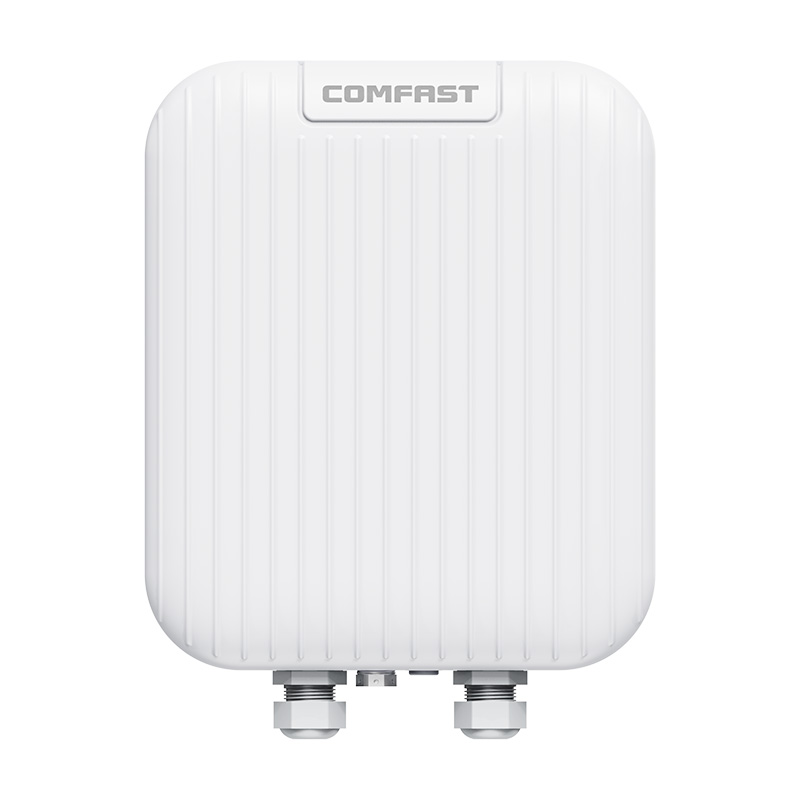
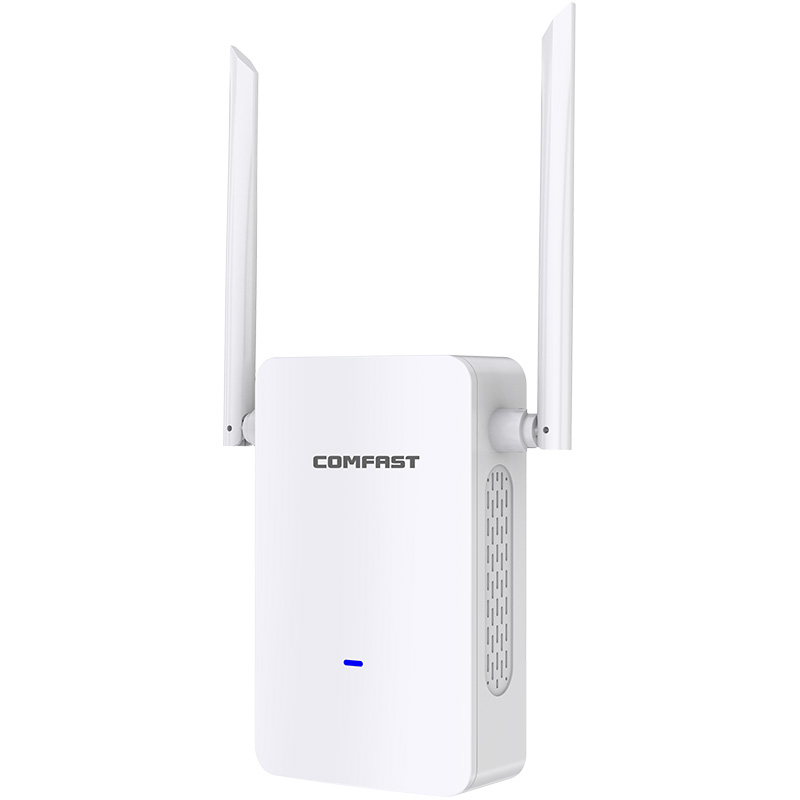
Our engineering team has used COMFAST equipment in many elevator monitoring, property CCTV, office building, hotel, parking, warehouse, and outdoor wireless transmission projects. From field experience, COMFAST gateways, PoE switches, WiFi 6 routers, APs, and wireless bridges are practical for elevator monitoring projects because they support flexible CCTV backhaul, centralized PoE power, clean management access, clear network segmentation, and easier maintenance. For this project, we selected COMFAST CF-AC100 full gigabit AC gateway router, CF-SG181P 8-port gigabit PoE switches, CF-WR653AX WiFi 6 router, CF-E390AX ceiling APs, CF-E591AX in-wall APs, CF-E312A V2 5.8G wireless bridges, and CF-E112N V2 wireless bridges.
1. Project Overview
Project Name: Project SkyLift CCTV Link
Project Location: Business Bay, Dubai, United Arab Emirates
Building Type: High-rise Grade-A office tower with retail podium, basement parking, property management office, fire command center, engineering duty room, and centralized security monitoring room
Building Scale: 46 office floors, 5 podium levels, and 4 basement parking levels
Elevators Included: 18 elevators, including office passenger elevators, service elevators, VIP elevators, retail podium elevators, and basement parking elevators
Maximum Elevator Travel Height: Approximately 172 meters
Elevator Car Cameras: 18 cameras
Elevator Hall Cameras: 44 cameras
Remote Cameras Requiring Wireless Backhaul: 14 cameras
NVR Location: Main security monitoring room on the ground floor
Main Monitoring Areas: Elevator cars, elevator machine rooms, elevator shafts, office floor elevator halls, retail podium elevator halls, basement parking elevator halls, main lobby elevator hall, fire command center, engineering duty room, property office, weak-current shafts, security booth, basement passageways, emergency alarm points, and remote CCTV points
Project Goal: Build a stable elevator CCTV wireless backhaul system with reliable elevator car video, continuous NVR recording, low-delay live preview, basement elevator hall monitoring, organized weak-current shafts, separated CCTV and management networks, and convenient maintenance access for property and elevator service teams.
2. Customer Pain Points Before the Project
Several elevator car camera feeds were unstable during normal operation. When an elevator was parked at a floor, the video could usually be previewed. However, once the elevator moved upward or downward, the monitoring room often saw short freezes, choppy video, or temporary signal loss.
Some elevator cameras had visible signal fluctuation when the elevator doors opened and closed. The previous system did not fully consider metal door movement, car position, shaft reflection, and receiving bridge location.
High-zone elevator groups had more frequent video dropouts. The building height, long shaft structure, machine room layout, steel rails, traveling cables, and concrete walls made the wireless environment more difficult than ordinary indoor coverage.
Basement parking elevator hall cameras were unstable during morning and evening traffic peaks. Thick basement walls, parked vehicles, long cable routes, and limited weak-current access made CCTV return difficult in several basement areas.
The NVR had occasional frame loss during playback. Live preview showed most cameras online, but recorded video from elevator car cameras and basement elevator hall cameras sometimes had short missing segments.
Some elevator machine room links to the monitoring room were not clearly documented. Several old patch cables and network paths passed through weak-current shafts without proper labeling, making troubleshooting slow and risky during office hours.
Weak-current shafts were cluttered. Old adapters, unlabeled patch cables, CCTV lines, office network cables, temporary devices, and elevator-related equipment were placed together, which made service work inefficient.
Multiple elevator wireless links were using overlapping channels. During morning office arrival, lunch movement, and evening exit periods, several elevators were active at the same time, causing interference and packet loss on the previous wireless links.
CCTV traffic, property office traffic, temporary maintenance WiFi, and device management access were not separated clearly. This made the CCTV system more vulnerable to congestion and made fault diagnosis more complicated.
3. Customer Requirements
Provide stable CCTV video backhaul for all elevator car cameras, elevator machine rooms, elevator hall cameras, basement parking elevator hall cameras, main lobby elevator hall cameras, property monitoring room, engineering duty room, fire command center, weak-current shaft devices, security booth cameras, and remote CCTV points.
Keep elevator car video stable during upward movement, downward movement, door opening, door closing, high-floor operation, basement operation, and peak elevator traffic periods.
Support continuous NVR recording, real-time preview, playback search, remote review, night video, and emergency incident review.
Use wireless bridges to reduce unnecessary traveling cable work, avoid destructive cabling, and improve future maintenance flexibility.
Separate the CCTV network, property office network, maintenance WiFi, and device management access by policy.
Use centralized PoE power where practical for elevator cameras, wireless bridges, APs, and monitoring devices.
Organize weak-current shafts, machine room devices, and monitoring room cabling with clear labels, switch port records, and bridge direction documentation.
Complete construction without affecting office tenant traffic, retail business, visitor access, basement parking flow, fire command access, elevator maintenance safety procedures, or building operation schedules.
Project handover must include topology diagram, device labels, camera point list, AP location list, wireless bridge direction records, switch port map, channel planning notes, and acceptance test results.
4. COMFAST Equipment Used in This Project
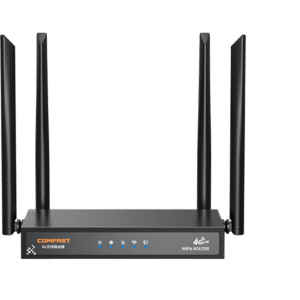
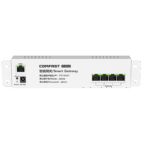
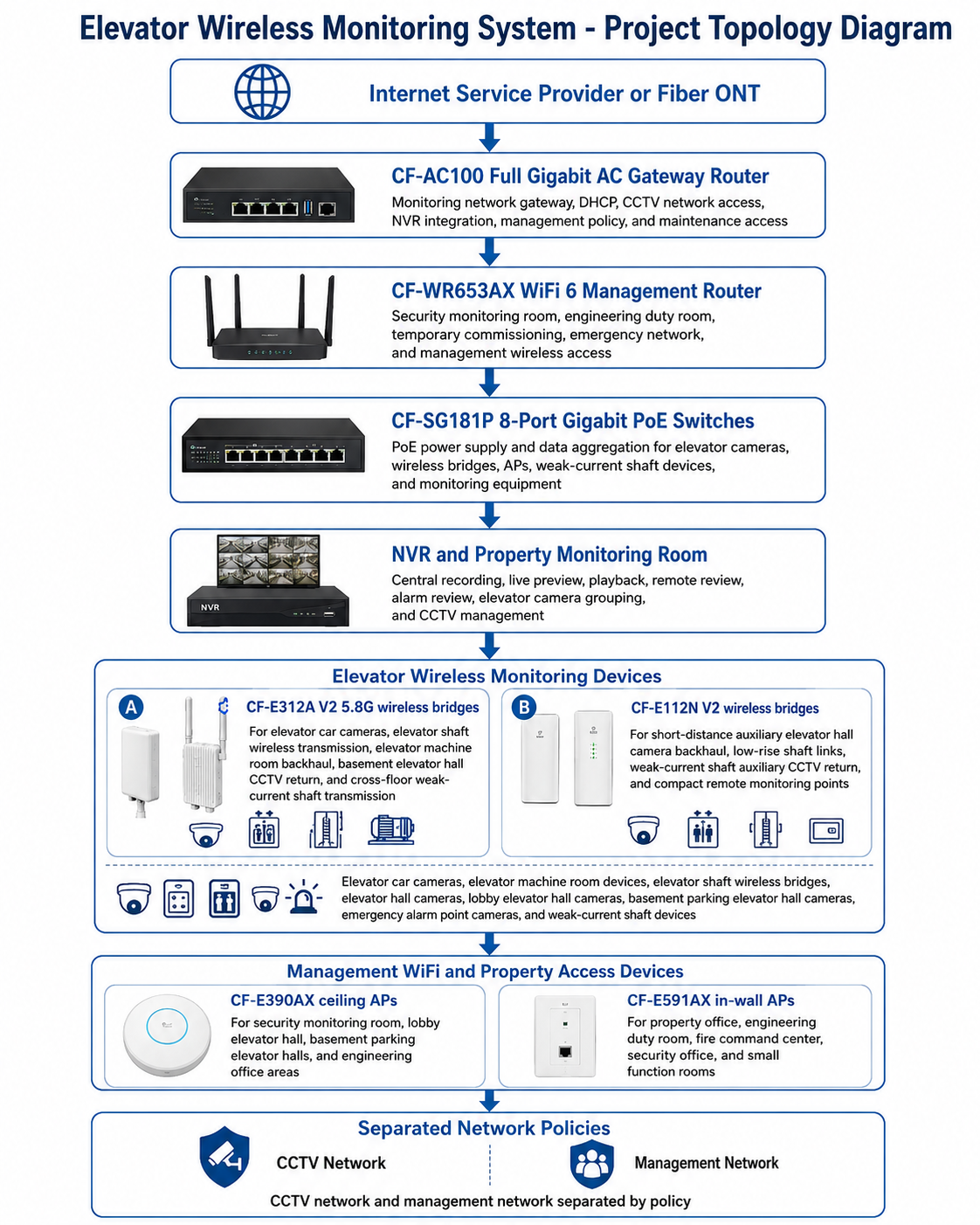
CF-AC100 Full Gigabit AC Gateway Router: The CF-AC100 was deployed as the core gateway for the elevator monitoring network. It handled DHCP, CCTV access, NVR integration, network policy, and maintenance access control.
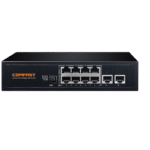
CF-SG181P 8-Port Gigabit PoE Switches: CF-SG181P PoE switches were installed in the monitoring room, selected elevator machine rooms, and weak-current shaft aggregation points. They provided PoE power and gigabit data aggregation for elevator cameras, wireless bridges, APs, and monitoring devices.
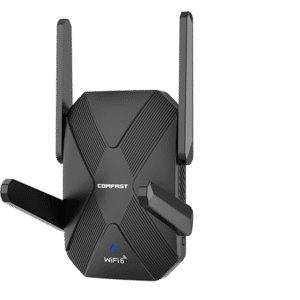
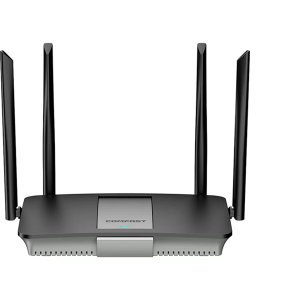
CF-WR653AX WiFi 6 Router: The CF-WR653AX was installed in the main security monitoring room and engineering duty room for management wireless access, temporary commissioning, emergency network access, and maintenance tool connectivity.
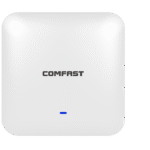
CF-E390AX WiFi 6 Ceiling AP: The CF-E390AX was used in the security monitoring room, main lobby elevator hall, basement parking elevator halls, and engineering office areas to provide controlled indoor management WiFi.
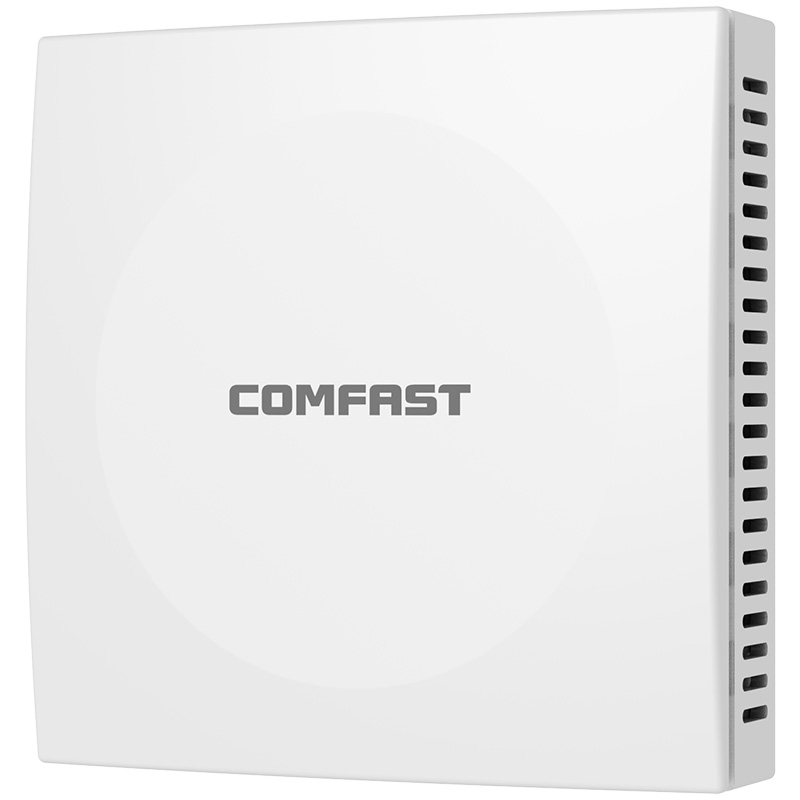
CF-E591AX WiFi 6 In-Wall AP: The CF-E591AX was used in the property office, engineering duty room, fire command center, security office, and small function rooms where room-level management access was required.
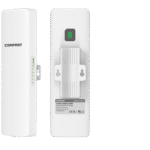
CF-E312A V2 5.8G Wireless Bridge: The CF-E312A V2 was used for elevator car camera backhaul to machine rooms, elevator machine room to monitoring room links, basement elevator hall camera backhaul, and cross-floor weak-current shaft CCTV return.
CF-E112N V2 Wireless Bridge: The CF-E112N V2 was used for short-distance auxiliary CCTV return, including low-rise elevator shaft links, nearby elevator hall camera links, weak-current shaft auxiliary transmission, and compact remote monitoring points.
5. Project Topology Diagram
6. Site Survey and Troubleshooting Process
We began the project with a full survey together with the property manager, security supervisor, IT supervisor, elevator maintenance engineer, building operations manager, fire command center operator, parking manager, and engineering duty technician. We followed the real system path from the monitoring room to the weak-current shafts, from elevator machine rooms to elevator cars, and from lobby elevator halls to basement parking elevator halls.
Inside the elevator cars, we inspected camera mounting position, lens angle, power condition, metal car structure, cable protection, and video stability. Every elevator camera was tested while the car was stopped, moving upward, moving downward, opening doors, and closing doors.
Inside the elevator shafts, we analyzed wireless path behavior, steel rail reflection, concrete wall obstruction, traveling cable area safety, shaft door positions, and receiving point conditions. We treated the shaft as a special moving-metal environment, not as a normal indoor wireless space.
In the elevator machine rooms, we checked weak-current boxes, PoE power, bridge mounting locations, device heat conditions, grounding, cable labels, and service clearance. The receiving bridge could not be placed randomly inside a metal-heavy machine room.
On typical office floors, we tested elevator hall cameras, waiting-area visibility, lighting conditions, tenant privacy requirements, and cable paths through weak-current shafts. Camera views were adjusted to cover doors and waiting areas without unnecessary privacy intrusion.
In the main lobby, we checked tenant arrival flow, visitor reception, elevator waiting lines, access control points, and AP placement for controlled management WiFi. Work in this area had to avoid office arrival and exit peaks.
In basement parking elevator halls, we checked vehicle movement, concrete wall obstruction, elevator lobby lighting, emergency call point visibility, long cable path difficulty, and CCTV return stability. Several basement points required wireless bridge return because wired routes were too disruptive.
In the monitoring room, we inspected the NVR, camera grouping, live preview, playback records, old switch ports, uplinks, and remote review settings. We separated issues caused by camera settings, power, wireless links, and unclear wiring records.
In the engineering duty room and fire command center, we checked management access, emergency viewing workflow, fire control coordination needs, and communication with the property team. These areas needed stable management access without sharing CCTV video traffic.
We performed wireless scanning and channel planning by elevator group. High-zone elevator links, low-zone elevator links, basement links, and auxiliary weak-current shaft links were separated to reduce interference during peak elevator operation.
7. Problems Found During Implementation
Elevator car camera instability was not caused by camera quality alone. The real causes included the moving metal car, shaft reflection, receiving point placement, door movement, PoE stability, and overlapping wireless channels.
The elevator shaft could not be treated like a normal hallway. Steel rails, concrete walls, moving cars, elevator doors, equipment cabinets, and traveling cable areas all changed the wireless environment. We redesigned bridge positions based on real elevator movement testing.
High-zone elevator camera backhaul required better receiving-point planning. Several old bridge devices were too close to metal cabinets or concrete corners, which weakened the link during movement.
Multiple elevator links could not use the same channel. We grouped wireless bridge links by elevator bank, floor zone, shaft condition, and receiving point to reduce interference when multiple elevators operated at once.
Night and basement video required bandwidth margin. Basement elevator hall cameras and some low-light elevator car cameras increased bitrate after dark, so we tested night playback and NVR recording continuity.
Property management WiFi could not be mixed with CCTV traffic. We separated the CCTV network and management network through the gateway and switch port plan to protect video stability.
Weak-current shaft devices had to be fixed neatly with clear labels and safe service clearance. Loose adapters, hanging cables, and unclear patching create future risks for both property staff and elevator maintenance teams.
All elevator-related work had to be confirmed with the elevator maintenance company, property safety officer, and building operations team. Work could only be performed during approved low-traffic windows with proper elevator safety procedures.
8. Final Engineering Solution
The CF-AC100 was deployed as the full gigabit core gateway for the elevator monitoring network. It provided DHCP, CCTV access, NVR integration, management policy, and separation between CCTV video and property management access.
CF-SG181P 8-port gigabit PoE switches were installed in the main monitoring room, selected elevator machine rooms, and weak-current shaft aggregation points. They provided PoE power and data aggregation for elevator cameras, wireless bridges, APs, and monitoring devices.
The CF-WR653AX WiFi 6 router provided controlled management wireless access in the security monitoring room and engineering duty room. It also supported temporary commissioning and emergency maintenance access.
CF-E312A V2 5.8G wireless bridges were used for elevator car camera backhaul, elevator shaft wireless transmission, elevator machine room to monitoring room links, basement elevator hall camera return, and cross-floor weak-current shaft CCTV transmission.
CF-E112N V2 wireless bridges were used for short-distance auxiliary links, including low-rise elevator shaft return, nearby elevator hall cameras, weak-current shaft auxiliary backhaul, and compact remote monitoring points.
CF-E390AX ceiling APs were installed in the main lobby elevator hall, basement parking elevator halls, security monitoring room, and engineering office areas for controlled management WiFi access.
CF-E591AX in-wall APs were installed in the property office, engineering duty room, fire command center, security office, and small function rooms to provide stable room-level management access.
9. Different Area Monitoring and Backhaul Design
NVR Property Monitoring Room Network: The monitoring room became the central point for live preview, continuous recording, playback, remote review, alarm review, and elevator camera group management. The NVR was connected through the CF-AC100 and CF-SG181P network structure.
Core Equipment Room Network: The core network was reorganized with clear uplinks, CCTV ports, management ports, wireless bridge links, and AP records. This made fault location faster for property IT staff.
Elevator Car Camera Wireless Backhaul: Elevator car cameras used CF-E312A V2 wireless bridge links. We tested each elevator car during upward movement, downward movement, stopping, door opening, and door closing to confirm video stability.
Elevator Shaft Wireless Transmission: Elevator shaft wireless paths were planned according to car movement range, steel rail position, concrete wall structure, door movement, and receiving bridge location. The final receiving points avoided metal cabinet obstruction and low-signal corners.
Elevator Machine Room Network: Machine room devices were connected through CF-SG181P PoE switches. Cameras, bridges, and uplinks were fixed, labeled, and arranged with service clearance for elevator maintenance staff.
Office Floor Elevator Hall Monitoring: Office floor elevator hall cameras were connected through PoE and weak-current shaft aggregation. Camera angles covered waiting areas, elevator doors, and emergency movement while respecting tenant privacy boundaries.
Main Lobby Elevator Hall Monitoring: The main lobby elevator hall used CCTV cameras and CF-E390AX management WiFi. The area was tested during morning arrival and evening departure peaks.
Retail Podium Elevator Hall Monitoring: Retail podium elevator hall cameras monitored customer movement, service access, and emergency routes. The installation avoided visible messy cabling in public retail areas.
Basement Parking Elevator Hall Monitoring: Basement elevator hall cameras used wired and wireless return depending on cable availability. CF-E312A V2 links were used for hard-to-cable basement camera points where thick walls and long routes made normal wiring difficult.
Engineering Duty Room Network: The engineering duty room used CF-E591AX and CF-WR653AX for controlled maintenance access, emergency troubleshooting, and temporary testing.
Fire Command Center Monitoring Access: The fire command center received stable management access and monitoring integration for emergency review. CCTV video remained separated from general property office traffic.
Property Office Management Network: The property office used CF-E591AX in-wall APs for staff management access. Office traffic was separated from the elevator CCTV network.
Security Booth Monitoring Network: Security booth camera and management access were connected into the CCTV and management network plan. Guards could coordinate with the monitoring room more easily.
Weak-Current Shaft Device Aggregation: Weak-current shaft devices were fixed, labeled, and connected through structured PoE aggregation. This solved the previous issue of unclear patching and loose field devices.
Emergency Alarm Point Monitoring: Emergency alarm points near selected elevator halls and basement access areas were covered by nearby cameras. These points supported incident review and emergency response.
Remote CCTV Wireless Bridge Backhaul: Remote CCTV points used CF-E112N V2 or CF-E312A V2 links according to distance and environment. Each link was tested for signal, delay, packet loss, live preview, recording, and playback.
Management WiFi Access: CF-E390AX, CF-E591AX, and CF-WR653AX provided controlled management WiFi for property IT, engineering duty staff, fire command center operators, security supervisors, and authorized maintenance engineers.
10. Elevator Wireless Bridge, AP, and Camera Installation Details
Elevator car camera wireless backhaul was tested under real elevator operation. We did not rely on static connection tests. Every elevator was tested while moving upward, moving downward, stopping at multiple floors, opening doors, closing doors, and operating during peak traffic periods.
CF-E312A V2 bridge receiving points were selected according to shaft structure, machine room layout, metal cabinet position, concrete wall obstruction, and maintenance access. We avoided random machine room corners because those positions often create weak signal paths.
CF-E112N V2 bridges were used for short-distance auxiliary links where a compact bridge backhaul was more suitable than a higher-power long-distance link. This helped keep weak-current shaft design clean and practical.
Elevator hall camera angles were adjusted to cover elevator doors, waiting areas, emergency movement, and access routes without unnecessary privacy intrusion. Basement elevator hall cameras were positioned to capture elevator doors, parking passageways, and emergency call areas.
CF-E390AX ceiling APs and CF-E591AX in-wall APs were installed only for controlled management access. They were not used as open public WiFi devices. Their role was to support engineering staff, property maintenance, fire command coordination, and authorized troubleshooting.
All weak-current shaft devices were fixed securely, labeled clearly, and arranged with service clearance. PoE power routes, camera names, bridge directions, and switch ports were documented before final handover.
All elevator-related work was coordinated with the elevator maintenance company and the building operations team. Elevator access windows, safety lockout requirements, work permits, and tenant notification procedures were confirmed before construction.
11. NVR and Property Monitoring Room Integration
The main security monitoring room was reorganized as the central point for elevator and building CCTV video. Camera groups were renamed according to actual locations, including high-zone elevators, low-zone elevators, VIP elevators, service elevators, retail podium elevators, basement parking elevators, lobby elevator hall, basement elevator halls, fire command center, engineering duty room, and remote CCTV points.
We tested live preview, continuous recording, playback, remote review, alarm review, and camera search after each elevator group was connected. This ensured that elevator cameras were not only online but also recording continuously to the NVR.
The monitoring team received a bridge-to-camera map showing which elevator cameras and hall cameras returned through each wireless bridge link and PoE switch. This allows property staff to quickly identify whether a future issue is camera-side, bridge-side, switch-side, power-side, or NVR-side.
The CF-WR653AX provided controlled management WiFi inside the monitoring room and engineering duty room. This access was separated from CCTV video traffic and property office user traffic.
12. Network Segmentation and Maintenance Design
CCTV Network: The CCTV network carried video from elevator car cameras, elevator hall cameras, basement elevator hall cameras, fire command area cameras, security booth cameras, and wireless bridge-connected remote cameras to the NVR. It was separated from property office traffic.
Management Network: The management network was reserved for the CF-AC100 gateway, CF-SG181P PoE switches, CF-WR653AX router, CF-E390AX APs, CF-E591AX APs, wireless bridges, NVR access, and authorized maintenance devices.
Property Management WiFi: Property management WiFi supported engineering staff, elevator maintenance staff, IT maintenance, security supervisors, and authorized building operations personnel. It was not mixed with CCTV video traffic.
PoE Power Design: CF-SG181P PoE switches provided centralized power for cameras, wireless bridges, APs, and monitoring devices in each selected aggregation point. This reduced scattered power adapters and improved troubleshooting efficiency.
Documentation and Labeling: Every elevator group, camera point, bridge link, AP, switch port, weak-current shaft device, and NVR channel was labeled. The handover package included topology, camera point list, AP location list, bridge direction records, port map, channel notes, and acceptance results.
13. What We Did Differently from Other Engineering Teams
We did not simply connect elevator cameras to wireless bridges and leave. We tested elevator upward movement, downward movement, door opening, door closing, high-zone elevators, basement elevators, day video, night video, NVR recording, playback, delay, and packet loss.
We did not use the same channel for every elevator link. Elevator groups, floor sections, basement links, and weak-current shaft links were planned separately to reduce interference during peak building operation.
We did not place wireless bridges randomly inside machine room corners. Receiving points were selected according to elevator travel range, shaft structure, machine room layout, weak-current shaft route, metal obstruction, and maintenance safety.
We did not mix CCTV video, property management WiFi, office network, and device management in one flat network. CCTV traffic and management access were separated by policy.
We did not blindly pull new cables in ways that could affect elevator safety, tenant access, or building operation. Wireless bridge backhaul and weak-current shaft aggregation were used where they reduced risk and improved maintainability.
We did not disturb building users. Construction was completed by elevator group during approved low-traffic windows, avoiding office arrival peaks, lunch movement, evening departure, retail business periods, basement parking peaks, fire command access, and elevator maintenance restrictions.
We did not leave weak-current shafts and the monitoring room messy. The customer received device labels, camera point tables, AP location lists, bridge direction records, switch port maps, channel records, and maintenance guidance.
14. Project Acceptance Results
NVR continuous recording test passed.
Daytime live video preview test passed.
Night infrared video test passed.
Video playback and search test passed.
Elevator car camera test passed.
Elevator upward movement video test passed.
Elevator downward movement video test passed.
Elevator door opening and closing stability test passed.
High-zone elevator video stability test passed.
Low-zone elevator video stability test passed.
Basement elevator operation video test passed.
Elevator machine room link test passed.
Office floor elevator hall camera test passed.
Main lobby elevator hall camera test passed.
Retail podium elevator hall camera test passed.
Basement parking elevator hall camera test passed.
Fire command center monitoring access test passed.
Engineering duty room management access test passed.
Wireless bridge signal strength test passed.
Wireless bridge alignment inspection passed.
Bandwidth test passed.
Latency test passed.
Packet loss test passed.
Power-off recovery test passed.
PoE power supply test passed.
Weak-current shaft organization inspection passed.
Device label inspection passed.
Topology diagram, camera point list, AP location list, wireless bridge direction records, switch port map, channel planning notes, and acceptance report were delivered to the property management team.
15. Customer and User Feedback
Property Manager Feedback: “The elevator monitoring system is much more stable now. We can review elevator car video, lobby elevator hall footage, and basement elevator hall cameras from the monitoring room with confidence.”
Security Supervisor Feedback: “NVR playback is smoother and more continuous, especially for the high-zone elevators and basement parking elevator halls. Incident review is much easier now.”
IT Supervisor Feedback: “The labels, bridge direction records, channel notes, and switch port map make troubleshooting much faster. We can clearly identify which elevator bank each device belongs to.”
Elevator Maintenance Engineer Feedback: “The installation was coordinated with our maintenance schedule, and the devices were fixed neatly with enough service clearance. This makes future elevator maintenance safer and faster.”
Building Operations Manager Feedback: “The project did not interrupt office tenants, retail visitors, or parking flow. The team worked by elevator group and used well-planned low-traffic windows.”
Parking Manager Feedback: “Basement elevator hall monitoring is more reliable now. The cameras remain stable even during morning and evening parking peaks.”
Fire Command Center Operator Feedback: “Monitoring access is cleaner and easier to coordinate with the security center. Emergency review is more convenient now.”
Office Tenant Representative Feedback: “The elevator camera and elevator hall monitoring upgrade was completed without disturbing our daily commute. The building feels better managed now.”
16. Project Summary
Project SkyLift CCTV Link was a successful Elevator Wireless Monitoring System project for a high-rise office tower in Dubai. The project solved unstable elevator car video, choppy video during elevator movement, signal fluctuation when doors opened and closed, high-zone elevator camera dropouts, basement elevator hall camera instability, NVR frame loss, unclear machine room links, weak-current shaft disorder, same-channel wireless interference, and mixed network traffic.
The final COMFAST solution used the CF-AC100 full gigabit AC gateway router, CF-SG181P 8-port gigabit PoE switches, CF-WR653AX WiFi 6 router, CF-E390AX ceiling APs, CF-E591AX in-wall APs, CF-E312A V2 5.8G wireless bridges, and CF-E112N V2 wireless bridges. This combination supported elevator car camera wireless backhaul, machine room aggregation, basement elevator hall camera return, property monitoring room integration, management WiFi, PoE power, NVR recording, and network segmentation.
The key value of this project was not simply adding wireless bridges. The real value was designing the elevator monitoring system around elevator movement, metal car structure, shaft reflection, door movement, receiving point placement, channel planning, video bitrate, PoE stability, weak-current shaft organization, NVR recording, network separation, and safe maintenance coordination.
17. Lessons Learned and Advice to Other Contractors
Elevator wireless monitoring must be tested during real elevator movement, not only when the car is stopped.
Elevator door opening and closing can affect signal stability, so it must be included in acceptance testing.
Wireless bridge receiving points should be selected according to shaft structure, machine room layout, metal obstruction, and maintenance access.
Multiple elevator links need channel grouping. Using the same channel for every elevator bank creates interference during peak operation.
Night video and basement elevator hall cameras require bandwidth margin because low-light video can increase bitrate.
CCTV traffic, property management WiFi, property office network, and device management should be separated by policy.
Weak-current shafts must be organized with fixed devices, clear labels, safe power paths, and enough service clearance for elevator maintenance teams.
All elevator-related work must be coordinated with the elevator maintenance company, property safety officer, and building operations team.
Construction should avoid office arrival peaks, lunch movement, evening departure periods, retail business hours, basement parking peaks, fire command access, and elevator maintenance restrictions.
Professional handover must include topology diagrams, camera point lists, AP location records, bridge direction records, signal test results, switch port labels, weak-current shaft records, channel notes, and maintenance guidance.
For elevator monitoring projects, engineers must understand elevator movement, shaft structure, machine room layout, metal reflection, weak-current shaft routing, tenant traffic patterns, and building operation schedules. A camera that works when the elevator is parked does not prove the system is ready for real operation.
An Elevator Wireless Monitoring System is complete only when elevator car cameras stay online during movement, NVR recording is continuous, elevator hall cameras are stable, basement monitoring is reliable, weak-current shafts are organized, management access is controlled, and the property team can maintain the system confidently. That was the standard we delivered for Project SkyLift CCTV Link.