










Travel Router for Hotel WiFi:
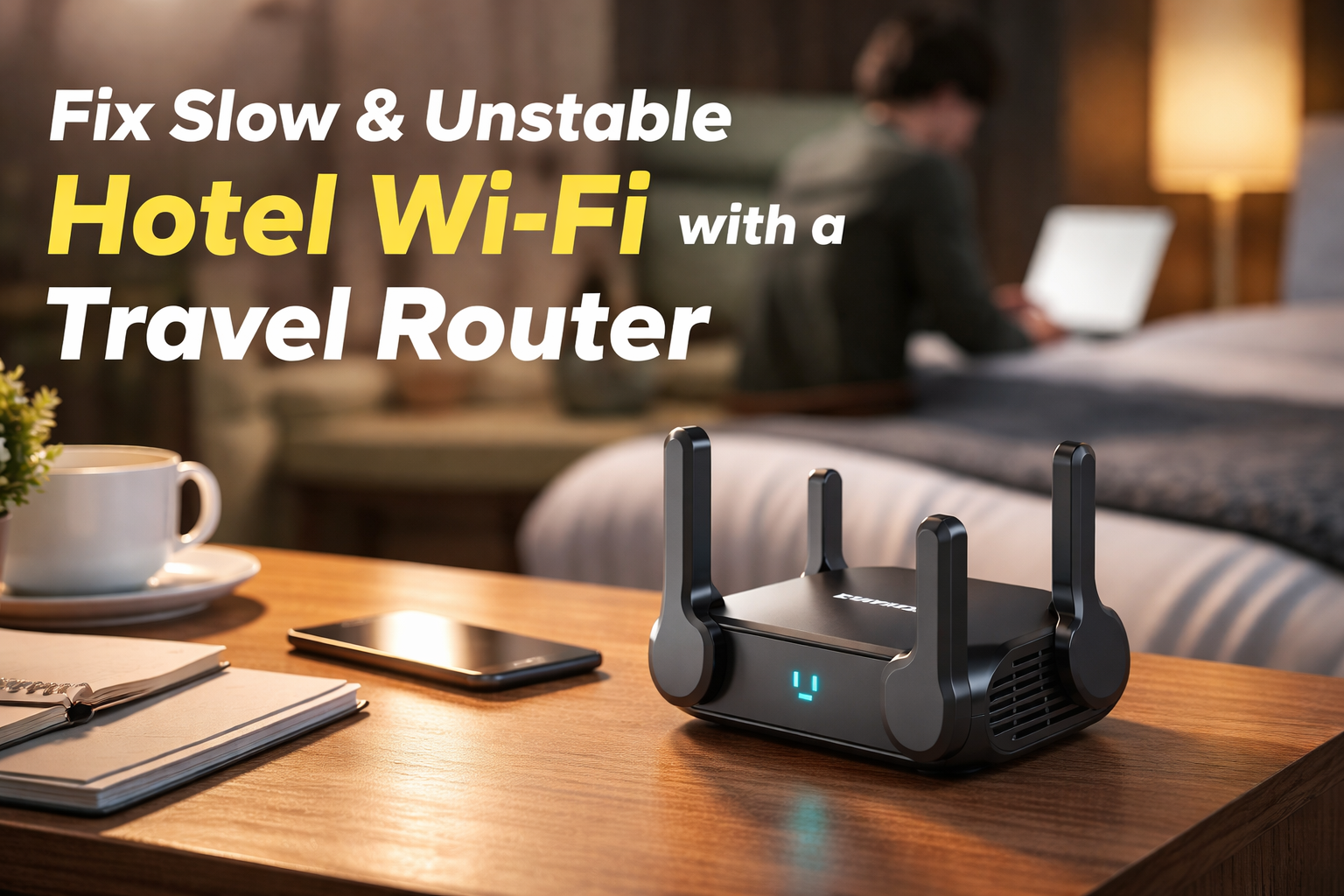
Hotel Wi-Fi often becomes unreliable when you need it most. Slow speeds, unstable coverage, and repeated logins can quickly turn a simple connection into a frustrating part of the trip.
For travelers, remote workers, and small teams, a travel wifi router offers a more practical way to stay connected across multiple devices. It creates a private and more stable connection layer on top of the hotel network.
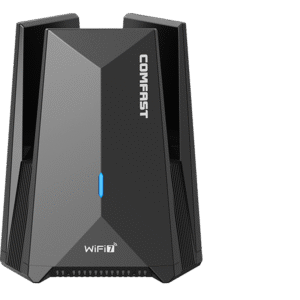
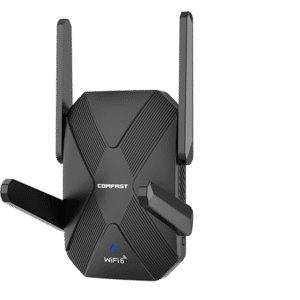
This guide explains why a travel router for hotel wifi matters, how it compares with other options, and why products such as the COMFAST CF-WR632AX are drawing attention in the portable networking market.
1. Why Hotel Wi-Fi Feels Like a Gamble Every Time You Check In
Hotel Wi-Fi rarely fails in a dramatic, honest way. The signal looks fine, the login page appears, your phone connects, and for a few minutes everything seems under control. Then your meeting freezes, your upload stalls, or the network suddenly stops behaving like something you can rely on.
For many travelers, a travel router for hotel WiFi can be a simple way to reduce that instability and manage multiple devices more effectively. The real problem is not total failure, but internet that works just enough to keep interrupting your work.
That unpredictability makes hotel internet feel less like infrastructure and more like a daily risk. For casual browsing, it is annoying. For remote work, video calls, cloud access, or multi-device travel, it becomes a productivity and security issue. That is also why the category behind the travel router for hotel wifi keeps gaining attention: it addresses a familiar user pain point in a way that feels practical, not theoretical.

Hotel internet is often not completely broken, just unreliable enough to disrupt work, calls, uploads, and multi-device use. That is exactly the kind of pain point a portable router can solve in a way users immediately understand.
1.1. One Night It Works, the Next Night It Barely Loads a Page
One of the strangest things about hotel wi-fi is how different it can feel from one stay to the next, even in the same city or hotel chain. One night you stream a video with no trouble. The next night, opening an email feels ambitious.That inconsistency usually has less to do with your device and more to do with how shared hotel networks behave under changing conditions.
More guests, thicker walls, peak evening traffic, weak room placement, overloaded hardware, and repeated login interruptions can all affect performance. If you are traveling with a phone, laptop, tablet, and another person who also needs bandwidth, the experience gets worse quickly. This is why a travel router for hotel wifi is appealing: not because it upgrades the hotel’s internet line, but because it gives your own devices a more stable and manageable way to connect.
1.2. The Real Problems Behind Slow, Crowded, and Unstable Hotel Wi-Fi
When hotel internet feels bad, speed is only part of the story. The bigger issue is usually a combination of shared bandwidth, weak coverage, crowded wireless environments, captive-portal login problems, and public-network security risk. In other words, the user experience breaks down because there are too many variables and almost no control on your side.
That matters even more now because hotel guests are no longer connecting one phone and calling it a day. They are working remotely, joining video meetings, syncing files, streaming content, and carrying multiple connected devices everywhere. Portable networking products now address a broader and more urgent problem than simple travel convenience.
That is exactly where products like the COMFAST CF-WR632AX start to make commercial sense. A compact WiFi 6 model with support for multiple devices is easier to connect to real travel scenarios, real frustration, and real buying demand. That makes the product easier to position because the use case is already familiar to the buyer.
This section establishes that hotel Wi-Fi is not only inconvenient, but structurally inconsistent in ways users already recognize. That makes the rest of the article feel practical instead of theoretical.
2. What Usually Goes Wrong When You Rely on Hotel Wi-Fi Alone
Depending only on hotel internet sounds reasonable until you actually need to do something important on it. Checking the weather is usually fine. Joining a client call, sending a large file, syncing cloud folders, or keeping several devices online at once is where things start to wobble. The main issue is not that hotel networks never work, but that they work inconsistently with very little control on your side.
For travelers, that means frustration. For remote workers, it means interruptions. For brands and channel buyers, it points to a use case that is easy to explain. A portable router is not trying to replace the hotel’s entire network. It is trying to solve the part users feel most directly, which is why the travel router for hotel wifi category keeps gaining traction in travel retail, remote-work gear, and portable networking demand.

When you rely on hotel Wi-Fi alone, the real problem is not just speed, but instability, lack of control, and exposure to a public network you cannot manage.
2.1. Weak Signals, Shared Bandwidth, and Random Disconnects
Hotel Wi-Fi often struggles for very ordinary reasons. Too many guests connect at the same time. Some rooms sit in better signal zones than others. Walls, floors, and building layout weaken coverage. Then evening arrives, everyone starts streaming, scrolling, uploading, and the network begins to slow down. The result is a familiar mix of slow loading, dropped calls, frozen meetings, and random disconnects.
This gets worse when you are using more than one device. A phone, laptop, tablet, earbuds, and even a streaming stick or handheld console can quickly turn “free hotel internet” into a small traffic jam. That is where a travel router for hotel wifi starts to make practical sense. It cannot repair the hotel’s infrastructure, but it can help you manage your own connection environment more cleanly.
2.2. Security Risks on Public Hotel Networks
The other problem is less visible, which is exactly why people ignore it. Hotel internet is usually a public shared network. Even when it looks professional, it is still an environment where many unknown devices connect through the same access system. For remote work, account access, file sharing, and online meetings, that shared environment is far less comfortable than it first appears.
Security concerns can include weak access control, exposed login behavior, untrusted local traffic, and the simple fact that you do not control who else is on that network. As the FCC explains in its online safety guidance, users should be cautious when sharing personal information or using unsecured public internet connections. You may be checking email, joining a work platform, opening internal documents, or logging into payment and travel accounts while surrounded by digital strangers.
This is why many frequent travelers rely on a travel router for hotel wifi to create a more stable private network inside the room. This is also why devices like the COMFAST CF-WR632AX are easy to position in both consumer and B2B terms. For end users, the value is more privacy, more convenience, and fewer repeated login headaches. For buyers and sellers, the message is straightforward. This is not just a small router, but a product built around a clear travel pain point that combines performance, convenience, and security.
Users buy a portable router not because hotel Wi-Fi is always unusable, but because it is unreliable, insecure, and inconvenient often enough to make a personal networking tool feel worth carrying.
3. Why a Travel Router Makes Hotel Internet Much Easier to Live With
A travel router does not perform magic, and that is actually part of its appeal. It does not promise to turn weak hotel internet into enterprise-grade networking. What it does offer is a more practical improvement for everyday travel use. It gives you more control, more consistency, and a cleaner way to connect your own devices.
This is why a travel router for hotel wifi makes sense to more people than ever. It helps create a more familiar network layer between your devices and the hotel connection, which is especially useful for remote work, multi-device travel, and temporary business use. From a product-positioning perspective, that value is easy to explain because users can usually feel the difference very quickly.
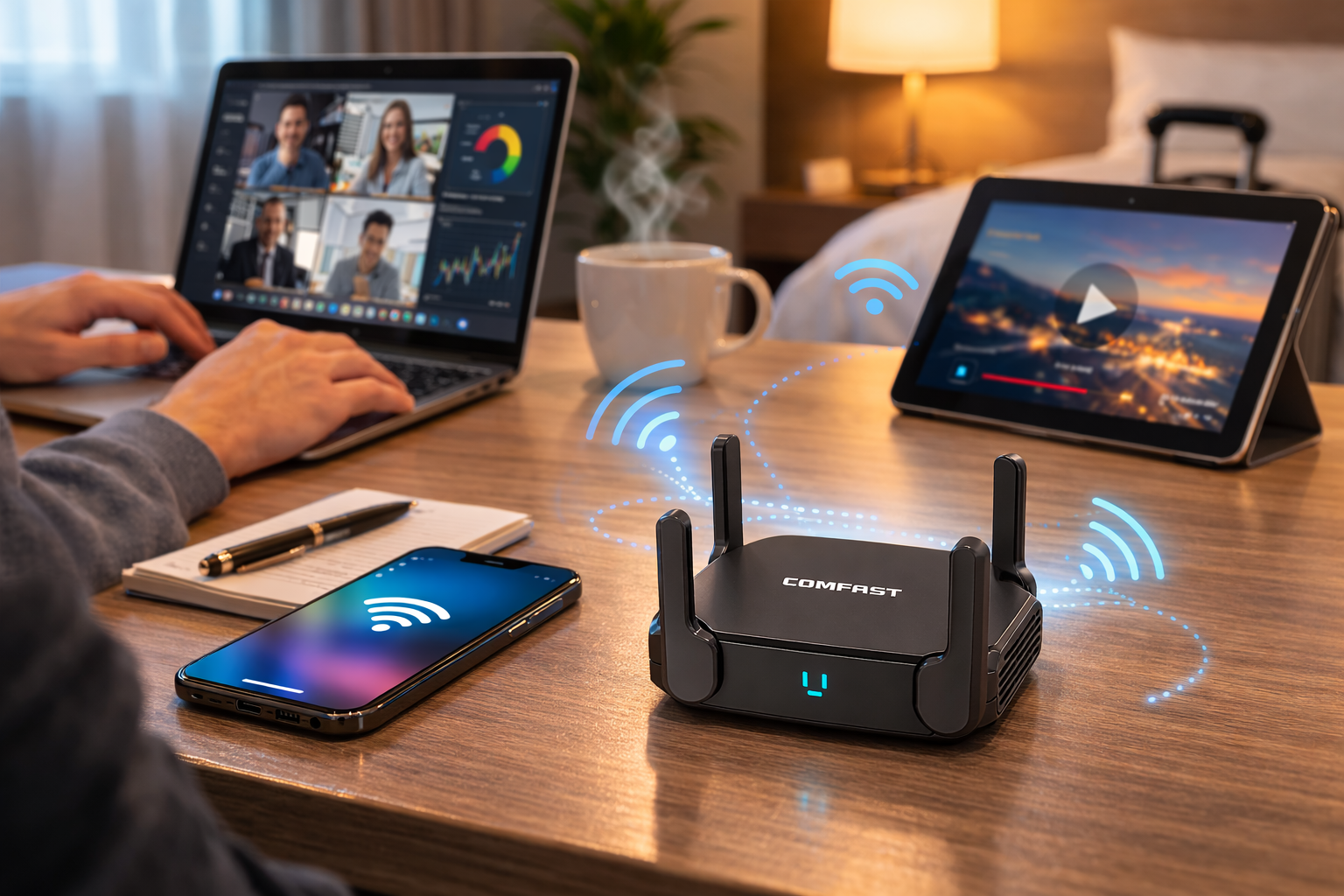
A travel router does not fix the hotel network itself, but it gives you a more private setup, simpler device management, and a more stable day-to-day experience.
3.1. Turning One Hotel Connection Into Your Own Private Wi-Fi Space
One of the biggest benefits of a travel router for hotel wifi is simple: instead of placing every device directly on the hotel network, you create your own small private Wi-Fi space. That gives your phone, laptop, and tablet a cleaner and more controlled way to connect.
In practice, this feels easier to manage. You connect the router once, then your devices connect to the router instead of negotiating with the hotel network again and again on every screen. As Cloudflare explains in its router overview, a router is designed to direct traffic between networks and devices, which is exactly why this setup feels more organized in a hotel room. For people working on the road, that added structure makes the experience feel less public and less chaotic.
3.2. Keeping Your Phone, Laptop, and Tablet on One Familiar Network
Hotel internet becomes much more irritating when you have several devices. You sign in on your laptop, then your phone asks for the portal again, then your tablet forgets everything, and before long the process becomes more annoying than the connection itself. A hotel wifi router reduces that repeated setup friction by giving your devices one familiar local network to join.
That is especially useful for remote workers and business travelers moving between hotels, apartments, event spaces, or temporary offices. Your devices do not need to keep adapting to each new environment in the same frustrating way. From a market perspective, this is one reason portable routers are easier to position today: they solve a very visible and relatable problem for people who expect multiple-device convenience in daily use.
The benefit is not only better networking logic, but also fewer logins, fewer reconnects, and fewer chances for your workflow to fall apart.
3.3. Adding More Stability to a Network You Do Not Control
No portable router can fully fix a terrible internet source. If the hotel network is truly awful, infrastructure still sets the limit. But in many real situations, the problem is not total failure. It is inconsistency.
That is where a travel router for hotel wifi helps by creating a more stable connection environment for your own devices.
A model like the COMFAST CF-WR632AX fits this use case well because it is built around the features portable users actually notice, including WiFi 6 performance, dual-band support, and the ability to handle more than a single device. That makes it easier to connect the product to hotel travel, remote work, and short-term business deployment scenarios without stretching the story.
In other words, a travel router is not about controlling the whole hotel network. It is about improving the part you actually interact with every day. For users, that means less chaos. For distributors, resellers, and OEM-focused buyers, it means a product category with clearer benefits and stronger everyday relevance.
That makes the story easier to understand because the value shows up in ordinary travel behavior, not abstract technical promises.
A travel router helps in three practical ways: it creates a more private local network, keeps multiple devices on one familiar setup, and adds stability to a connection you cannot directly control.
4. When a Hotel WiFi Router Is Actually Worth Packing
Not every trip requires extra networking gear. If you are spending one quiet night in a hotel, using one phone, and doing little more than checking messages, you can probably get by without a router.
But once your trip includes work, multiple devices, repeated logins, or unreliable hotel internet, carrying a small router becomes much easier to justify.
This matters because the best portable networking products are not the ones that sound clever in theory. They are the ones that solve a real problem quickly in daily travel use. That is also why a hotel wifi router is increasingly relevant to both end users and B2B buyers: it fits obvious usage scenarios, and obvious usage scenarios are easier to explain, market, and convert into demand.
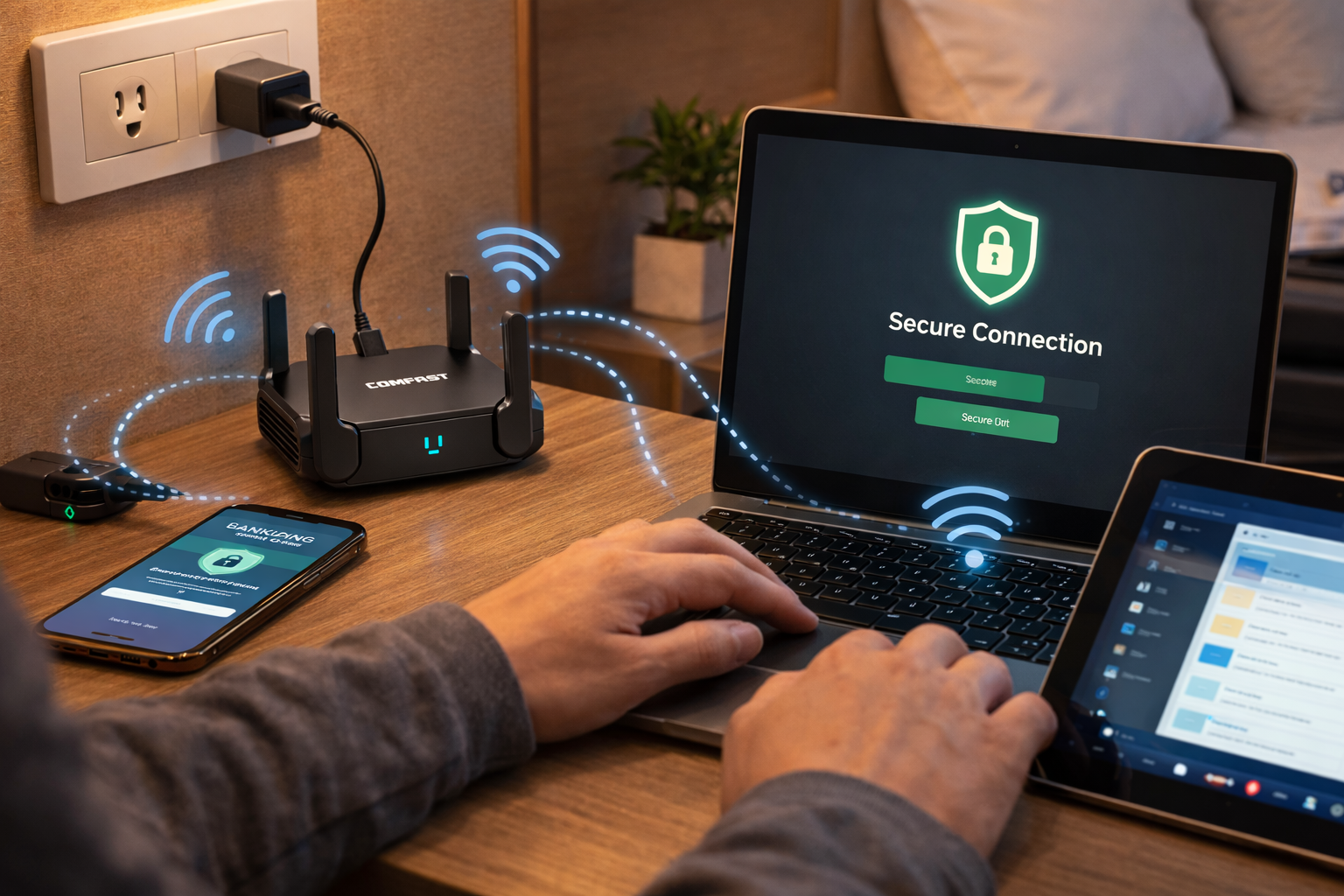
A travel router is worth packing when hotel internet stops being a convenience and starts becoming
part of your workflow, family setup, or daily reliability problem.
4.1. Business Trips, Remote Work, and Video Calls
This is probably the clearest use case. If your trip includes meetings, cloud documents, email access, file uploads, CRM logins, or video calls, a router starts to look less like an accessory and more like practical preparation. Hotel internet may be available, but available and dependable are not the same thing.
In these situations, a travel router for hotel wifi is worth carrying because it gives you a more controlled and repeatable setup. That matters for remote workers, sales teams, consultants, exhibitors, and anyone working between hotels and temporary sites. It also gives manufacturers and resellers a strong B2B message because the category connects directly to mobile productivity, business continuity, and work-from-anywhere demand.
4.2. Family Travel With Multiple Devices
Family travel turns even decent hotel internet into a crowded little ecosystem. One person wants to stream, one needs maps, one is uploading photos, and someone inevitably asks why the tablet is not connecting again. Once several devices enter the room, hotel Wi-Fi often starts to show its limits.
This is where a portable router becomes useful not because it is exciting, but because it reduces setup repetition, device chaos, and shared-network frustration. A model built for multi-device travel, such as the COMFAST CF-WR632AX, fits this situation well because it is designed for portable use while offering WiFi 6, dual-band support, and enough capacity for more than a single light-use connection. From a market perspective, this broadens the audience beyond business travel and makes the category easier to sell into retail, travel-tech, and consumer electronics channels.
In family travel, the router is not only helping with internet access, but also reducing the repeated setup friction that quickly turns into
device chaos.
4.3. Trips Where You Expect Weak or Complicated Hotel Wi-Fi
Some trips basically come with a warning label. Older hotels, high-traffic travel periods, short stays with constant check-in and check-out, event venues, and properties with awkward login systems are all situations where hotel internet is more likely to be inconvenient or limited.
If you already expect the network experience to be weak or complicated, bringing a router is usually the smarter move.
This is also where the product story becomes easier to communicate. A portable router solves a visible problem before it becomes a major interruption. That is valuable in travel use, but it is also valuable in B2B positioning because products with clear scenario-based demand are easier to recommend, compare, and sell across different customer groups.
In other words, a travel router is most worth packing when the cost of unreliable internet is higher than the inconvenience of carrying one more small device. On modern business trips, remote-work travel, and multi-device stays, that trade-off is usually easy to justify. The bag stays light, and the connection has a better chance of behaving like it respects your schedule.
A hotel WiFi router is worth packing when you expect
work-critical connectivity, several devices, or hotel internet that looks acceptable on paper but behaves unpredictably in practice.
5. Travel Router vs Extender: Which One Helps More in a Hotel
This is where many people get stuck, because both products sound like they are trying to help bad Wi-Fi behave better. In practice, though, they solve different problems.
A Wi-Fi extender mainly stretches coverage, while a travel router creates and manages your own local connection layer.
In a hotel, that difference matters a lot. You are not usually trying to extend Wi-Fi across your own home or reach a distant room. You are trying to deal with a public network, repeated login pages, multiple devices, and a connection experience that is often more frustrating than weak signal alone. That is why, for most hotel use, a travel router for hotel wifi is usually the more practical tool.
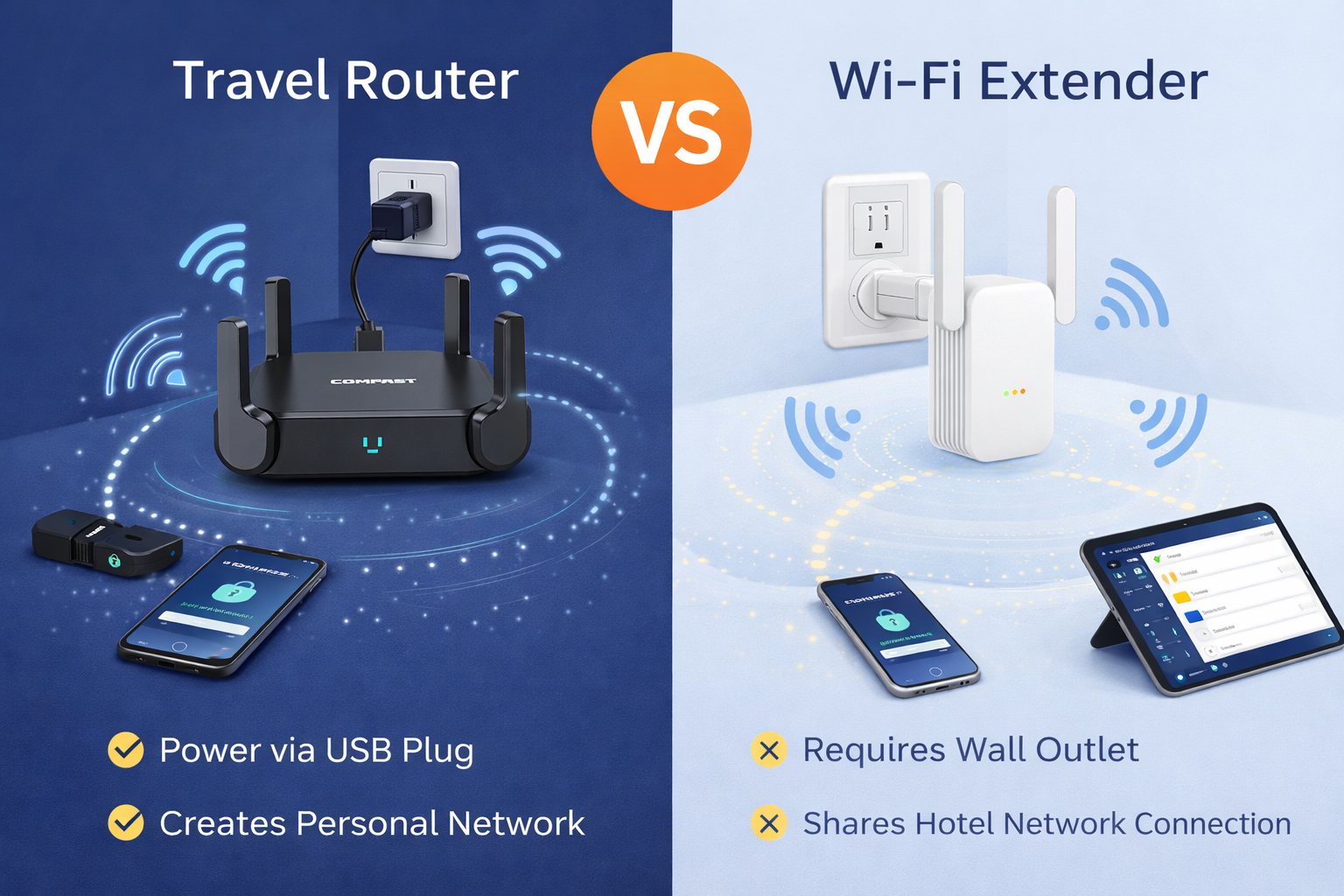
In hotel use, an extender tries to improve signal reach, while a travel router improves
control, device management, and day-to-day usability.
5.1. What a Travel Router Does Better
A travel router is better at the things hotel guests actually struggle with most. It lets you build one familiar private network for your own devices instead of making every phone, laptop, and tablet negotiate separately with the hotel login system. That means fewer repeated sign-ins, cleaner device handling, and a setup that feels more consistent from trip to trip.
It is also the better option when security and workflow matter. Public hotel Wi-Fi is still public hotel Wi-Fi, but a router gives you more privacy, more control over your local network, and a more manageable connection environment. For remote workers, business travelers, and small teams on the move, that is much closer to the real problem than simply asking whether you can get one more bar of signal.
This is also why products such as the COMFAST CF-WR632AX are easier to position in both consumer and channel markets. The value proposition is direct: portable size, WiFi 6 performance, multi-device support, and a clearer answer to the question users are actually asking. Most travelers are not asking how to extend a hotel network, but how to make it easier to live with.
5.2. Where a Wi-Fi Extender Still Falls Short in Hotel Use
A Wi-Fi extender is not useless. It can help when the main issue is simply coverage and you already have a network you control. That makes sense at home, in a small office, or in another fixed setup. But hotels are different. In hotel use, the problem is rarely just distance, but a mix of public access rules, unstable performance, device login friction, and limited control over the upstream network.
That is where extenders often feel disappointing. They do not really solve repeated captive-portal issues. They do not give you the same private local-network experience. They do not simplify multi-device travel in the same way. If the upstream hotel connection is already crowded or inconsistent, extending it may simply give you a larger version of the same problem.
So while extenders still have a place, they are usually not the smarter first choice for hotel travel. If the goal is to improve how you connect, manage devices, reduce public-network friction, and keep your setup more predictable, a travel router fits the use case much better. That distinction is worth making because it helps both readers and buyers understand why these categories are not interchangeable.
In hotel scenarios, a travel router usually wins because it addresses
connection control, repeated login pain, multi-device convenience, and privacy,
while an extender is still mostly focused on signal reach.
6. What to Look for in a Travel Router for Hotel Wi-Fi
Once you decide a travel router is worth bringing, the next question is simple: what actually matters? This is where many buyers get distracted by long spec lists and dramatic product descriptions that make every small device sound more powerful than it needs to be. For hotel use, the better approach is to focus on the features that solve real travel problems.
A good travel router for hotel wifi should be fast enough for modern use, small enough to carry without regret, simple enough to set up after a long day, and stable enough to support the devices you actually bring. For brands, distributors, and OEM buyers, these same points matter because they are easier to communicate and far more relevant to real demand than vague promises about ultimate performance.
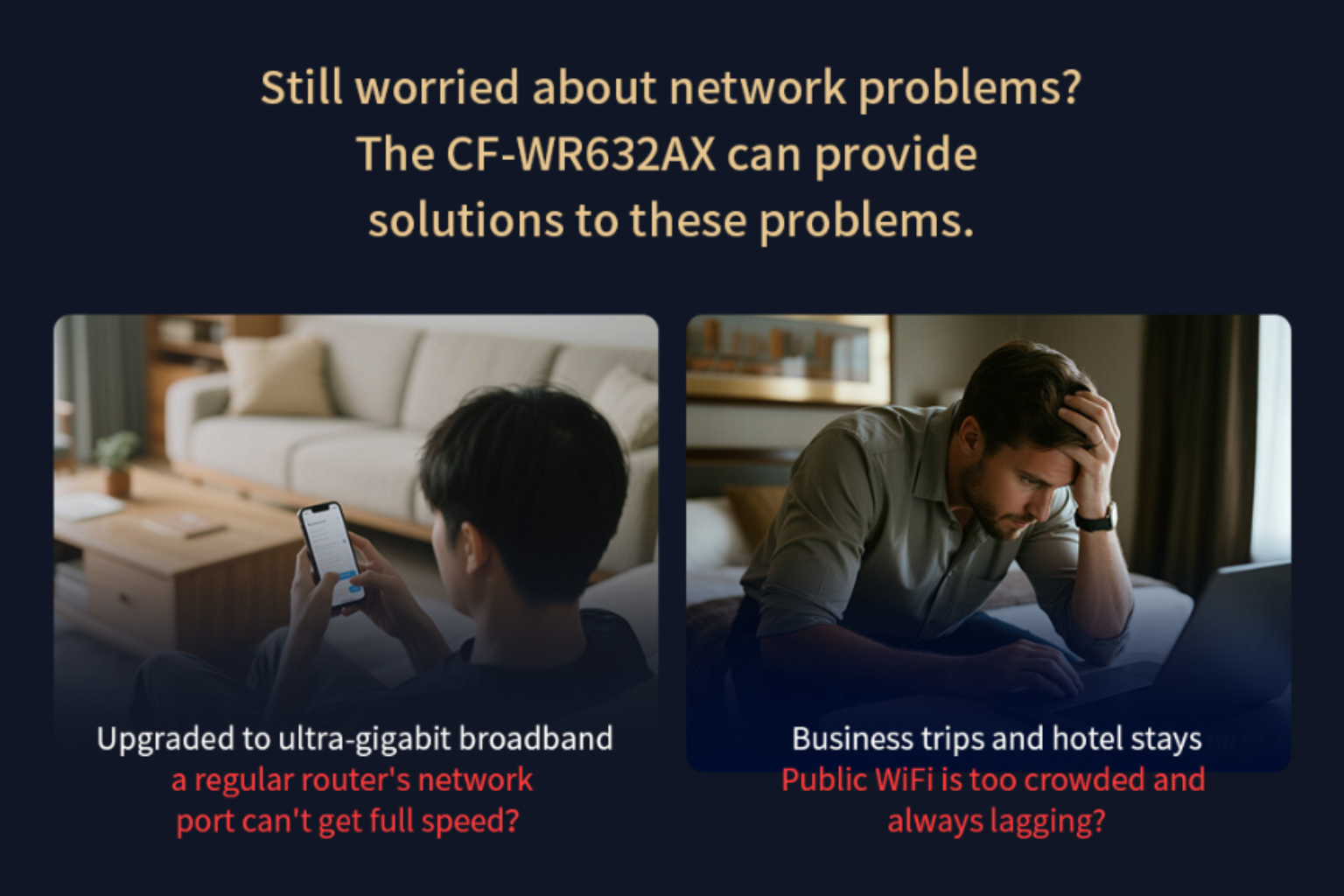
For hotel use, the best travel router is not the one with the loudest specs. It is the one that combines
modern wireless performance, easy portability, practical setup, and reliable multi-device use.
6.1. Dual Band WiFi 6 for Better Speed and Device Handling
Hotel travel in 2026 is rarely a one-device situation, which is why dual band WiFi 6 is more than a nice extra. It gives a travel router for hotel wifi a better chance of handling modern usage, especially when you are moving between phones, laptops, tablets, streaming devices, and work platforms. Dual-band support improves flexibility, while WiFi 6 improves efficiency when several devices are active at once.
This is one reason products like the COMFAST CF-WR632AX stand out more clearly in this category. A compact router with WiFi 6 and dual-band support is easier to connect to real travel needs such as remote work, video calls, file sync, and multi-device access. Security also matters here. As the Wi-Fi Alliance security overview explains, modern wireless security standards such as WPA3 are designed to provide stronger protection for connected devices, which makes newer router models more relevant for hotel and public-network use.
6.2. Portable Size, Easy Setup, and Reliable Power Options
A travel router that is technically impressive but annoying to carry or painful to configure has already missed the point. Hotel use rewards products that are small, practical, and quick to deploy. After a long flight or a late check-in, most people do not want a complicated setup process. The best travel models are the ones that fit in a bag, power up easily, and get you online without friction.
That is why size, setup flow, and power flexibility matter so much. A portable device should feel genuinely portable, not conditionally portable. Easy setup matters because hotel environments change all the time. Reliable power options matter because travel setups are rarely elegant. These are also strong selling points in B2B product planning, since usability often shapes customer satisfaction more directly than one extra line on a specification chart.
Travel gear gets judged quickly. The best models win because they feel
useful within minutes, not impressive in theory.
6.3. Security, Stable Performance, and Support for Multiple Devices
Security is easy to ignore until you are logging into work email, payment accounts, cloud platforms, or internal tools on a public network you know very little about. That is why a hotel router should not only connect well, but also support a more private and stable local networking experience. For modern travel, stable performance and basic privacy now matter just as much as raw speed.
This is where multi-device support becomes more than a technical detail. It is part of the product’s real usefulness. A router that can manage several devices smoothly is far more relevant for hotel stays, family travel, work trips, and temporary business deployment. That gives the category stronger value because it supports convenience, performance, and trust at the same time.
In short, the best hotel travel router is not just about speed. It should help you feel more secure, stay more organized, and keep multiple devices running without turning every trip into an informal troubleshooting session. That broader practical value is exactly what makes this type of product more attractive for both end users and businesses looking for portable networking solutions with clear demand.
When choosing a travel router for hotels, focus on dual band WiFi 6, portable design, simple setup, reliable power, stronger privacy, and solid multi-device support.
7. Why COMFAST CF-WR632AX Fits This Use Case Well
Once you look at hotel travel the right way, the product requirements become much clearer. You do not need a large device full of features that only make sense in a permanent office. You need something portable, modern, easy to deploy, and capable of handling real travel behavior.
That is exactly why the COMFAST CF-WR632AX fits this use case so naturally. It is not being asked to run a whole hotel or replace enterprise deployment. In this article’s context, the question is much simpler: can it make hotel internet easier, cleaner, and more useful for a traveler, a remote worker, or a temporary business setup? The answer is yes, because its feature set lines up well with what people actually need in the field.

The CF-WR632AX fits hotel travel well because it combines
portable design, WiFi 6 dual-band performance, and practical multi-device support
in a form factor that makes sense outside fixed installations.
7.1. A Portable Design Built for Travel and Temporary Setups
The first reason this model works well is also the most obvious one: it is built to be portable without feeling underpowered. That matters because travel networking products live or die by whether people will actually carry them. If a device is too bulky, awkward, or demanding after check-in, it quickly becomes a smart idea that stays in the bag.
The CF-WR632AX makes sense because it is aimed at travel, temporary deployment, and flexible short-term use. That gives it value not only for individual travelers, but also for event teams, exhibitors, mobile staff, channel buyers, and OEM projects targeting portable connectivity. In other words, it sits in a product category that is easy to explain in both user language and commercial language.
7.2. WiFi 6, Dual Band Performance, and Support for More Devices
The second reason is performance. A hotel travel router now needs to do more than keep one phone online. It needs to support laptops, tablets, work platforms, streaming, and multiple active devices at the same time. That is where WiFi 6 and dual-band capability matter, because they make the product feel more relevant to how people actually travel and work today.
This is also where the CF-WR632AX becomes easier to position against simpler or older portable routers. It is not just compact. It is compact with a feature set that feels current enough for modern demand. That distinction matters because users increasingly expect better speed, smoother device handling, and fewer compromises, while buyers want products that do not feel outdated the moment they are compared with newer WiFi 6 options.
For hotel use especially, this matters because the router is often being asked to make a weak or messy network more manageable. Stronger wireless capability does not magically fix bad upstream internet, but it does improve the part you control. That makes multi-device stability a real part of the product promise, not just a technical footnote.
The point is not to carry a tiny router for decoration. The point is to carry one that still feels
modern enough for work, travel, and several devices without turning every trip into a compromise.
7.3. How It Connects Back to Broader Travel Router Needs
What makes this model more interesting is that it does not only fit one narrow use case. It connects well to a broader set of travel-router needs, including hotel internet, short-term work setups, multi-device travel, temporary networking, and portable connectivity demand. That gives the product a stronger story than simply being a small router for people who dislike public Wi-Fi.
From a B2B perspective, that is useful because broader relevance usually means better content potential, clearer channel positioning, and more angles for product communication. A device that works for hotel travel can also fit remote work, mobile teams, temporary business deployment, and private label opportunities.
The point is not to force every scenario, but to show credible overlap with several real ones.
So in the context of this article, the COMFAST CF-WR632AX fits well because it checks the boxes that matter most: portability, current wireless capability, practical device handling, and a use case that is easy to understand. That combination is what turns a product page into something content can genuinely support, rather than just politely link to and hope for the best.
The CF-WR632AX works in this article because it aligns with the three things hotel travelers actually care about: portability, modern performance, and smoother multi-device use in temporary network environments.
8. Common Hotel Wi-Fi Situations and How You Would Handle Them
Hotel internet problems are rarely identical, which is part of what makes them so annoying. Sometimes the network is technically available but painfully slow. Sometimes the speed is acceptable, but the login system behaves like it was designed to test your patience. And sometimes everything looks fine until the moment you need a stable connection for work, streaming, or a call that cannot freeze at the wrong moment.
This is exactly why a travel router for hotel wifi is useful in practical terms. It is not about winning a networking competition in your suitcase. It is about making everyday hotel internet problems easier to manage, less disruptive, and less repetitive.

Hotel internet does not usually fail in one clean, obvious way. It fails in small practical ways that interrupt work, force repeated setup, and make a portable router much more useful than it first sounded.
8.1. The Hotel Network Is Slow but Still Usable
This is probably the most common hotel situation. The internet is not completely broken. Pages load, messages send, and basic tasks work, but everything feels slower than it should. Video calls wobble, uploads take longer, and streaming behaves unpredictably. In that case, the smartest move is not to expect miracles, but to make the connection you do have more organized for your own devices.
A router helps here by reducing repeated device friction and giving you one cleaner local network instead of asking every device to wrestle with the hotel system on its own. You are not increasing the hotel’s internet supply, but you are improving how your phone, laptop, and tablet interact with it. In real use, that often means fewer reconnects and a connection that feels more livable even when it is not perfect.
8.2. The Login Page Keeps Breaking Across Devices
This is the kind of problem that sounds small until it happens four times in a row. The portal loads on one device but not another. Your laptop gets through, your phone does not, and your tablet appears to have lost faith in the whole process. In these situations, the real problem is often not internet speed, but access flow that is clumsy and poorly suited to multi-device travel.
This is where a hotel wifi router becomes especially helpful. By creating your own local network, it reduces the need to keep repeating the same login process on every device you carry. That is a very practical benefit and one that is easy to communicate in both consumer and B2B content. Repeated setup friction may sound boring, but boring problems that happen constantly are often the easiest products to sell against.
Travel frustration is rarely one huge disaster. More often, it is the same silly problem repeated until it becomes weirdly personal. A router helps by removing
small recurring annoyances that quietly ruin the whole experience.
8.3. You Need a More Stable Connection for Work, Streaming, or Calls
Sometimes the issue is not speed or login friction. It is simply that you need the connection to behave for something important. A work call, a presentation, a file transfer, a live stream, or even a quiet evening of uninterrupted streaming all place a higher demand on stability than casual browsing. This is where hotel internet starts to feel especially risky, because “mostly fine” is not the same as reliable enough.
In that scenario, a router helps by giving your devices a more stable local connection environment and reducing some of the messy behavior that comes from every device handling the hotel network separately. A model such as the COMFAST CF-WR632AX is relevant here because its portable design, WiFi 6 capability, and support for multiple devices match the kind of modern hotel use this article has been building toward.
That makes the product story stronger. It is not being recommended because it is technically interesting in a vacuum. It is being recommended because it fits a real pattern of behavior: people traveling with several devices, relying on unstable public internet, and wanting something that makes the whole experience feel more stable, more private, and less irritating.
In real hotel scenarios, a travel router is most useful when the internet is slow but usable, awkward across multiple devices, or not stable enough for work, streaming, or calls.
9. Key Takeaways Before Your Next Trip
By this point, the pattern behind hotel internet problems is probably familiar. Some nights the connection works fine. Other nights it becomes unreliable at exactly the wrong moment. For travelers who work online, travel often, or carry multiple devices, unpredictable hotel Wi-Fi quickly turns into a recurring frustration.
That is where a travel router for hotel wifi starts to make practical sense. Instead of depending entirely on whatever network situation the building happens to provide, you create your own small and more stable connection space for your devices. A model such as the COMFAST CF-WR632AX fits this scenario well because it combines portable size, WiFi 6 performance, and support for multiple devices in a way that matches modern travel use.

A travel router is less about chasing speed and more about reducing friction.
It gives your devices one reliable network, reduces repeated logins, and makes unpredictable hotel internet easier to live with.
9.1. Why a Travel Router Can Save Time, Frustration, and Repeated Reconnection
The biggest improvement is often convenience. Without a router, every device has to connect directly to the hotel network. That means repeating the same login process, reconnecting whenever the signal drops, and dealing with the same access friction again and again.
With a portable router in the room, the process becomes much simpler. The router connects to the hotel network once, and your devices connect to the router instead. In practice, that means fewer login loops, less reconnection, and a more stable local network even when the building’s internet is not perfect.
9.2. Who Should Bring One and Who Can Probably Skip It
A travel router makes the most sense for remote workers, frequent travelers, digital nomads, and anyone who depends on stable internet during trips. It is also useful for families carrying multiple devices, small teams working on the road, and travelers staying in places where network quality is unpredictable. The more your trip depends on reliable connectivity, the more practical a travel router becomes.
On the other hand, if your trips are short, your internet needs are minimal, and you usually connect only one device, you may never notice much difference. A travel router is not essential for everyone. But once your trip includes video calls, file uploads, streaming, or several devices competing for the same hotel Wi-Fi, carrying one starts to feel like a sensible decision.
Products that solve everyday travel problems often have strong retail and channel potential. A portable WiFi 6 router like CF-WR632AX works well not only for individual users, but also for distributors, private label brands, and OEM partners looking for a clear use case and strong demand scenario.
Frequently Asked Questions
Quick answers to the most common questions about travel router for hotel wifi, public hotel wi-fi, and whether the COMFAST CF-WR632AX is a smart fit for personal travel, remote work, or channel demand.