










Project Background
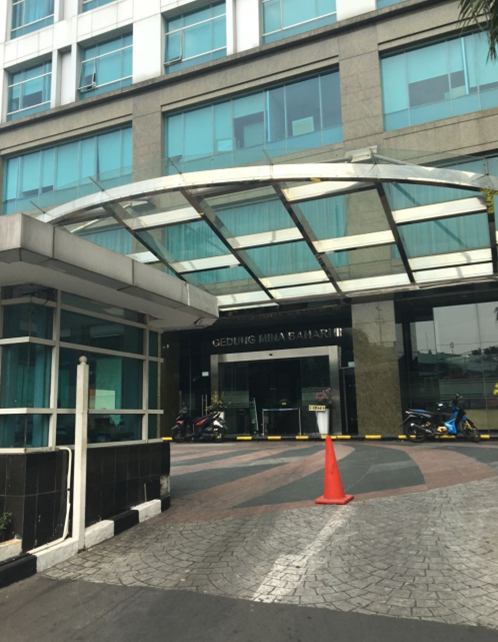
With the rapid development of enterprise office informatization and the Bring Your Own Device (BYOD) trend in Indonesia, many institutions are actively upgrading their network architecture and wireless coverage solutions. An excellent enterprise-grade wireless solution is not only a reliable complement to the wired network but also a key driver for efficient mobile office operations. This project is located in a government office area in Jakarta, the capital of Indonesia. The Indonesian engineering party has set high standards for the solution’s architecture design, equipment performance, and implementation results.
After multiple rounds of evaluation and stringent screening, the client ultimately chose to partner with COMFAST, primarily based on the following considerations: COMFAST provides a comprehensive pre-sales consultation and post-sales technical support system, with product quality undergoing strict verification. The Indonesian project lead personally visited COMFAST’s company and production facility in Shenzhen, China, for an on-site inspection, ultimately confirming that its products and professional capabilities meet the high-standard requirements of this project.
Core Challenges Analysis
1. High-Standard Performance Requirements: The government office environment imposes extremely stringent demands on wireless network speed, stability, and comprehensive coverage, necessitating the smooth operation of various office services.
2. High-Level Security Protection: Government department networks involve sensitive information, requiring the establishment of a multi-layered security defense system to effectively guard against network attacks, unauthorized access, and data leakage risks.
3. Complex Multi-Building Coverage: The project requires simultaneous coverage of three government office buildings. The interiors mostly feature multi-compartment office layouts with complex structures, posing challenges for overall solution planning and signal penetration capabilities.
COMFAST Enterprise-Grade Wireless Coverage Solution

Deployment Plan
1. Overall Network Architecture: To address existing issues in the original wireless network such as low speed, instability, and frequent disconnections, this solution involves a comprehensive upgrade. A “Core AC Gateway + Gigabit Switch + Gigabit Dual-Band Wireless Router” networking model is adopted to build a high-performance, easily manageable wireless network foundation.

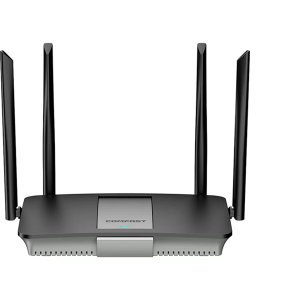
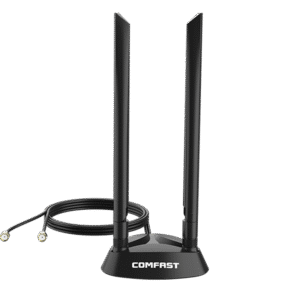
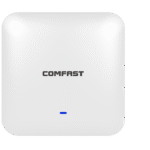
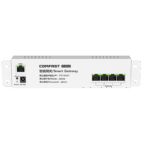
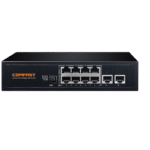
2. Core Equipment Selection: One COMFAST 8-Port Gigabit Core Gateway (CF-AC300) is deployed for unified management and control, paired with one 24-Port Gigabit PoE Switch (CF-S1000P8) for centralized power supply and data exchange. A total of 64 COMFAST Gigabit Dual-Band Wireless Routers (CF-WR650AC) are used as wireless access points. These routers offer a maximum wireless speed of up to 1750 Mbps, fully meeting the high-bandwidth demands of government office operations.
3. Implementation and Support: COMFAST dispatched technical engineers to Jakarta to provide on-site, full-process technical support, ensuring the smooth deployment and debugging of the solution. The final delivered results gained client approval.
Core Advantages of the Solution
1. Comprehensive High-Speed, Stable Coverage: The Gigabit Dual-Band Routers provide access speeds up to 1750 Mbps. Combined with the intelligent traffic control, load balancing, and seamless roaming functions enabled by the AC Gateway, network speed and stability are significantly improved, thoroughly resolving the original issues of lag and disconnections.
2. Centralized Management and In-Depth Security Protection: Through the Core Gateway paired with the OrangeOS system, unified policy management and status monitoring of all connected devices are achieved. The system integrates dangerous application identification, URL filtering, multi-dimensional access control, and attack defense mechanisms, providing enterprise-grade security protection for the government office network.
3. High Reliability and Flexible Scalability: The solution design balances reliability and foresight. The network architecture is flexible, supporting future smooth capacity expansion and feature upgrades, effectively protecting the client’s long-term investment and meeting the ongoing needs of government informatization development.