











If you are trying to find a good wireless network card for gaming, it is easy to get pushed toward the wrong number. Most product pages scream about top speed. Most comparison lists stack giant Mbps figures like that alone decides whether your games will feel smooth. It does not. In real gaming, the problem is often not the biggest speed number on the box. The real problem is usually delay, signal instability, packet loss, bad antenna placement, poor drivers, or a weak router setup. If you want the bigger category view first, this overview of wireless adapter product options helps frame the wider upgrade path before you narrow down the right gaming model.
You can see this in normal life. Maybe your speed test looks decent, but your character still teleports for one second in the middle of a match. Maybe downloads are fast, but your voice chat breaks up. Maybe the signal looks strong in Windows, yet your ping jumps exactly when the action gets intense. That is why buying a wireless network card for gaming by speed alone is one of the easiest ways to waste money.
This guide is here to make the choice simpler. Instead of treating gaming WiFi like a spec-sheet contest, you will look at what really shapes the experience: latency, stability, packet loss, interference, router quality, antenna location, and driver behavior. You will also see where products like CF-987BE, CF-985BE, CF-986BE, and CF-988BE fit different gaming setups without forcing every buyer into the same answer.
1. Why a Wireless Network Card for Gaming Is About More Than Speed
1.1 Why “fast WiFi” does not always feel fast in games
A lot of buyers assume gaming quality and internet speed are basically the same thing. That sounds logical at first, but it falls apart the second you think about what games actually do. Most online games do not need extreme download bandwidth to work well. They need fast response and steady communication between your device and the game server.
That means a connection can look fast on paper and still feel bad in practice. A connection with high peak throughput can still have delay spikes. It can still drop packets. It can still become unstable when the router is in another room or when the adapter is placed behind a metal PC case. It can still struggle when the wireless driver behaves badly under load.
This is the trap. Speed is easy to advertise because the number looks exciting. But the gaming experience is built on whether the connection stays calm and predictable every second, not whether it can hit a dramatic short burst in a marketing test.
1.2 What gamers actually notice first: ping, stability, and packet loss
If you play online games, you do not usually complain by saying, “My throughput is disappointing today.” You complain in much more painful language. You say your aim felt off. You say the enemy appeared late. You say movement felt sticky. You say your hit registration was weird. You say voice chat sounded broken. You say the game froze for a moment and then caught up all at once.
Those are not just “speed” complaints. Those are often latency, jitter, and packet-loss complaints.
Latency is the delay between your action and the network response. Jitter is the amount that delay changes from one moment to the next. Packet loss means some of the data never arrives correctly at all. In gaming, those problems hurt more than a lower headline speed in many cases.
That is why a good wireless network card for gaming is not the one with the most dramatic number on the box. It is the one that helps your setup behave more consistently during real play.
2. Wireless Network Card for Gaming vs Best Wired Network Card for Gaming
2.1 Why wired still wins if your setup allows it
Let’s not pretend otherwise: if you can use wired properly, wired is still the cleaner path for many serious gaming setups. A best wired network card for gaming discussion usually ends with the same basic advantage list. Wired connections are more stable, less exposed to air interference, less affected by walls, and usually better at keeping latency behavior predictable.
That does not mean wired is magical. A bad ISP route is still a bad ISP route. A slow server is still a slow server. But when you remove wireless uncertainty from the chain, one major source of drama disappears.
This is also why some buyers should not force a wireless solution just because it sounds newer or more convenient. If your desktop sits right beside the router, if your room supports clean cable routing, or if you play highly competitive games where consistency matters more than flexibility, wired still deserves serious respect.
For broader context on this tradeoff, Intel’s neutral overview of WiFi vs Ethernet for gaming is one of the safer mainstream references.
2.2 When wireless is still the better real-world choice
Now for the part people actually live with: many setups are not ideal. Maybe the router is in another room. Maybe you rent and do not want cables running across the house. Maybe the gaming PC is not placed where wiring is practical. Maybe you move between rooms. Maybe the computer is used for gaming, work, and daily life, and you want one cleaner upgrade without turning the room into a cable experiment.
That is where a wireless network card for gaming still makes excellent sense.
The key is to stop treating wireless as a lazy compromise. Wireless can work well for gaming when the entire path is chosen intelligently. That means the adapter matters, but so do the router, the band you use, the antenna position, the driver quality, and the interference level in the room. A smart wireless setup can feel very good. A careless one can feel terrible even with a flashy card.
3. What Makes the Best Wireless Network Card for Gaming in Real Use

3.1 Low latency matters more than headline speed
The phrase best wireless network card for gaming gets abused because many “best” lists quietly rank products by speed first. That is lazy. For gaming, what matters more is whether the connection responds quickly and predictably.
Imagine two setups. One reaches a higher peak speed during a file transfer, but the delay jumps around during live gaming. The other shows a less dramatic speed figure, but the ping stays steadier and the link behaves well during long sessions. For a gamer, the second one is often the better answer.
This is why buyers should stop worshipping peak speed as if it automatically equals better gameplay. For gaming, consistency beats bragging rights.
3.2 Stable signal matters more than peak throughput
A strong gaming connection is not just about how fast data can move when conditions are perfect. It is about how well the connection holds together when conditions are normal, imperfect, and messy.
That includes:
- the router being a little too far away
- other wireless devices in the home waking up
- walls and furniture affecting signal path
- the PC case blocking part of the adapter path
- neighboring networks crowding the same airspace
A best network card for gaming choice should help reduce instability, not just make your speed test screenshot look sexy for five seconds.
3.3 Driver quality can make or break your experience
This part gets ignored by buyers and buried by sellers, which is convenient for everyone except the person who has to live with the result.
A network card is not only hardware. It is also a driver experience. If the driver is unstable, outdated, buggy, or badly matched to the OS, your gaming experience can suffer even if the hardware itself is theoretically strong.
Bad driver behavior can show up as:
- random disconnects
- problems after Windows updates
- sleep and wake issues
- inconsistent throughput
- lag spikes that seem mysterious
- device detection problems
That is why a best network interface card for gaming decision should always include support maturity, not just radio specs. If the driver side is weak, the whole product starts acting like a drama queen.
3.4 Antenna design and placement are not small details
A lot of gaming buyers still underestimate this. They think the adapter is the whole story and the antenna is some side note. No. Antenna behavior is part of the actual performance story.
If the antenna is placed behind a desktop tower, jammed under a desk, pressed near metal surfaces, or blocked by a wall angle, the signal path changes. Even a strong adapter can underperform if the physical placement is stupid.
That is one reason internal desktop cards with better antenna positioning often make more sense for fixed gaming systems. It is also why a USB adapter may perform differently depending on whether it is plugged into the front of the PC, the back panel, or a more open position.
In gaming, a few meters and a little obstruction can matter more than buyers expect.
4. How Router Quality Changes the Result of Any Best Network Card for Gaming Choice
4.1 A strong card cannot fully save a weak router
This is where many product expectations go to die.
You can buy a better adapter. You cannot turn a weak router, poor placement, or bad network environment into magic just by changing the client card. If the router is old, badly placed, overloaded, or stuck in a noisy environment, a better gaming adapter may help somewhat, but it will not rewrite reality.
That is why good buying advice should never isolate the card from the rest of the chain. The router still matters. The environment still matters. The distance still matters.
4.2 Why 5 GHz and WiFi 7 matter differently for gaming
In many gaming situations, 5 GHz is attractive because it is often faster and less crowded than 2.4 GHz. That can help reduce some wireless messiness, especially in dense home environments. But 5 GHz also tends to be weaker over longer distance and through heavy walls. So it is not automatically better in every room layout.
WiFi 7 adds another layer. On paper, newer standards can improve the ceiling. In practice, the benefit depends on whether the whole chain supports it well. If the router, environment, placement, and device setup are not aligned, the standard name alone will not rescue the experience.
That is why smart buyers look at standards as part of the system, not the entire answer.
4.3 Why distance and walls still punish wireless gaming
Wireless signals do not care about your budget, your hopes, or the marketing copy you read at midnight.
If the router is far away, if there are thick walls in between, if the room has lots of reflective or blocking materials, or if the PC is stuck in an awkward corner, the wireless path becomes harder. That can show up as unstable ping, weaker signal, and inconsistent real-time behavior.
For neutral background on wireless networking behavior, IBM’s summary of wireless networking concepts is a stable general reference.
5. PCIe vs USB: Which Wireless Network Card for Gaming Fits You Better
5.1 Why PCIe cards often feel more serious for desktop gaming
For a fixed desktop gaming setup, PCIe often feels like the more deliberate path. Not because every PCIe product is automatically superior, but because the form factor usually fits the use case better.
A desktop gaming system often benefits from:
- stronger long-session stability
- more deliberate antenna positioning
- a cleaner permanent upgrade route
- less dependence on a tiny external dongle placement
That is why many buyers looking for the best wireless network card for gaming on a desktop end up preferring the internal-card direction.
5.2 When a USB gaming adapter still makes sense
USB still has real value. If you want quick installation, easy replacement, less hardware effort, or a flexible upgrade path that works across more than one machine, USB may be the more practical answer.
This is especially true if:
- you do not want to open the PC case
- you may move the adapter between devices
- you want a fast upgrade with less installation friction
- you are testing whether a wireless improvement is enough before going deeper
The trick is not to assume “easy” and “best” always mean the same thing.
5.3 The hidden cost of choosing only by convenience
Convenience is great until it quietly becomes instability.
A USB solution can be a smart gaming choice, but it is more sensitive to placement, port quality, surrounding interference, and physical obstruction. If you choose it only because it looks easy, without considering the environment, you may buy yourself a more annoying setup than expected.
This is where buyers often make the wrong comparison. They compare installation effort, not long-session behavior. For gaming, long-session behavior usually matters more.
6. How to Match COMFAST Models to Different Gaming Needs

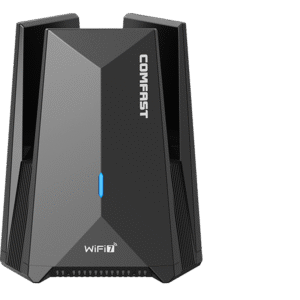
6.1 CF-987BE: for gamers who want a stronger long-term desktop upgrade
If your setup is a fixed desktop and you want the more serious internal-upgrade path, CF-987BE fits the buyer who cares about a cleaner long-term direction. This kind of choice makes sense when gaming is regular, the system stays in one place, and you want better control over placement and stability rather than just a quick plug-in fix.
If your decision is already moving toward the internal route, the focused WiFi 7 network card page is the natural product path to review.
6.2 CF-985BE: for buyers comparing the broader internal-card path
CF-985BE makes sense for buyers who are still comparing the wider internal-card family instead of jumping directly into one final model. If your question is not only “Which gaming card?” but also “Should I go with the broader desktop internal-card route at all?” then this position is useful.
For that wider product context, the WiFi 7 network card collection is the better supporting path.
6.3 CF-986BE: for users deciding whether an easier adapter path is enough
Not every gaming buyer needs to commit to an internal installation path immediately. CF-986BE is better for the person who still wants a meaningful upgrade but prefers to judge whether a simpler adapter-style solution already solves the problem.
That is especially relevant when your current frustration is moderate rather than extreme, or when the machine needs more flexibility. In that case, the WiFi 7 adapter category gives the broader external-upgrade context.
6.4 CF-988BE: for fast upgrade buyers who want a simpler external route
If your biggest priority is speed of installation, less hardware drama, and a fast path to trying a better gaming connection, CF-988BE is the cleaner external route to compare.
It is a better fit for buyers who do not want to open hardware, want a faster upgrade cycle, or simply need the practical USB WiFi 7 adapter option first.
7. Is a Killer Network Card or Killer Networking Card Automatically Better for Gaming
7.1 Why gaming branding can be misleading
Searches like killer network card 和 killer networking card carry a lot of gamer-brand emotion. The name sounds powerful. The image sounds specialized. The branding suggests that one gaming-labeled product category automatically beats normal options.
Reality is less dramatic.
Gaming branding can signal market focus, but it does not guarantee the best real-life result. A heavily branded product in a poor environment can still perform worse than a less flashy product in a cleaner setup.
7.2 What to compare instead of gaming labels
Instead of being hypnotized by gamer language, compare the things that actually shape gameplay:
- driver stability
- antenna structure and placement options
- router compatibility
- environment quality
- band usage
- distance from router
- signal obstruction
- long-session behavior
That is how you get closer to the best network card for gaming answer for your actual setup, not someone else’s marketing department fantasy.
8. Common Mistakes When Choosing the Best Network Interface Card for Gaming
8.1 Buying by maximum Mbps alone
This is the biggest mistake because it is the easiest one to sell. A giant speed number is emotionally satisfying. It also hides almost everything that matters during live gaming.
8.2 Ignoring router age and placement
If the router is badly placed or outdated, the card alone cannot fix the entire chain. Buyers who ignore that usually end up blaming the adapter for problems that began elsewhere.
8.3 Placing antennas behind the PC case
This is painfully common in desktop setups. You spend money on a better wireless path and then bury the usable signal behind metal and furniture. Very smart. Very tragic.
8.4 Forgetting driver support and OS compatibility
A gaming upgrade that behaves badly after updates is not a good upgrade. Driver quality should be part of the selection process, not an afterthought.
8.5 Expecting wireless to fix ISP or server problems
If the game server is struggling or the internet route itself is bad, no adapter can erase that. Buyers need to separate local connection problems from upstream network problems.
8.6 Choosing a product style that does not fit your device
Some people buy internal-style solutions when what they really need is convenience and flexibility. Others buy quick USB solutions when their fixed desktop setup would benefit more from a stronger long-term internal path. The right product is not only the stronger one. It is the better-matched one.
9. How to Choose the Best Wireless Network Card for Gaming for Your Setup
9.1 If you play fast competitive games
If your games punish delay hard, prioritize consistency over convenience. Look for a setup path that improves latency stability, supports better antenna positioning, and fits a stronger long-session desktop environment. This is where the more serious internal-card path often wins.
9.2 If you mainly play story games or casual online games
You may not need the most aggressive setup. A simpler wireless solution can be enough if the environment is decent and the adapter path is chosen well. Convenience matters more here because the tolerance for tiny instability is often higher.
9.3 If your router is in another room
Do not blame the card first. Look at signal path, wall thickness, congestion, and room layout. A better adapter may help, but the environment may still be the larger force.
9.4 If you want the safest desktop gaming upgrade
If your desktop is fixed, gaming matters regularly, and you care about fewer surprises over time, the stronger internal path is usually the safer answer. If you want a category-level view before choosing the final route, you can also compare this topic with what a wireless network card is, the laptop-focused decision guide on network card internal vs USB choices, the troubleshooting cluster article on network card not working, and the speed-priority comparison in 2.5Gb network card vs 10G.
For a plain technical baseline on NIC hardware, the Wikipedia overview of network interface controllers is still a useful neutral reference.
10. FAQs
Is a wireless network card for gaming good enough for competitive games?
Yes, it can be, but only if the whole setup is reasonably strong. A good wireless network card for gaming can handle competitive play much better when the router, band choice, antenna position, and driver quality are also in good shape.
What is the best wireless network card for gaming if my router is far away?
There is no magic answer if the router is far away and the signal path is poor. In that case, the best wireless network card for gaming is the one that matches the environment honestly, not the one with the biggest advertised speed.
Does a faster wireless network card reduce ping in games?
Not automatically. A faster card may help in some conditions, but ping is influenced by many things, including router quality, signal path, interference, and network behavior. Higher peak speed alone does not guarantee lower delay.
Is a PCIe card better than a USB wireless network card for gaming?
For many fixed desktop setups, yes. A PCIe wireless network card for gaming often offers a stronger long-term path because it usually supports better antenna positioning and a more deliberate desktop upgrade route.
Do drivers really affect gaming performance that much?
Yes. A weak driver can create disconnects, instability, poor behavior after system updates, and inconsistent real-time performance. That is why driver quality matters more than many buyers expect.
Is COMFAST a good choice for gaming WiFi upgrades?
COMFAST can be a good fit when the product path matches the setup correctly. The important part is not choosing by branding alone, but by environment, installation style, router conditions, and gaming expectations.
11. Conclusion
If you are looking for a good wireless network card for gaming, the smartest move is to stop treating speed as the only answer. Gaming experience is shaped by delay, jitter, packet loss, router quality, interference, antenna placement, and driver stability. Those factors decide whether the connection feels calm or chaotic.
That is why the best wireless network card for gaming is not the one with the loudest spec sheet. It is the one that fits your device, your room, your router, and your gaming style with the least amount of nonsense.
If you are still deciding whether your gaming setup needs a stronger internal card or a simpler adapter route, COMFAST can help you compare the practical fit based on desktop type, router environment, interference level, and upgrade goals.